
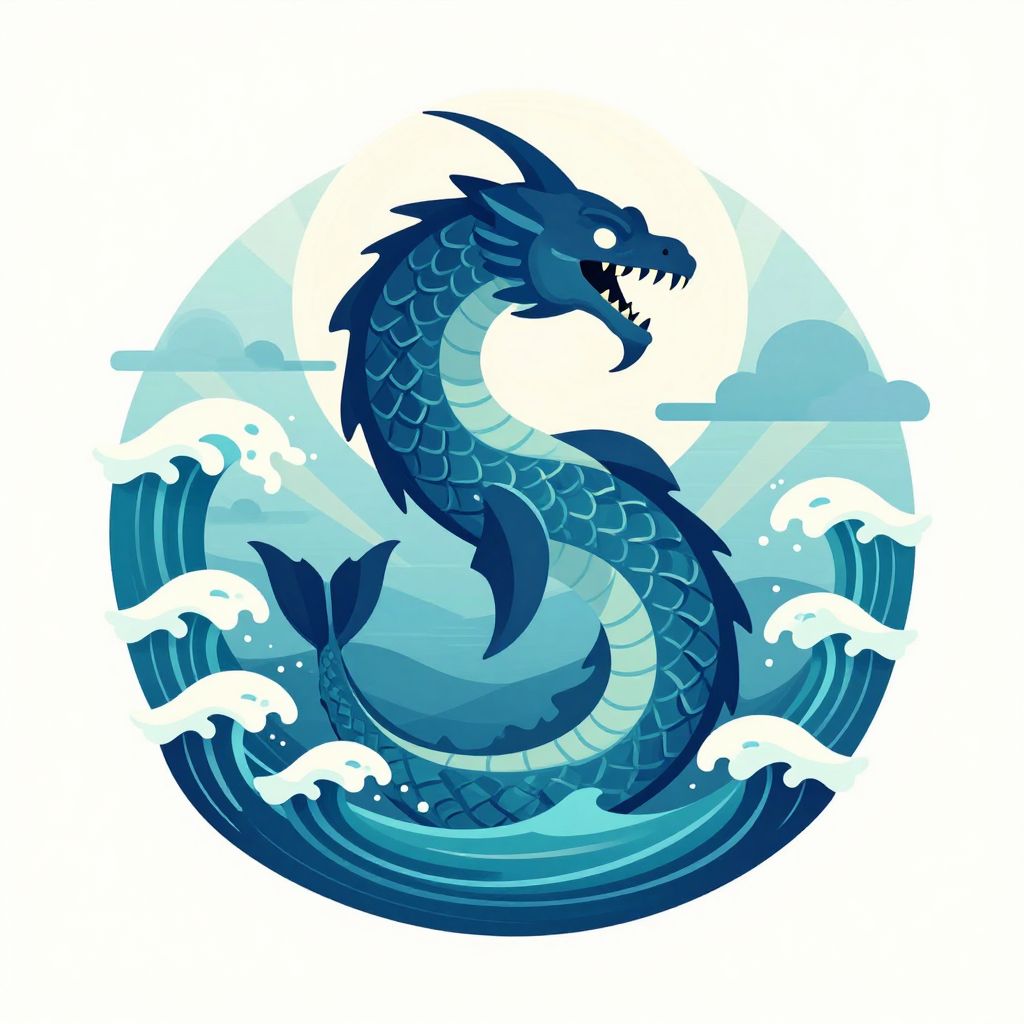
Leviathan appears in Scripture as a creature of terrifying power, yet the Bible never records its destruction or death in a single dramatic event. Instead, Scripture speaks of this beast in poetic language that reveals God’s absolute sovereignty over all creation, including the forces of chaos that seem unstoppable to human eyes. The mystery of what happened to Leviathan isn’t about tracking down a missing monster but understanding what God reveals about His power through this creature.
The question matters because Leviathan represents something deeper than an ancient sea dragon. It points to the spiritual realities we face when confronting overwhelming evil, chaos, and opposition that feels completely beyond our control.
What Happened to Leviathan in the Bible?
The Bible does not describe a specific event where Leviathan was killed or destroyed. Instead, Scripture presents Leviathan as a creature under God’s complete control, used to demonstrate His power over chaos and evil. Isaiah 27:1 prophesies that “the Lord will punish with his sword, his fierce, great and powerful sword, Leviathan the gliding serpent, Leviathan the coiling serpent; he will slay the monster of the sea.” This points to a future defeat rather than a past event.
Where Leviathan Appears in Scripture
Leviathan shows up in several key passages, each revealing something different about God’s relationship to this creature. The most detailed descriptions come from Job, Psalms, and Isaiah.
In Job 41, God dedicates an entire chapter to describing Leviathan’s terrifying features. The purpose isn’t to give Job a zoology lesson but to humble him with the reality that if he cannot control this creature, how can he question the One who created it?
Psalm 74:14 says God “crushed the heads of Leviathan and gave it as food to the creatures of the desert.” This past-tense language suggests God has already demonstrated His power over chaotic forces.
Psalm 104:26 presents a surprising image: “There is the sea, vast and spacious, teeming with creatures beyond number. There the ships go to and fro, and Leviathan, which you formed to frolic there.” Here, Leviathan isn’t a threat but something God created to play in the ocean.
The Prophetic Future of Leviathan
Isaiah 27:1 stands as the clearest statement about Leviathan’s ultimate fate. The prophet writes about a day when the Lord will slay this serpent with His sword.
This prophecy uses apocalyptic language common in Isaiah’s writing. The slaying of Leviathan represents God’s final victory over all forces of evil and chaos that oppose His kingdom.
The imagery connects to ancient Near Eastern creation myths where gods battled sea monsters to establish order. But Scripture flips the script entirely: God doesn’t struggle against Leviathan or barely win by cunning.
He speaks, and the battle is already over. The outcome was never in question because Leviathan exists only by God’s permission and serves His purposes.
What Leviathan Represents in Biblical Theology
Understanding what happened to Leviathan requires grasping what this creature symbolizes throughout Scripture. Leviathan functions as more than a literal animal in the biblical narrative.
Chaos and Untamable Power
Ancient cultures viewed the sea as a place of chaos, danger, and death. Leviathan embodied everything humanity could not control or conquer.
Job 41 emphasizes this untamable nature with vivid language. “Can you pull in Leviathan with a fishhook or tie down its tongue with a rope?” God asks in Job 41:1.
The entire chapter builds case after case for Leviathan’s invincibility. Its scales form an impenetrable armor, its breath kindles coals, and strength resides in its neck.
Yet this terrifying catalogue serves a stunning purpose: if no human can stand before Leviathan, who can stand before the God who created it? The creature’s power magnifies the Creator’s infinitely greater power.
Evil and Spiritual Opposition
Isaiah 27:1 connects Leviathan to the broader biblical theme of the serpent as an embodiment of evil. Calling it “the coiling serpent” echoes the language of Genesis 3 and Revelation 12.
This doesn’t mean Leviathan and Satan are identical, but the serpent imagery links them thematically. Both represent forces that oppose God’s good creation and seem overwhelmingly powerful from a human perspective.
The prophetic promise of slaying Leviathan points forward to the ultimate defeat of Satan and all evil. What happened to Leviathan becomes part of the larger story of what will happen to all God’s enemies.
Revelation 20:10 describes the final judgment: “And the devil, who deceived them, was thrown into the lake of burning fire and sulfur.” This is the fulfillment of Isaiah’s prophecy applied to the spiritual reality behind the symbol.
God’s Creative Delight
Psalm 104:26 presents Leviathan in an entirely different light, which actually deepens rather than contradicts the other passages. God made this creature to frolic in the sea.
This detail reveals something beautiful about God’s character. Even the most terrifying aspects of creation bring Him joy and serve His purposes.
Leviathan doesn’t threaten God or exist as His opponent in any meaningful sense. It’s more like a pet, though that word fails to capture the majesty involved.
This perspective transforms how we view overwhelming challenges in our own lives. What feels like chaos attacking us exists under God’s complete control and might even delight Him in ways we cannot yet understand.
The Connection Between Job 41 and God’s Sovereignty
Job 41 deserves special attention because it contains the longest and most detailed description of Leviathan. God speaks these words directly to Job after chapters of suffering and questioning.
Why God Describes Leviathan to Job
Job had demanded answers from God about his undeserved suffering. He wanted an explanation, a defense, something that would make sense of his pain.
God’s response doesn’t explain suffering at all. Instead, He asks Job question after question about creation, culminating in the detailed description of behemoth and Leviathan.
The point cuts to the heart: Job cannot control or even understand creatures God made, so how can he comprehend the ways of their Creator? This isn’t dismissive but actually merciful.
God redirects Job from demanding explanations he couldn’t process to trusting in the One whose power and wisdom exceed all understanding. Sometimes we need the same redirection when chaos surrounds us.
Leviathan’s Fearsome Description
Job 41 spares no detail in painting Leviathan as absolutely terrifying. Its hide deflects every weapon, its eyes gleam like the dawn, and smoke pours from its nostrils.
“Flames stream from its mouth; sparks of fire shoot out,” Job 41:19 declares. Whether this describes literal fire-breathing or uses poetic imagery, the message is clear: this creature is beyond human power.
Verse 33 summarizes: “Nothing on earth is its equal, a creature without fear.” No other created thing matches Leviathan’s power and fearlessness.
Yet this unstoppable force exists entirely at God’s pleasure. He made it, He controls it, and He will end it when He chooses. That truth meant everything to Job and means everything to us.
The Theological Lesson for Believers
Job’s encounter with Leviathan teaches us how to respond when life feels chaotic and out of control. We face situations that seem as unstoppable as a sea monster: illness, injustice, loss, spiritual attack.
The answer isn’t a formula or explanation. The answer is a Person whose power so far exceeds our problems that comparing them is like comparing Leviathan to a goldfish.
Job’s response in Job 42:2-3 shows he got the message: “I know that you can do all things; no purpose of yours can be thwarted.” He moves from demanding answers to resting in God’s sovereignty.
What happened to Leviathan matters less than what Job learned about God through Leviathan. That same lesson applies when we face our own monsters.
Leviathan in Prophecy and Eschatology
Isaiah 27:1 shifts the discussion from what Leviathan is to what will happen to it. This prophecy connects to the broader biblical theme of God’s final victory over evil.
The Day of the Lord’s Judgment
Isaiah 27 appears in a section of prophecy about God’s ultimate judgment and restoration. The slaying of Leviathan isn’t an isolated event but part of the comprehensive defeat of all opposition to God.
The Lord’s “fierce, great and powerful sword” represents His absolute authority to execute judgment. No defense can stand against it, no creature can escape it.
This prophecy assures God’s people that every force arrayed against them will fall. The monsters aren’t winning, no matter how it appears in the moment.
Have you ever felt like evil is too powerful, too entrenched, too certain to win? Isaiah 27:1 declares otherwise with the certainty of God’s unchanging word.
The Already-Not-Yet Reality
Here’s where it gets interesting: Psalm 74:14 speaks of God crushing Leviathan’s heads in the past tense, while Isaiah 27:1 puts it in the future. Both are true.
This reflects the biblical pattern of “already but not yet” that runs throughout Scripture. God has already defeated evil through Christ’s death and resurrection, yet the final consummation of that victory awaits His return.
Colossians 2:15 says Christ “disarmed the powers and authorities, he made a public spectacle of them, triumphing over them by the cross.” The decisive battle already happened at Calvary.
But Revelation 20 describes future events when Satan and death face their final doom. What happened to Leviathan mirrors this pattern: defeated in principle, awaiting complete execution of judgment.
How This Affects Our Spiritual Life
Understanding Leviathan’s fate shapes how we engage spiritual warfare today. We don’t fight to achieve victory but from the victory Christ already won.
The monsters still thrash and roar, but their doom is certain. 1 John 3:8 declares, “The reason the Son of God appeared was to destroy the devil’s work.” That destruction is guaranteed.
This truth fuels confidence rather than fear when we face spiritual opposition. The outcome isn’t in doubt, even when the battle feels overwhelming.
We pray, resist, and stand firm not wondering if God can win but knowing He already has. What happened to Leviathan is what will happen to every enemy of God’s kingdom.
Practical Application for the Christian Life
The biblical teaching about Leviathan isn’t just ancient poetry or abstract theology. It speaks directly to the chaos and opposition we face in daily life.
Facing Your Personal Leviathans
Everyone faces challenges that feel as unstoppable as Leviathan. These might be addictions, chronic illnesses, abusive relationships, overwhelming debt, or spiritual oppression.
The common thread is the feeling of powerlessness. You’ve tried everything, prayed every prayer, and the monster still circles.
The Leviathan passages teach us to shift our focus from our power to God’s power. You cannot defeat your Leviathan, but the One who created it can handle it with a word.
This isn’t passive resignation but active trust. You still take steps of obedience, seek help, and resist sin, but you do so relying on God’s strength rather than your own.
Trusting God’s Timing
The “already but not yet” reality of Leviathan’s defeat mirrors our experience with many struggles. God has won, but we still fight.
This tension requires patience and faith. Your Leviathan might not disappear immediately, but its ultimate defeat is certain if you belong to Christ.
Romans 8:37 promises, “In all these things we are more than conquerors through him who loved us.” More than conquerors because the victory is already secure in Christ.
Keep fighting, keep praying, keep trusting. What happened to Leviathan in God’s sovereign plan will happen to every force opposing you.
Worship in the Face of Chaos
Job’s response to seeing Leviathan was worship. After God’s revelation of His power, Job repented in dust and ashes and worshiped the Lord.
We can worship even when our circumstances feel chaotic because we serve the God who made Leviathan play in the sea. Nothing threatens Him, surprises Him, or overwhelms Him.
Psalm 46:10 commands, “Be still, and know that I am God; I will be exalted among the nations, I will be exalted in the earth.” Stillness in the storm isn’t denial but confidence in who controls the storm.
Your worship declares whose power you trust. When you praise God while Leviathan circles, you testify that your God is greater than any monster.
Living in Light of Leviathan’s Defeat
What happened to Leviathan ultimately points to what happens to all God’s enemies and all forces of chaos and evil. They fall before the sword of the Lord.
This isn’t just future hope but present reality that changes how we live today. We walk as people who know how the story ends.
The monsters aren’t winning. The chaos isn’t ultimate. The enemy isn’t in control, never has been, and never will be.
Jesus declared in Matthew 28:18, “All authority in heaven and on earth has been given to me.” That authority extends over every Leviathan, literal or symbolic, that threatens God’s people.
When you face your overwhelming challenge today, remember what God asked Job: “Can you pull in Leviathan with a fishhook?” You can’t, but you know the One who can.
That knowledge transforms fear into faith, panic into peace, and despair into hope. What happened to Leviathan is what will happen to everything that rises against the Lord and His anointed.
Rest in that truth. Fight from that victory. Worship the God who controls the sea monsters and invites you to trust Him completely with the chaos you cannot control.
If you found this exploration meaningful, you might want to deepen your understanding by reading more about what is the Leviathan in the Bible and how this mysterious creature fits into the broader biblical narrative. Scripture contains depths of wisdom waiting for those who dig into its truths with both mind and heart, and studying these difficult passages often yields the richest spiritual fruit for those willing to wrestle with them.