
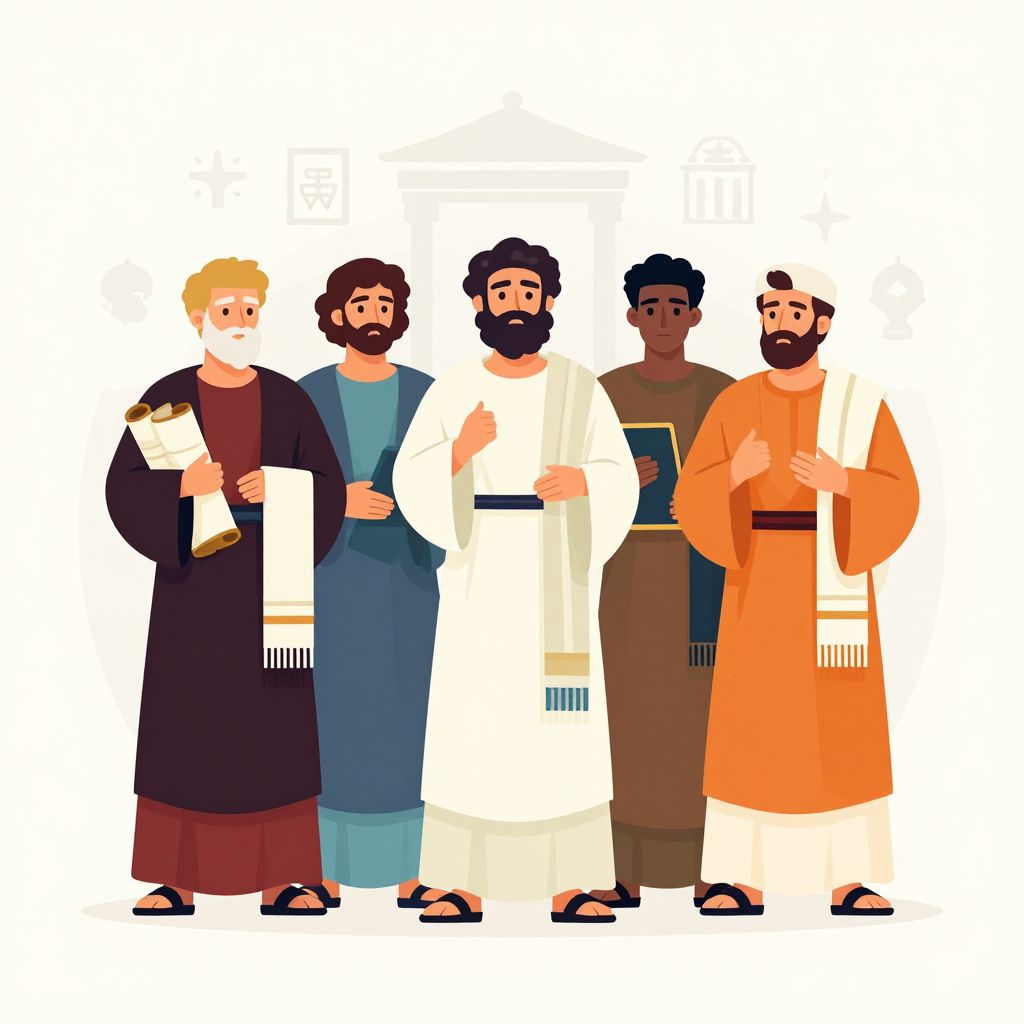
You’ve probably read about the Pharisees in the Gospels and wondered who these religious leaders really were. Most Christians know them as the group that opposed Jesus, but their story runs much deeper than surface-level antagonism.
The Pharisees were influential Jewish religious teachers who emerged during the second century BC and became the dominant religious party by Jesus’ time. Understanding their beliefs, practices, and motivations helps us grasp why they clashed so intensely with Christ and what lessons their example holds for modern believers.
Who Were the Pharisees in the Bible?
The Pharisees were a Jewish religious sect that developed during the intertestamental period, known for their strict adherence to the Law of Moses and their extensive oral traditions. They held significant influence over Jewish religious life and education during Jesus’ ministry.
The Historical Origins of the Pharisees
The Pharisees emerged around 150 BC during a turbulent period in Jewish history. Foreign rulers had repeatedly tried to force Greek culture and pagan worship on the Jewish people.
These religious leaders arose as defenders of Jewish faith and practice. Their name likely comes from the Hebrew word “perushim,” meaning “separated ones” — they separated themselves from anything they considered religiously impure.
Unlike the wealthy Sadducees who controlled the temple, the Pharisees came from middle-class backgrounds. They connected with ordinary people and taught in synagogues throughout Palestine.
What the Pharisees Believed
The Pharisees held several core beliefs that distinguished them from other Jewish groups. They believed in the resurrection of the dead, which the Sadducees rejected.
They also believed in angels, demons, and divine providence governing human affairs. Most significantly, they believed that both the written Law (Scripture) and the oral Law (traditions passed down from teachers) carried equal authority from God.
This oral tradition included hundreds of detailed rules about how to observe the Sabbath, dietary laws, ritual purity, and religious ceremonies. They genuinely believed these traditions helped people obey God more faithfully.
Why the Pharisees Clashed with Jesus
The Authority Question
Jesus challenged the Pharisees’ fundamental assumption that human traditions carried the same weight as God’s written Word. In Mark 7:8-9, Jesus told them, “You have let go of the commands of God and are holding on to human traditions.”
This wasn’t a minor theological disagreement. Jesus struck at the heart of their religious system by declaring that their carefully constructed rules actually hindered people from knowing God.
The Pharisees had spent generations building interpretive walls around Scripture. Jesus tore those walls down with simple statements like “The Sabbath was made for man, not man for the Sabbath” (Mark 2:27).
External Religion vs. Heart Transformation
Jesus consistently confronted the Pharisees about their focus on external compliance while neglecting internal spiritual reality. They tithed their garden herbs but ignored justice, mercy, and faithfulness (Matthew 23:23).
The Pharisees had turned faith into a performance designed to impress others rather than a relationship that transforms the heart. They prayed long prayers in public but failed to love their neighbors privately.
Christ’s harshest words in Scripture — the “woes” of Matthew 23 — targeted this very issue. He called them “whitewashed tombs” that looked beautiful outside but contained death within.
The Threat to Their Position
Jesus posed a direct threat to Pharisaic influence and authority. When crowds flocked to hear His teaching, the religious establishment felt their control slipping away.
The Pharisees had built their entire identity around being the expert interpreters of God’s law. Jesus taught with an authority that made their complex systems seem unnecessary and burdensome.
John 11:48 reveals their deeper fear: “If we let him go on like this, everyone will believe in him, and then the Romans will come and take away both our temple and our nation.” They chose political preservation over spiritual truth.
What Christians Can Learn from the Pharisees
The Danger of Adding to Scripture
The Pharisees’ core error still tempts believers today. Whenever we elevate human traditions, denominational practices, or cultural preferences to the level of biblical truth, we walk their path.
God’s Word stands complete and sufficient for faith and practice (2 Timothy 3:16-17). Church traditions can be helpful, but they must never become requirements for spiritual maturity or acceptance with God.
Ask yourself: Do I judge other believers based on practices Scripture doesn’t require? Have I made my particular way of following Christ the standard for everyone else?
The Heart Behind Religious Activity
The Pharisees performed many outwardly good actions — they prayed, fasted, gave money, and studied Scripture. Their problem wasn’t what they did but why they did it.
Religious activity becomes spiritually dangerous when it serves our pride rather than God’s glory. When we use Bible reading, church attendance, or Christian service to feel superior to others, we’ve adopted a Pharisaic spirit.
Paul warned Timothy about people who have “a form of godliness but deny its power” (2 Timothy 3:5). External conformity without heart transformation produces the same spiritual deadness the Pharisees displayed.
The Grace That Transforms
Interestingly, not all Pharisees rejected Jesus. Nicodemus came to Him seeking truth (John 3), and Joseph of Arimathea provided Christ’s burial place (John 19:38-39).
The apostle Paul had been a Pharisee zealous for traditions, yet God’s grace transformed him into Christianity’s greatest missionary. Even the most religious pride can be broken by encountering the living Christ.
This gives hope for anyone trapped in performance-based faith. God’s grace reaches people regardless of how deeply they’ve buried themselves in religious activity or self-righteousness.
Recognizing Pharisaic Attitudes Today
Warning Signs in Our Hearts
Pharisaic thinking creeps into Christian life more easily than we realize. It appears whenever we focus more on rule-keeping than relationship, more on appearance than authenticity.
Do you find yourself looking down on believers who don’t follow certain practices you consider important? Do you measure spiritual maturity primarily by external behaviors rather than love for God and others?
The Pharisees were Scripture experts who missed the Messiah standing right in front of them. Knowledge without humility produces blindness, not insight.
The Path Forward
Jesus offers a better way than the heavy burden of religious performance. His yoke is easy and His burden light (Matthew 11:28-30) because He provides both the power and the desire to obey God.
True spiritual life flows from a transformed heart that loves God and seeks to honor Him, not from external compliance designed to impress others. The Holy Spirit produces genuine righteousness that surpasses anything human effort can achieve.
This doesn’t mean Christians ignore God’s commands or live carelessly. Rather, we obey from gratitude and love, not from fear and pride.
The Gospel the Pharisees Missed
The tragedy of the Pharisees lies not in their zeal but in their rejection of the very salvation they sought through their religious efforts. They tried to earn God’s approval through perfect law-keeping while rejecting the One who perfectly kept the law on their behalf.
Christ fulfilled every requirement they struggled to meet. He lived the sinless life they pursued but could never achieve, then died to pay for their failures and ours.
The gospel declares that God accepts us based on Christ’s righteousness, not our religious performance. This truth liberates us from the exhausting burden of trying to earn divine approval through human effort.
Have you received the gift of righteousness Christ offers, or are you still trying to build your own through religious activity? The Pharisees’ example warns us that even sincere religious effort leads to spiritual death when it replaces faith in Christ.
God calls us to learn from the Pharisees’ mistakes and embrace the grace they rejected. Their story serves as both a warning about religious pride and a reminder of the gospel’s power to transform even the most self-righteous heart.
Continue growing in your understanding of biblical truth by exploring what the Bible says about various topics that strengthen faith. You might also find it helpful to study foundational principles like where the Ten Commandments appear in Scripture and how they reveal God’s character and our need for His grace.