
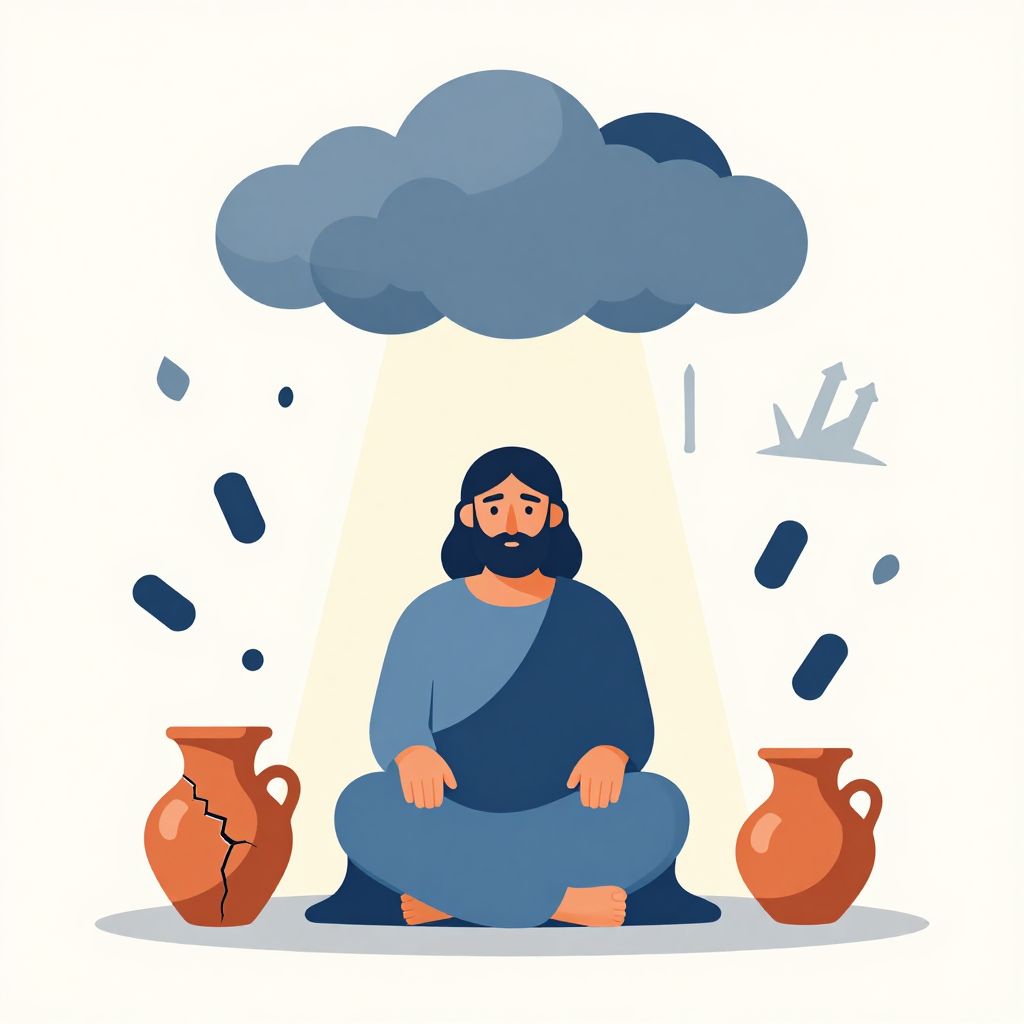
When life crushes you with suffering so intense that death seems preferable, you find yourself walking in the footsteps of one of Scripture’s most tested saints. Job stands as the Bible’s most comprehensive portrait of human suffering and divine sovereignty colliding in one man’s life.
Job was a wealthy, righteous man from the land of Uz whom God allowed Satan to test through devastating loss and physical affliction. His story reveals profound truths about suffering, faith, and God’s ultimate purposes that transcend human understanding.
Who Was Job in the Bible?
Job was a blameless and upright man who feared God and shunned evil, living in the land of Uz with immense wealth and a large family. Scripture describes him as the greatest man among all the people of the East.
Job’s Character and Standing
The opening verses of Job paint a picture of exceptional righteousness and prosperity. Job 1:1 tells us he was “blameless and upright; he feared God and shunned evil” (NIV).
This wasn’t merely external religiosity but genuine heart devotion. Job regularly offered burnt offerings for his children, concerned that they might have sinned and cursed God in their hearts.
His wealth was staggering by ancient standards: seven thousand sheep, three thousand camels, five hundred yoke of oxen, and five hundred donkeys. He also had a large household of servants, making him extraordinarily influential in his region.
Job’s Family Life
Job had seven sons and three daughters who regularly feasted together. His paternal concern for their spiritual welfare shows a man who understood that earthly success means nothing without right standing before God.
The regular family gatherings suggest harmony and prosperity, making the coming devastation even more striking. Job’s world was complete, blessed, and secure—or so it seemed.
The Divine Test That Shook Heaven and Earth
Behind Job’s suffering lies a cosmic confrontation between God and Satan that reveals the spiritual warfare surrounding every believer’s life. This heavenly scene explains why righteous people suffer and why faith matters more than circumstances.
Satan’s Challenge to God
Satan accused Job of serving God only because of divine protection and blessing, claiming “Does Job fear God for nothing?” (Job 1:9). The enemy argued that Job’s righteousness was merely transactional—remove the benefits, and faith would crumble.
God’s confidence in Job’s genuine faith led Him to permit Satan’s testing within strict boundaries. First, Satan could destroy Job’s possessions and family but not touch Job himself.
When Job remained faithful through devastating loss, Satan demanded permission to afflict Job’s body, arguing that physical suffering would break what financial ruin could not. God granted this request but commanded that Job’s life be spared.
The Scope of Job’s Losses
In one catastrophic day, Job lost everything that mattered to him. Raiders stole his oxen and donkeys, killing the servants who tended them.
Fire destroyed his sheep and their shepherds. More raiders carried off his camels and murdered their caretakers.
Most devastating of all, a great wind collapsed the house where his children were feasting, killing all ten sons and daughters. Job’s response reveals the depth of his faith: “The Lord gave and the Lord has taken away; may the name of the Lord be praised” (Job 1:21).
Satan then struck Job with painful sores from head to toe. Job sat among the ashes, scraping his festering skin with broken pottery while his wife urged him to “curse God and die.”
Job’s Wrestling with God Through Suffering
The bulk of Job’s story unfolds through intense dialogues between Job and his friends, revealing how suffering challenges our understanding of God’s justice. These conversations expose both human wisdom’s limitations and divine mystery’s depths.
The Friends’ Faulty Theology
Three friends—Eliphaz, Bildad, and Zophar—arrived to comfort Job but ended up condemning him. They insisted that suffering always results from sin, demanding that Job confess whatever wickedness brought this calamity.
Their logic seemed sound: God is just, so He punishes sin and rewards righteousness. Since Job was suffering terribly, he must have sinned terribly.
This “prosperity theology in reverse” ignored the possibility that God might have purposes beyond simple moral mathematics. Job’s friends couldn’t conceive that a righteous person might suffer for reasons beyond their understanding.
Job’s Honest Struggle
Job refused to accept false guilt but also refused to curse God. He demanded an audience with the Almighty to present his case, confident in his integrity while tormented by God’s apparent injustice.
His raw honesty about suffering refreshes readers tired of sanitized spirituality. Job complained, questioned, and even wished he had never been born, yet never abandoned his faith in God’s existence or ultimate righteousness.
Have you ever felt caught between knowing God is good and experiencing circumstances that seem to contradict that goodness? Job models how to maintain faith while honestly expressing our deepest struggles.
God’s Overwhelming Response
When God finally spoke to Job, He didn’t explain the cosmic bet or justify His actions. Instead, God overwhelmed Job with questions about creation’s complexity and His sovereign power over the universe.
Divine Questions That Humble Human Pride
“Where were you when I laid the earth’s foundation?” God asked (Job 38:4). Question after question exposed Job’s finite understanding compared to God’s infinite wisdom and power.
God described creating mountains and seas, commanding morning and evening, governing weather patterns, and caring for wild animals. Each divine question highlighted the vast gap between Creator and creature.
The message was clear: if Job couldn’t comprehend or control the natural world, how could he question God’s moral governance of the universe? Finite minds cannot fully grasp infinite purposes.
Job’s Humble Surrender
Job’s response shows genuine repentance—not for the sins his friends imagined, but for presuming to judge God’s actions. “I know that you can do all things; no purpose of yours can be thwarted” (Job 42:2).
He had heard about God before, but suffering brought him into direct encounter with divine majesty. Sometimes God uses pain to give us deeper revelation of His character than comfort ever could.
Job’s Restoration and God’s Vindication
God restored Job’s fortunes doubly, giving him twice as much livestock as before and blessing him with ten more children. More importantly, God vindicated Job’s integrity against his accusers.
Divine Justice Fulfilled
God rebuked Job’s friends for speaking falsely about Him and required them to offer sacrifices while Job prayed for their forgiveness. The very man they condemned became their intercessor—a preview of Christ’s priestly ministry.
This reversal demonstrates that human wisdom often contradicts divine truth. The friends’ theological certainties proved wrong, while Job’s honest wrestling with God proved acceptable.
Lessons That Transcend Time
Job’s story teaches us that suffering doesn’t always indicate sin, that God’s purposes often transcend human understanding, and that genuine faith can survive the darkest trials. Satan’s accusations against Job echo his accusations against every believer—we serve God only for selfish benefit.
Every time Christians choose faithfulness over comfort, obedience over ease, they answer Satan’s challenge with their lives. Job’s vindication becomes our encouragement that God sees, knows, and will ultimately make all things right.
The book of Job stands as Scripture’s most thorough exploration of why righteous people suffer and how faith survives life’s deepest mysteries. Job emerges not as a perfect man who never questioned God, but as a genuine believer whose faith proved stronger than his circumstances. His story continues speaking hope to everyone walking through valleys they never expected to enter, reminding us that our Redeemer lives and will have the final word in every story marked by suffering and loss.
For those seeking to deepen their understanding of biblical characters and stories, explore more insights at The Bible Christian. You can also discover comprehensive biblical teachings and answers to life’s pressing questions through what the Bible says about the challenges we all face.