
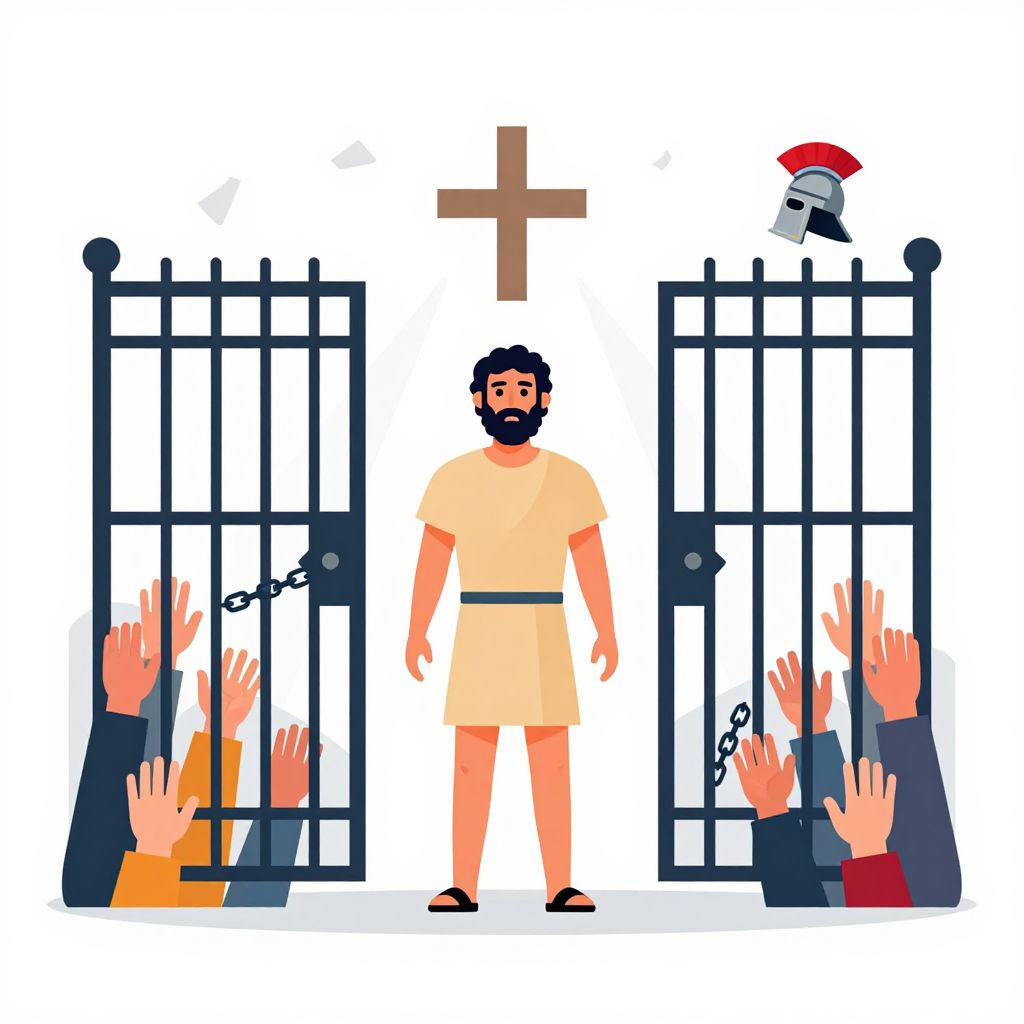
The crowd faced a choice between two prisoners, and they chose the rebel over the Messiah. Barabbas stands as one of Scripture’s most striking figures—not because of his greatness, but because of what his freedom reveals about God’s plan of redemption.
His story appears in all four Gospels during the most pivotal moment in human history. The man who walked free while Jesus died carries profound meaning for every believer who understands the weight of substitution.
Who Was Barabbas in the Bible?
Barabbas was a Jewish insurrectionist and murderer who was released from Roman custody instead of Jesus Christ during Pontius Pilate’s Passover amnesty. The Gospels describe him as a notorious prisoner who had committed murder during a rebellion against Roman authority.
The Historical Context
First-century Jerusalem simmered with political tension under Roman occupation. Jewish zealots regularly sparked uprisings against their oppressors, viewing armed resistance as the path to freedom.
Barabbas embodied this violent approach to liberation. His name ironically means “son of the father” in Aramaic, creating a stark contrast with Jesus, the true Son of the Father.
What the Gospels Tell Us
Matthew 27:16 calls him “a notorious prisoner.” Mark 15:7 reveals he “was in prison with the insurrectionists who had committed murder in the uprising.”
Luke 23:19 confirms he was “thrown into prison for an insurrection started in the city, and for murder.” John 18:40 simply states that “Barabbas had taken part in an uprising.”
The Choice That Changed Everything
Pontius Pilate faced pressure from every direction during Jesus’s trial. The Roman governor attempted to use a Passover custom to release Jesus, but the crowd’s response revealed the depths of human rebellion against God.
Pilate’s Political Maneuver
Pilate clearly recognized Jesus’s innocence and sought a way to release Him without angering the Jewish leaders. The custom of releasing one prisoner during Passover seemed like the perfect solution.
He offered the crowd a choice between Jesus, called the Christ, and Barabbas the murderer. Surely they would choose the miracle-working teacher over the violent criminal.
The Crowd’s Verdict
The religious leaders stirred the crowd to demand Barabbas instead of Jesus. Matthew 27:21 records their thunderous cry: “Barabbas!”
When Pilate asked what to do with Jesus, they shouted, “Crucify him!” The irony cuts deep—they chose a man who killed others over the One who came to give life.
A Picture of Substitution
Barabbas experienced what every believer receives through Christ’s sacrifice. The guilty party walked free while the innocent One took his place on the cross.
This wasn’t mere coincidence but divine orchestration. God used even the crowd’s rejection to accomplish His perfect plan of redemption.
What Barabbas Represents Spiritually
Barabbas serves as more than a historical footnote. His story illustrates profound spiritual truths that speak directly to the human condition and God’s response to it.
The Nature of Human Rebellion
Barabbas represents humanity’s attempt to solve its problems through violence and rebellion against authority. He embodied the flesh’s approach to freedom—taking what you want by force.
The crowd’s choice reveals something darker about human nature. When faced with truth and falsehood, people often choose the familiar rebellion over the uncomfortable call to righteousness.
The Pattern of Substitution
Every Christian stands in Barabbas’s position. We deserved death for our rebellion against God, but Jesus took our place.
Isaiah 53:6 captures this perfectly: “We all, like sheep, have gone astray, each of us has turned to our own way; and the Lord has laid on him the iniquity of us all.” Barabbas lived this truth in real time.
Grace for the Guilty
Barabbas received freedom he didn’t earn and couldn’t deserve. His hands carried blood, his heart harbored violence, yet he walked away unchained.
This mirrors exactly what Christ accomplishes for every believer. Romans 5:8 declares, “But God demonstrates his own love for us in this: While we were still sinners, Christ died for us.”
Lessons from Barabbas’s Freedom
Scripture doesn’t tell us how Barabbas responded to his unexpected freedom. We don’t know if he ever understood who died in his place or if he changed his ways afterward.
The Mystery of Response
Some traditions suggest Barabbas later became a follower of Christ, but the Bible remains silent on his fate. This silence itself teaches us something important about grace.
God extends mercy without guaranteeing human response. The same freedom that allows us to receive grace also permits us to reject or ignore it.
The Weight of Substitution
Imagine Barabbas hearing the hammer blows echoing from Golgotha, knowing those nails were meant for his hands. Every Christian should carry this same awareness.
The cross we deserved became the cross that freed us. This reality should transform how we live, love, and respond to God’s incredible gift.
Questions for Reflection
How does understanding your position as Barabbas change your view of salvation? Do you live with the gratitude of someone who walked free while another took your punishment?
The thief on the cross recognized Jesus’s innocence and his own guilt. Barabbas had the same opportunity to acknowledge the One who died in his place.
The Deeper Symbolism
Barabbas’s story contains layers of meaning that illuminate God’s character and His plan for humanity. The details reveal divine fingerprints throughout this pivotal moment.
Names That Speak Volumes
Some ancient manuscripts give Barabbas the full name “Jesus Barabbas.” If accurate, this creates an even starker contrast—Jesus Barabbas, son of the father through rebellion, versus Jesus Christ, Son of the Father through obedience.
The crowd literally chose between two men named Jesus. One offered freedom through violence and self-will; the other provided freedom through sacrifice and surrender to God’s will.
The Timing of Providence
Barabbas was available for release at precisely the right moment in God’s timeline. His presence in prison during Passover week wasn’t coincidental but providential.
God orchestrated every detail to demonstrate the principle of substitution. The innocent dies for the guilty, the righteous for the unrighteous, the Son of God for the sons of rebellion.
A Mirror for Every Heart
Barabbas forces us to confront uncomfortable truth about ourselves. We are the ones who deserved punishment; we are the ones whose rebellion earned death.
Yet like Barabbas, we can walk free because Another took our place. 2 Corinthians 5:21 states, “God made him who had no sin to be sin for us, so that in him we might become the righteousness of God.”
Living as Barabbas Set Free
Understanding Barabbas’s position should fundamentally alter how believers approach daily life. We are people who received freedom we didn’t earn through a sacrifice we didn’t make.
Gratitude as a Way of Life
Barabbas woke up that morning expecting execution and went to bed a free man. Every believer should carry this same sense of wonder about their salvation.
Colossians 2:13-14 reminds us that God “forgave us all our sins, having canceled the charge of our legal indebtedness, which stood against us and condemned us; he has taken it away, nailing it to the cross.” This deserves lifelong gratitude.
Humility Before God
Barabbas had no grounds for pride or self-righteousness after his release. He received mercy, not justice; grace, not reward.
Christians who truly grasp their Barabbas-like position approach God with humility, not entitlement. We come as recipients of undeserved mercy, not as people owed something by God.
Compassion for Others
Someone who understands they walked free while Jesus died develops compassion for other rebels and sinners. Barabbas was no better than any other criminal—he simply received grace.
This perspective transforms how we view and treat others who are still trapped in rebellion. We extend mercy because mercy was extended to us.
Barabbas remains one of Scripture’s most powerful illustrations of substitutionary redemption. His story reminds us that salvation belongs to the guilty who receive grace, not the good who earn reward. Every believer stands in his sandals—free because Another took their place, pardoned because the innocent One died for the guilty. The next time you read about this notorious prisoner, remember that his story is your story, and let that truth fill you with humble gratitude for the Christ who set you free.
The Bible contains many fascinating characters and teachings that can deepen your understanding of God’s Word. If you’re curious about where is the Bible Belt and its cultural influence, or want to explore what does the Bible say about various topics in your daily life, you’ll find these resources helpful for growing in biblical knowledge and practical faith application.