
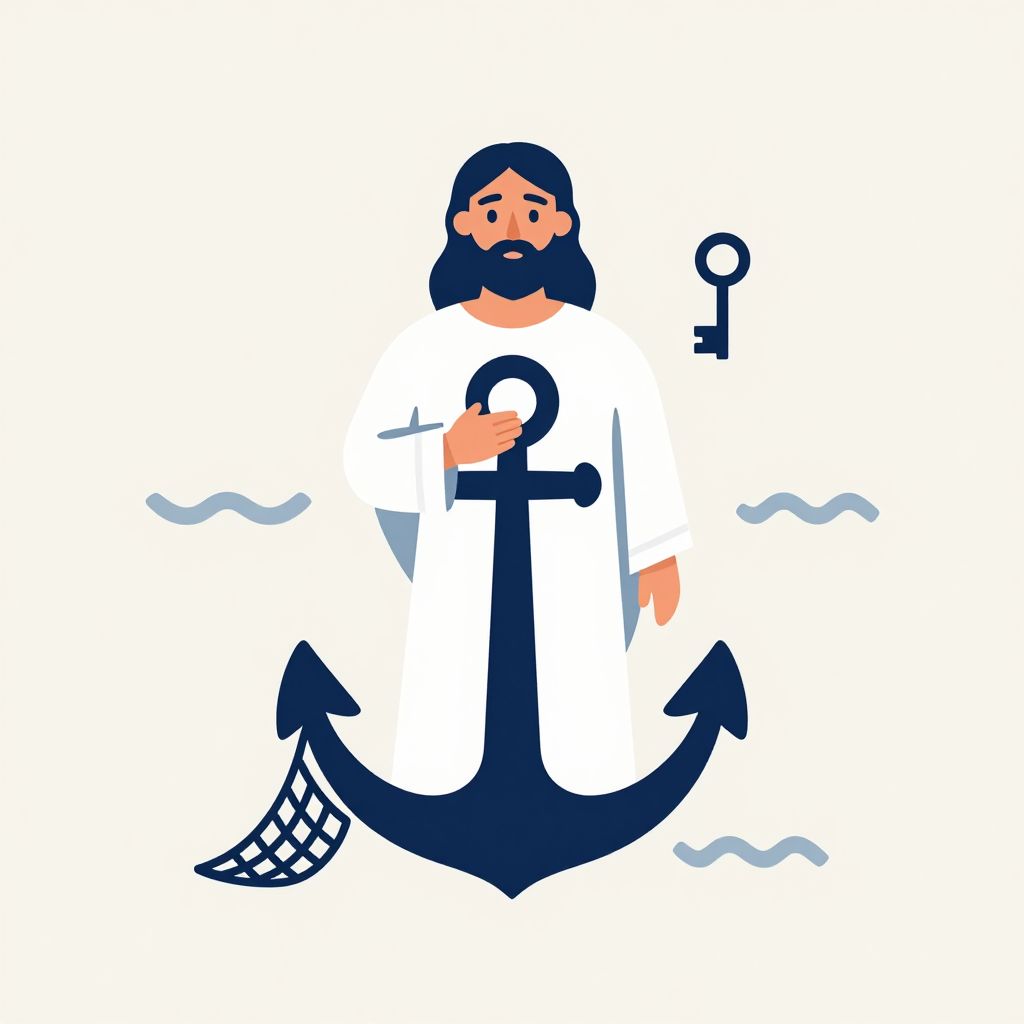
Peter stands as one of the most relatable figures in all of Scripture—a man who walked on water one moment and denied Christ the next. His story reveals how God transforms ordinary, flawed people into extraordinary leaders for His kingdom.
When you study Peter’s life, you discover a blueprint for how Christ works in every believer’s heart. His journey from impulsive fisherman to bold apostle shows us that God uses our weaknesses as much as our strengths.
Who Was Peter in the Bible?
Peter was a fisherman whom Jesus called to become one of His twelve apostles, later serving as a foundational leader of the early church and author of two New Testament letters. Born Simon, Jesus renamed him Peter (meaning “rock”) to reflect the steady leadership he would eventually demonstrate.
Peter’s Background and Calling
Simon Peter worked as a commercial fisherman on the Sea of Galilee alongside his brother Andrew. Matthew 4:18-20 records Jesus calling both brothers with the simple invitation: “Follow me, and I will make you fishers of men.”
Peter left everything immediately to follow Christ. This decisive moment reveals the kind of man Peter was—quick to act, passionate, and willing to take risks for what he believed.
The Meaning Behind His Name
Jesus gave Simon the name Cephas (Aramaic) or Peter (Greek), both meaning “stone” or “rock.” John 1:42 shows Jesus declaring this new identity at their first meeting.
This name change wasn’t based on Peter’s current character but on what Christ saw he would become. God often calls us by our future identity rather than our present struggles.
Peter’s Role Among the Disciples
Peter consistently appears as the spokesman and leader among the twelve disciples. Christ chose him, along with James and John, to witness His most significant moments.
Part of the Inner Circle
Jesus brought Peter into His innermost circle for crucial events. He witnessed the Transfiguration (Matthew 17:1-9), the raising of Jairus’s daughter (Mark 5:37), and Christ’s agony in Gethsemane (Matthew 26:37).
This proximity to Jesus didn’t make Peter perfect—it prepared him for the weight of leadership he would carry later. Sometimes God places us in difficult positions not to break us but to build us.
The Spokesman of the Group
Peter spoke first and most often among the disciples. When Jesus asked, “Who do you say I am?” Peter boldly declared, “You are the Christ, the Son of the living God” (Matthew 16:16).
Christ blessed this confession and promised to build His church on this foundational truth. Peter’s willingness to speak often led to both revelation and correction—a pattern many believers recognize in their own lives.
Peter’s Greatest Moments of Faith
Peter experienced some of the most dramatic demonstrations of faith recorded in Scripture. These moments show what becomes possible when ordinary people trust an extraordinary God.
Walking on Water
Matthew 14:28-31 records Peter’s request to walk on water toward Jesus. He succeeded until fear made him sink, but his willingness to try set him apart from the other disciples.
Peter’s water-walking teaches us that faith requires action, not just belief. How many miracles do we miss because we stay safely in the boat?
Defending Jesus in the Garden
When soldiers came to arrest Jesus, Peter drew his sword and cut off the high priest’s servant’s ear (John 18:10). Though Jesus corrected his method, Peter’s instinct was to fight for his Lord.
This incident reveals Peter’s loyal heart, even when his judgment failed him. God values our heart’s direction even when our actions need refinement.
Peter’s Most Devastating Failure
Peter’s denial of Christ represents one of Scripture’s most heartbreaking failures. Yet this low point became essential to his development as a leader.
The Three Denials
Despite promising to die for Jesus, Peter denied knowing Him three times in one night (Luke 22:54-62). Luke 22:61 records that “the Lord turned and looked at Peter,” breaking his heart with recognition of what he’d done.
Peter’s tears that night flowed from genuine repentance, not mere regret. The difference between worldly sorrow and godly sorrow determines whether failure destroys us or develops us.
Why God Allowed This Failure
Jesus predicted Peter’s denial but also his restoration (Luke 22:31-32). Christ told Peter that Satan had asked to sift him like wheat, but Jesus had prayed for his faith not to fail.
Sometimes God allows us to face our weakness so we can discover His strength. Peter’s failure taught him humility and dependence that made him a better leader.
Peter’s Restoration and Commission
Christ’s restoration of Peter shows how God handles our failures with grace. This conversation reveals the heart of redemption.
Three Questions, Three Commissions
John 21:15-17 records Jesus asking Peter three times if he loved Him. Each “yes” received a commission: “Feed my lambs,” “Tend my sheep,” “Feed my sheep.”
Jesus gave Peter three opportunities to affirm his love, matching his three denials. God’s restoration often exceeds our failure in both scope and grace.
The Prophecy of Peter’s Death
Jesus concluded by telling Peter how he would die, saying, “Follow me” (John 21:18-19). This prophecy pointed to Peter’s future martyrdom as a testimony to Christ.
Peter’s death would glorify God in a way his earlier bravado never could. Maturity transforms our service from self-focused heroics to God-honoring sacrifice.
Peter as Leader of the Early Church
After receiving the Holy Spirit at Pentecost, Peter emerged as the primary leader of the early church. His transformation from denier to declarer demonstrates the Spirit’s power.
The Pentecost Sermon
Peter’s sermon in Acts 2:14-41 resulted in 3,000 people accepting Christ. The same man who couldn’t confess Christ to a servant girl now boldly proclaimed Him to thousands.
This message shows Peter’s deep understanding of Scripture and confident proclamation of the gospel. The Holy Spirit had transformed his fear into supernatural boldness.
Signs, Wonders, and Church Growth
Acts 3:1-10 records Peter healing a lame man at the temple gate. When questioned by authorities, he boldly declared that salvation comes only through Jesus (Acts 4:12).
Peter’s ministry demonstrated both supernatural power and unwavering courage. The same impulsiveness that once led to failure now fueled fearless evangelism.
Peter’s Letters and Legacy
Peter wrote two letters that remain part of our New Testament canon. These epistles reveal his mature understanding of suffering, grace, and Christian living.
Themes in Peter’s Letters
First Peter emphasizes hope in suffering, while Second Peter warns against false teachers. Both letters show Peter’s pastoral heart for believers facing difficult times.
His writing reflects hard-won wisdom about persecution, false doctrine, and Christian maturity. Peter’s failures qualified him to comfort others facing similar struggles.
Peter’s Death and Ultimate Victory
Church tradition records that Peter died by crucifixion in Rome, requesting to be crucified upside down because he felt unworthy to die exactly as his Lord did. His death fulfilled Jesus’ prophecy and demonstrated complete surrender.
The man who once fled in fear faced martyrdom with courage. This transformation shows what Christ can accomplish in any surrendered life.
What Peter’s Life Teaches Us Today
Peter’s story offers hope to every believer struggling with failure, doubt, or inconsistency. His life proves that God specializes in transforming weakness into strength.
God Uses Imperfect People
Peter’s impulsiveness, pride, and fear didn’t disqualify him from leadership—they prepared him for it. God chose Peter not despite his flaws but through them.
Your weaknesses don’t disqualify you from God’s service; they position you to experience His strength. Second Corinthians 12:9 promises that God’s power is made perfect in weakness.
Failure Isn’t Final
Peter’s denial could have ended his ministry, but God had different plans. Romans 8:28 promises that God works all things together for good for those who love Him.
What failure are you allowing to define you instead of refine you? God’s grace transforms our worst moments into our greatest testimonies.
Growth Takes Time
Peter’s transformation didn’t happen overnight—it took three years with Jesus, a devastating failure, and the filling of the Holy Spirit. Spiritual maturity requires patience with the process.
Are you frustrated with your rate of spiritual growth? Remember that God is more interested in your character than your comfort, and character development takes time.
Peter’s life demonstrates that God delights in using ordinary people to accomplish extraordinary purposes. His journey from impetuous fisherman to foundational apostle reveals the transforming power of Christ’s grace. The same Jesus who restored Peter after his failure stands ready to restore and use you, regardless of your past mistakes or present weaknesses. Like Peter, your greatest ministry may emerge not from your strengths but from your surrendered weaknesses, transformed by the power of the living God.
For those seeking to deepen their understanding of biblical characters and their relevance to faith today, you’ll find additional insights at The Bible Christian. The site also offers comprehensive guidance on what the Bible says about various aspects of Christian living and spiritual growth.