
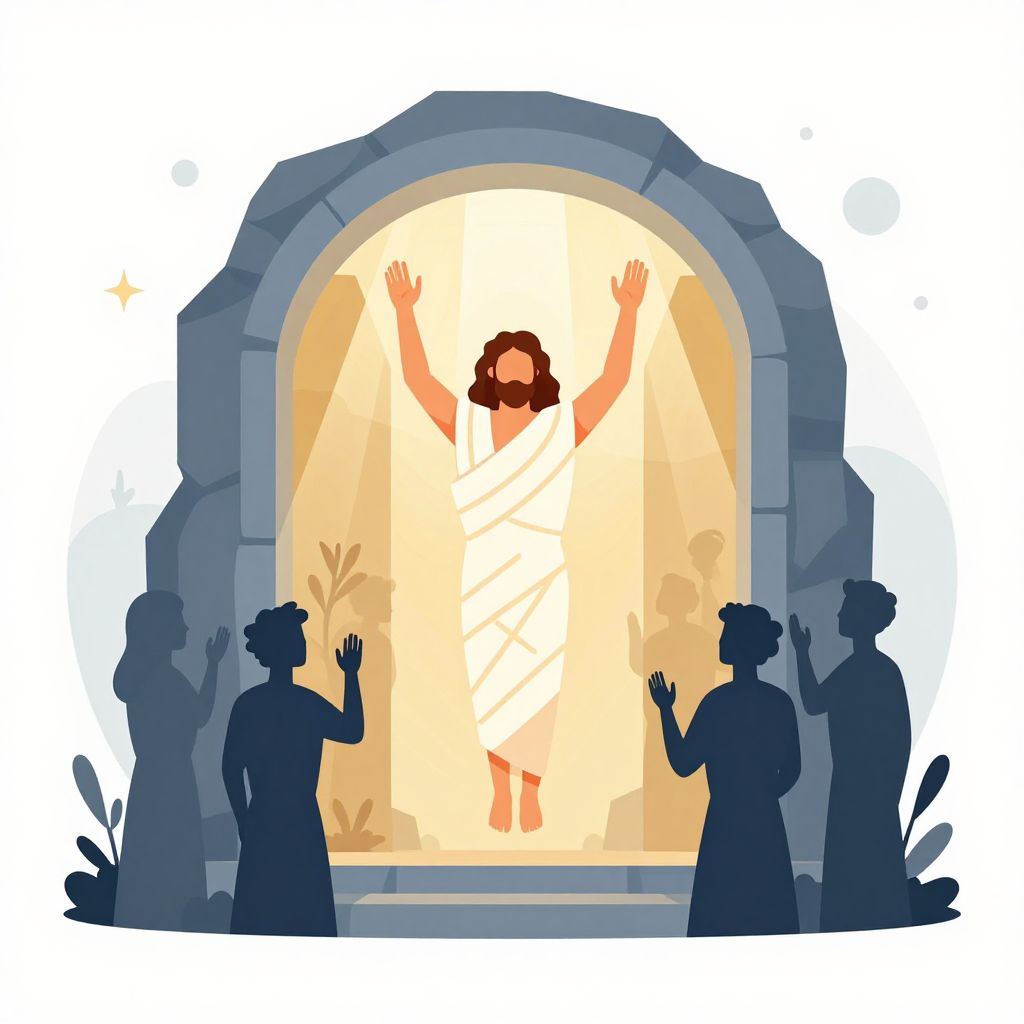
When people hear the name Lazarus, they often think of resurrection and miracles. But who was this man that Jesus called friend, and why does his story matter so deeply to our faith today?
Lazarus was more than just the subject of an amazing miracle. He was a beloved friend of Jesus whose life and death reveal profound truths about Christ’s power, love, and mission.
Who Was Lazarus in the Bible?
Lazarus was a man from Bethany who lived with his sisters Mary and Martha, and he was a close personal friend of Jesus Christ whom the Lord raised from the dead after four days in the tomb. This miracle demonstrated Jesus’s divine authority over death itself and foreshadowed His own resurrection.
The Family from Bethany
Lazarus lived in Bethany, a small village about two miles from Jerusalem, with his two sisters Mary and Martha. The Gospels paint a picture of a household that welcomed Jesus regularly and provided Him with friendship and hospitality.
Mary was the sister who anointed Jesus’s feet with expensive perfume and wiped them with her hair, an act of worship that Jesus defended when others criticized her extravagance. Martha was known for her service and hospitality, though she sometimes became anxious about her many preparations.
This family clearly held a special place in Jesus’s heart. John 11:5 tells us plainly: “Now Jesus loved Martha and her sister and Lazarus.”
A Friend of Jesus
The relationship between Jesus and Lazarus went beyond casual acquaintance. When Lazarus became ill, his sisters sent word to Jesus saying, “Lord, the one you love is sick” (John 11:3).
They didn’t even need to mention Lazarus by name. Jesus knew exactly who they meant because their friendship was that close and well-known.
The Death and Resurrection of Lazarus
The Illness and Delay
When Jesus received word that Lazarus was sick, He made a statement that puzzles many readers: “This sickness will not end in death. No, it is for God’s glory so that God’s Son may be glorified through it” (John 11:4).
Even more surprising, Jesus stayed where He was for two more days instead of rushing to Bethany. This wasn’t callousness or indifference – it was divine timing.
Jesus knew that Lazarus would die, and He knew that He would raise him. The delay served a greater purpose than immediate healing would have accomplished.
Jesus Arrives Too Late
By the time Jesus arrived in Bethany, Lazarus had been dead for four days. Both Martha and Mary expressed the same heartbroken sentiment: “Lord, if you had been here, my brother would not have died” (John 11:21, 32).
Their words reveal both faith and disappointment. They believed Jesus could have prevented the death, but they struggled to understand why He didn’t come sooner.
Have you ever felt like Jesus arrived too late in your situation? The story of Lazarus teaches us that God’s timing often looks different from our perspective.
Jesus Wept
One of the most human moments in all of Scripture occurs when Jesus saw Mary weeping and the mourners with her. “Jesus wept” (John 11:35) – the shortest verse in the Bible, but one of the most powerful.
Why did Jesus weep when He knew He was about to raise Lazarus from the dead? He wept because death is real, grief is real, and the pain of this broken world genuinely moves the heart of God.
The Miracle at the Tomb
At the tomb, Jesus prayed aloud to His Father, acknowledging that everything He did was for the glory of God and so that people would believe. Then He called out with a loud voice: “Lazarus, come out!” (John 11:43).
Lazarus emerged from the tomb, still wrapped in burial cloths. Jesus instructed the crowd to unwrap him and let him go free.
This wasn’t resuscitation – this was resurrection. Lazarus had been dead for four days in a climate where decomposition would have already begun, yet he came forth completely whole and alive.
The Spiritual Significance of Lazarus
A Preview of Jesus’s Own Resurrection
The raising of Lazarus served as a powerful preview of what Jesus would accomplish through His own death and resurrection. It demonstrated that Jesus truly had power over death and that His claims about eternal life were not empty promises.
This miracle occurred during the final week before Jesus’s crucifixion. It was a final, undeniable sign of His divine nature before He willingly laid down His life.
A Picture of Spiritual Resurrection
Beyond the physical miracle, Lazarus represents what happens to every believer spiritually. Paul writes in Ephesians 2:1 that we were “dead in transgressions and sins” before Christ made us alive.
Just as Lazarus could not raise himself from physical death, we cannot raise ourselves from spiritual death. Only Jesus has the power to call us from death to life.
Faith in the Face of Impossible Circumstances
Martha’s declaration of faith stands as one of the great statements of trust in Scripture. Even after her brother’s death, she affirmed: “Yes, Lord, I believe that you are the Messiah, the Son of God, who is to come into the world” (John 11:27).
Her faith didn’t depend on getting what she wanted when she wanted it. She believed in Jesus even when circumstances seemed to contradict His goodness and power.
The Aftermath and Consequences
Many Believed
The resurrection of Lazarus had exactly the effect Jesus intended. John 11:45 records: “Therefore many of the Jews who had come to visit Mary, and had seen what Jesus did, believed in him.”
This wasn’t a private miracle hidden away from public view. It happened in front of many witnesses who could testify to its reality.
The Religious Leaders Plot
The miracle also intensified opposition from the religious authorities. They recognized that such a public display of power would draw more people to Jesus, threatening their position and influence.
From that day on, they plotted to take Jesus’s life (John 11:53). Ironically, the very miracle that demonstrated Jesus’s power over death set in motion the events that would lead to His own death.
Lazarus as a Target
The chief priests even made plans to kill Lazarus as well, because his very existence served as ongoing proof of Jesus’s miraculous power. His life had become a living testimony that they could not refute or ignore (John 12:10-11).
Sometimes bearing witness to Jesus’s work in our lives makes us targets for opposition as well. Lazarus reminds us that following Christ sometimes comes with a cost.
What Lazarus Teaches Us Today
God’s Timing Is Perfect
Jesus’s delay in coming to Bethany teaches us that God’s timing rarely matches our expectations. What feels like delay to us may be divine preparation for something greater than we could imagine.
When you’re waiting for God to act in your situation, remember that His timing serves purposes you may not yet see. Sometimes God allows us to reach the end of human solutions so that His power becomes unmistakable.
Death Is Not the End
For believers, Lazarus represents the promise that physical death is not the final word. Jesus declared: “I am the resurrection and the life. The one who believes in me will live, even though they die” (John 11:25).
This promise transforms how we face mortality – both our own and that of our loved ones. Death becomes a defeated enemy rather than an ultimate threat.
Jesus Cares About Our Pain
The fact that Jesus wept reveals the depth of His compassion for human suffering. He doesn’t stand aloof from our pain, even when He knows how the story will end.
Your tears matter to Jesus. Your grief moves His heart, and He enters into your sorrow even when He’s working behind the scenes to bring restoration.
Lessons from a Resurrected Life
The Call to Come Forth
Jesus’s command “Lazarus, come out!” echoes the call He gives to every person trapped in spiritual death. He calls us by name to leave behind the grave clothes of our old life and walk in resurrection power.
What areas of your life still need to hear this call? Where might you be living as though you’re still dead when Christ has made you alive?
The Community of Unwrapping
Notice that Jesus told the community to unwrap Lazarus from his burial cloths. Resurrection is Jesus’s work, but the process of helping people live in freedom often involves the body of believers.
We’re called to help one another shed the grave clothes of old patterns, hurts, and limitations that keep us bound even after we’ve been made alive in Christ.
The story of Lazarus reveals Jesus as the Lord of life who cares deeply about His friends and demonstrates divine power over humanity’s greatest enemy. His resurrection wasn’t just a miracle – it was a promise and a preview of the victory available to all who trust in Christ. When life feels hopeless and death seems to have the final word, remember Lazarus and the One who called him forth from the tomb. The same Jesus who said “Lazarus, come out!” is calling your name today. Will you answer His call to step out of death and into the abundant life He offers?
Continue exploring the rich stories and teachings of Scripture by discovering more about what the Bible says on various topics, or visit our main site for additional faith-building resources and biblical insights.