
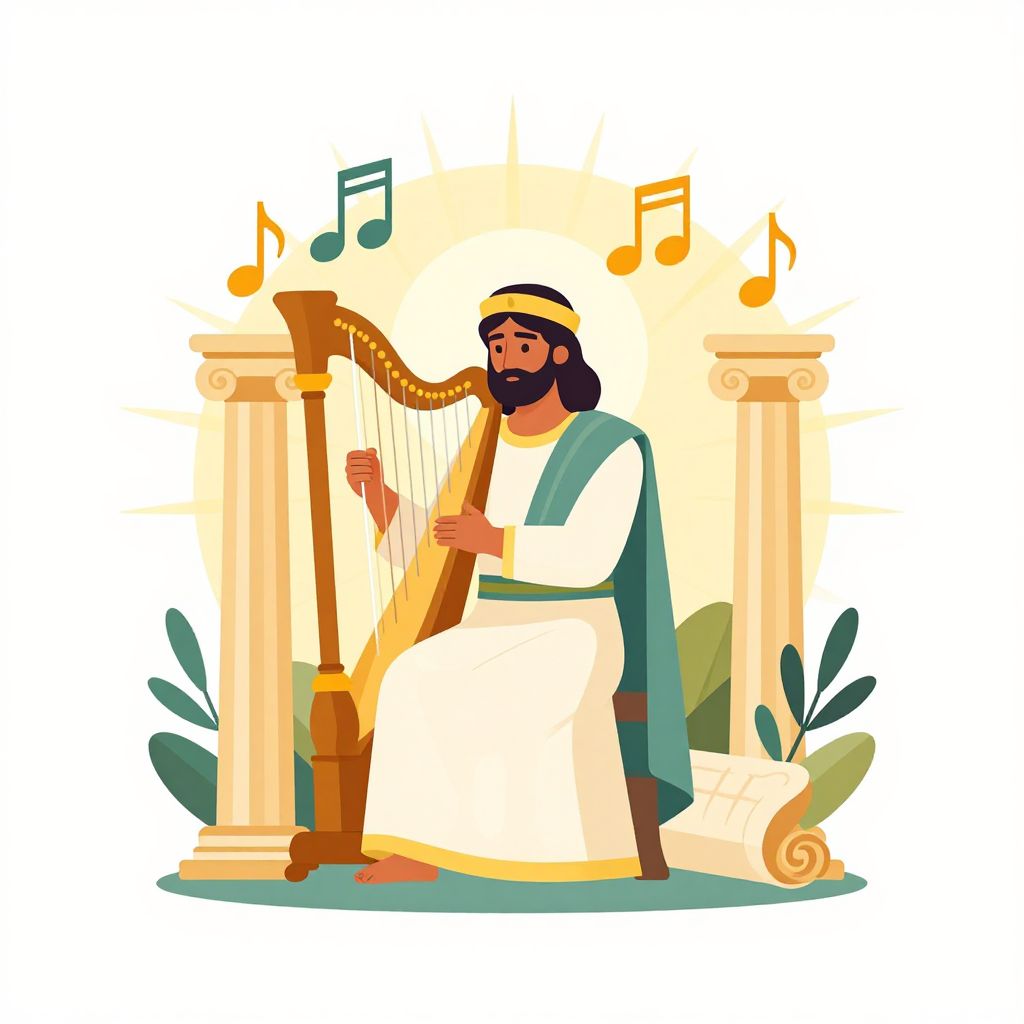
When you read through the Psalms, you encounter names like David and Solomon, but one name appears again and again that many believers overlook: Asaph. This gifted worship leader and prophet authored twelve psalms and established a musical legacy that lasted for generations.
Understanding Asaph’s life and ministry reveals how God uses faithful servants to shape worship, preserve truth, and guide His people through both triumph and tragedy.
Who Was Asaph in the Bible?
Asaph was a Levite appointed by King David as one of the chief musicians for temple worship, serving as a worship leader, prophet, and psalmist who authored twelve psalms and established a musical dynasty that served in the temple for centuries.
A Levite Called to Music Ministry
Asaph belonged to the tribe of Levi, specifically descended from Gershon, one of Levi’s three sons. First Chronicles 6:39 identifies him as “Asaph son of Berekiah, the son of Shimea,” placing him in the priestly lineage designated for temple service.
God designed the Levitical system with specific roles and responsibilities. While some Levites carried the ark and others maintained the tabernacle, Asaph received a calling that combined musical skill with spiritual leadership.
David’s Chief Musician
King David appointed Asaph as one of three chief musicians responsible for worship in the tabernacle. The other two were Heman and Ethan (also called Jeduthun), but Asaph held the primary position, leading with cymbals and directing the musical worship.
This appointment wasn’t based on political connections or family influence. First Chronicles 15:16-17 shows that David specifically chose these men for their musical abilities and spiritual maturity, recognizing that leading worship required both skill and heart preparation.
What Did Asaph Do in Temple Worship?
Leading Musical Worship
Asaph directed the instrumental and vocal worship that accompanied the daily sacrifices and special celebrations in David’s tabernacle. He played cymbals and likely conducted the other musicians and singers, creating an atmosphere of reverence and joy before the Lord.
The Hebrew word for the type of cymbals Asaph played suggests they were bronze instruments that produced clear, ringing tones. These weren’t just keeping time—they were leading the congregation’s hearts toward God through carefully crafted musical worship.
Prophetic Ministry Through Song
Second Chronicles 29:30 calls Asaph a “seer,” the Hebrew term for prophet. This means his musical ministry carried prophetic weight, delivering God’s messages through inspired songs and psalms.
Asaph didn’t just lead worship—he received divine revelation and communicated God’s truth through music. This combination of musical gifting and prophetic insight made him uniquely effective in guiding Israel’s spiritual life.
Which Psalms Did Asaph Write?
The Twelve Psalms of Asaph
Asaph authored twelve psalms that bear his name: Psalms 50 and 73-83. These psalms reveal his heart for God’s justice, his concern for Israel’s spiritual condition, and his deep understanding of God’s covenant faithfulness.
Each psalm reflects different aspects of his ministry and Israel’s history:
- Psalm 50: God’s call for authentic worship over empty ritual
- Psalms 73-77: Wrestling with suffering and God’s apparent silence
- Psalms 78-83: Historical reflections and urgent prayers for national deliverance
Themes in Asaph’s Psalms
Asaph wrote with raw honesty about spiritual struggles while maintaining unwavering faith in God’s character. Psalm 73:2-3 admits, “But as for me, my feet had almost slipped; I had nearly lost my foothold. For I envied the arrogant when I saw the prosperity of the wicked.”
Yet he always returns to God’s sovereignty and faithfulness. His psalms teach us that authentic worship includes bringing our doubts and disappointments to God rather than pretending everything feels fine.
How Did Asaph’s Family Continue His Legacy?
The Sons of Asaph
Asaph’s descendants continued serving as temple musicians for generations, forming what Scripture calls “the sons of Asaph.” Second Chronicles 20:14 shows that even centuries later, during King Jehoshaphat’s reign, the Spirit of the Lord came upon Jahaziel, one of Asaph’s descendants, to deliver a prophetic message through music.
This wasn’t just a family business—it was a spiritual calling passed down through faithful training and godly example. The sons of Asaph maintained both the musical excellence and prophetic sensitivity that characterized their ancestor.
Worship Leadership After the Exile
When the Jewish exiles returned from Babylon, 128 descendants of Asaph came back to restore temple worship (Ezra 2:41). Nehemiah 7:44 confirms their continued role in leading the rebuilt temple’s musical ministry.
This demonstrates how God preserves His purposes through faithful families. The musical and spiritual foundation Asaph established endured through Israel’s darkest period and emerged ready to serve again.
What Can We Learn from Asaph’s Life?
Excellence in Service
Asaph developed his musical abilities to serve God’s people excellently, not to showcase his own talent. His skill opened doors for ministry, but his heart kept the focus on God’s glory rather than personal recognition.
Do you approach your gifts—whether musical, artistic, intellectual, or practical—as opportunities to serve others and honor God? Excellence in our abilities becomes worship when we offer them for purposes greater than ourselves.
Honest Wrestling with Hard Questions
Asaph’s psalms model how to bring our deepest struggles directly to God rather than pretending faith means never having questions. Psalm 77:7-9 asks difficult questions: “Will the Lord reject forever? Will he never show his favor again? Has his unfailing love vanished forever?”
Yet he works through these struggles in God’s presence, ultimately affirming God’s faithfulness. This teaches us that mature faith includes space for honest doubt and patient waiting for God’s perspective.
Building Lasting Spiritual Legacy
Asaph invested in training others to continue the ministry God gave him, creating a spiritual legacy that outlasted his own lifetime. His descendants served faithfully because he modeled both skill and character worth emulating.
What kind of legacy will your faithfulness create? The people you influence and train today may carry forward the spiritual impact you begin, multiplying your service far beyond what you can accomplish alone.
Why Does Asaph Matter for Christians Today?
Worship That Engages Heart and Mind
Asaph combined musical excellence with theological depth, creating worship that stirred emotions while teaching truth. His psalms demonstrate that effective worship engages both our hearts and our minds with God’s character and works.
Contemporary Christian worship benefits from following Asaph’s example—using skillful artistry to communicate substantial biblical truth rather than choosing between emotional impact and doctrinal content.
Ministry Through Creative Gifts
God used Asaph’s musical and poetic abilities for prophetic ministry, showing that creative gifts can carry significant spiritual impact. Artists, musicians, writers, and other creative people serve vital roles in communicating God’s truth and leading others in worship.
If you possess creative abilities, consider how God might use them for His kingdom purposes. The church needs gifted believers who can present biblical truth through compelling artistic expression.
Faithfulness Through Changing Circumstances
Asaph’s ministry spanned different seasons—from David’s victorious reign through times of national crisis reflected in his later psalms. He remained faithful to his calling regardless of external circumstances, trusting God’s purposes even when situations looked discouraging.
Your ministry calling may require similar persistence through changing seasons. The gifts and character God develops in you during good times prepare you to serve effectively when challenges come.
Asaph’s life demonstrates that faithful service to God creates impact far beyond what we can see in our own lifetime. His worship leadership shaped Israel’s spiritual life, his psalms continue encouraging believers today, and his family legacy established patterns of ministry that endured for generations. Consider how God might use your faithful service—whether in music, teaching, service, or any other area—to influence others for His kingdom both now and in the future.
Discover more insights about biblical figures and their lasting impact on faith and worship through our collection of faith-based articles and studies that examine the lives of those who served God faithfully throughout Scripture.