
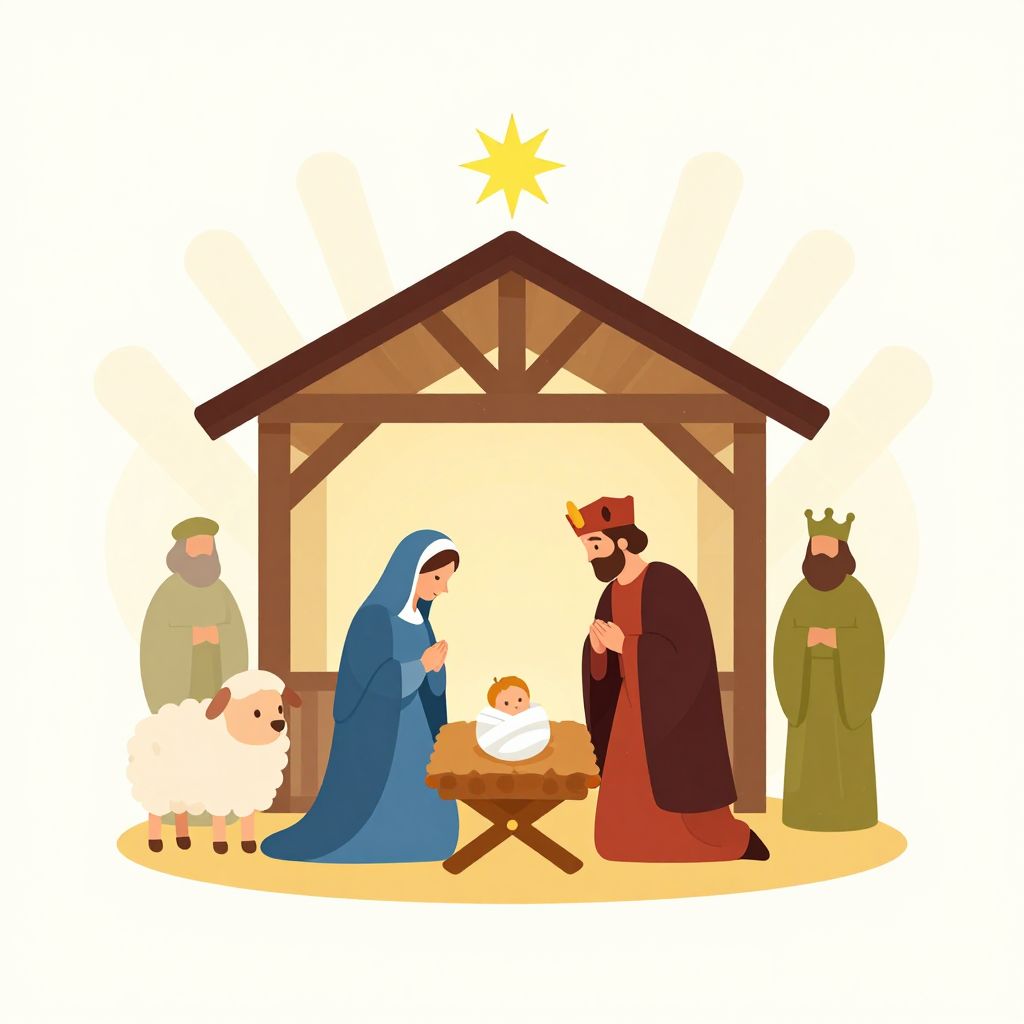
Many Christians can recite pieces of the Christmas story, but when someone asks exactly where to find it in Scripture, they pause. You know about Mary, Joseph, the manger, and the shepherds, but pinpointing the specific chapters feels surprisingly difficult.
The Christmas story appears primarily in two Gospel accounts: Matthew chapters 1-2 and Luke chapters 1-2. Each Gospel writer presents unique details that together form the complete narrative of Christ’s birth, from the angel’s announcement to the flight into Egypt.
Where Is the Christmas Story Found in the Bible?
The biblical Christmas story spans Matthew 1-2 and Luke 1-2, with each Gospel providing distinct but complementary accounts of Jesus’ birth. Matthew focuses on Joseph’s perspective and the visit of the wise men, while Luke emphasizes Mary’s experience and the shepherds’ encounter with angels.
Matthew’s Account: The Royal Lineage and Joseph’s Dream
Matthew opens his Gospel with Jesus’ genealogy, tracing His lineage back to Abraham and King David (Matthew 1:1-17). This genealogy establishes Jesus’ legal right to David’s throne through Joseph’s family line.
The narrative shifts to Joseph’s dilemma when he discovers Mary’s pregnancy (Matthew 1:18-19). Joseph, described as a righteous man, plans to divorce Mary quietly rather than expose her to public shame.
God intervenes through an angel who appears to Joseph in a dream, explaining that “what is conceived in her is from the Holy Spirit” (Matthew 1:20, NIV). The angel instructs Joseph to name the child Jesus, meaning “the Lord saves,” because He will save His people from their sins.
Matthew connects this miraculous birth to Isaiah’s prophecy: “The virgin will conceive and give birth to a son, and they will call him Immanuel” (Matthew 1:23, NIV). Immanuel means “God with us,” revealing the profound truth that God became flesh to dwell among humanity.
Luke’s Account: Mary’s Faith and the Shepherds’ Worship
Luke provides the most detailed Christmas narrative, beginning with the angel Gabriel’s announcement to Mary (Luke 1:26-38). Gabriel greets Mary as “highly favored” and announces she will conceive Jesus through the Holy Spirit’s power.
Mary’s response demonstrates remarkable faith: “I am the Lord’s servant. May your word to me be fulfilled” (Luke 1:38, NIV). Her submission to God’s plan, despite the social risks, reveals the heart of worship.
Luke records Mary’s visit to her relative Elizabeth, who was miraculously pregnant with John the Baptist (Luke 1:39-45). Elizabeth’s baby leaps in her womb when Mary arrives, and Elizabeth declares Mary “blessed among women.”
This encounter prompts Mary’s magnificent song of praise (Luke 1:46-55), often called the Magnificat. Mary exalts God for choosing the lowly and fulfilling His promises to Abraham’s descendants.
The Birth Narrative in Luke Chapter 2
The Journey to Bethlehem
Caesar Augustus’ census decree forces Joseph and Mary to travel from Nazareth to Bethlehem (Luke 2:1-5). God uses this Roman emperor’s political decision to fulfill Micah’s prophecy that the Messiah would be born in Bethlehem (Micah 5:2).
The timing seems inconvenient from human perspective, but God orchestrates every detail to accomplish His redemptive plan. Mary makes this difficult journey while heavily pregnant, demonstrating continued obedience to God’s will.
The Manger Birth
Luke records simply that “there was no guest room available for them” (Luke 2:7, NIV). Mary gives birth to her firstborn son, wraps Him in cloths, and places Him in a manger because no proper lodging exists.
The Son of God enters the world in the humblest circumstances possible. The manger symbolizes how Jesus identifies with the poor and marginalized from His very first breath.
The Angels and Shepherds
An angel of the Lord appears to shepherds keeping watch over their flocks at night (Luke 2:8-20). The glory of the Lord shines around them, causing great fear among these humble workers.
The angel announces: “Today in the town of David a Savior has been born to you; he is the Messiah, the Lord” (Luke 2:11, NIV). This proclamation contains three powerful titles: Savior, Messiah (Christ), and Lord.
Suddenly a great company of the heavenly host appears, praising God and saying, “Glory to God in the highest heaven, and on earth peace to those on whom his favor rests” (Luke 2:14, NIV). Heaven breaks into song over Jesus’ birth.
The shepherds hurry to Bethlehem and find everything exactly as the angel described. They spread the word about what they experienced, and all who heard it were amazed at what the shepherds told them (Luke 2:18, NIV).
Matthew’s Unique Elements: The Wise Men and Herod’s Rage
The Visit of the Magi
Matthew alone records the visit of wise men from the east who follow a star to find Jesus (Matthew 2:1-12). These Gentile scholars travel great distances to worship the newborn King of the Jews.
Their question disturbs King Herod: “Where is the one who has been born king of the Jews? We saw his star when it rose and have come to worship him” (Matthew 2:2, NIV). Herod assembles the chief priests and teachers to locate the Christ’s birthplace.
The wise men present gifts of gold, frankincense, and myrrh (Matthew 2:11). Gold befits a king, frankincense honors deity, and myrrh foreshadows Jesus’ death and burial.
God warns the wise men in a dream not to return to Herod, so they depart for their country by another route (Matthew 2:12). Their obedience protects the Christ child from Herod’s murderous intentions.
The Flight to Egypt
An angel appears to Joseph in another dream, warning him to flee to Egypt because Herod plans to kill Jesus (Matthew 2:13-15). Joseph immediately takes Mary and Jesus and escapes under cover of darkness.
Matthew sees this flight fulfilling Hosea’s prophecy: “Out of Egypt I called my son” (Matthew 2:15, NIV). Just as God called Israel out of Egypt, He calls His Son from that same land.
Herod’s rage leads to the massacre of all male children in Bethlehem two years old and under (Matthew 2:16-18). This horrific act fulfills Jeremiah’s prophecy about Rachel weeping for her children.
Why Two Different Accounts Matter
Complementary Perspectives
Matthew and Luke don’t contradict each other; they complement each other by highlighting different aspects of the same events. Matthew emphasizes Jesus’ royal lineage and fulfillment of Old Testament prophecies.
Luke focuses on the human drama and emotional responses of Mary, Elizabeth, and the shepherds. Together, these accounts reveal both the cosmic significance and intimate humanity of Jesus’ birth.
Different Audiences
Matthew writes primarily for Jewish readers, demonstrating how Jesus fulfills Messianic prophecies. He traces Jesus’ genealogy through David and repeatedly shows prophetic fulfillment.
Luke addresses Gentile audiences, emphasizing God’s grace reaching all people regardless of social status. Shepherds, considered lowly in society, receive the first angelic announcement.
Other Biblical References to Jesus’ Birth
John’s Theological Perspective
John’s Gospel doesn’t narrate the birth story but declares its theological meaning: “The Word became flesh and made his dwelling among us” (John 1:14, NIV). This incarnation allows humanity to see God’s glory.
John emphasizes that Jesus existed from eternity and became human without ceasing to be divine. The Christmas story represents God’s ultimate revelation of Himself.
Paul’s References
Paul alludes to Jesus’ birth in several passages, most notably: “But when the set time had fully come, God sent his Son, born of a woman, born under the law” (Galatians 4:4, NIV). This verse emphasizes God’s perfect timing.
Paul also writes that Jesus “made himself nothing by taking the very nature of a servant, being made in human likeness” (Philippians 2:7, NIV). The incarnation demonstrates ultimate humility.
What the Christmas Story Teaches Us
God’s Faithfulness to His Promises
Every detail of Jesus’ birth fulfills specific Old Testament prophecies made centuries earlier. God keeps His word even when circumstances seem impossible or timing appears wrong.
The genealogies in Matthew and Luke prove God works through flawed people and difficult circumstances to accomplish His perfect plan. Both family lines contain sinners whom God redeemed and used.
The Importance of Ordinary People
God chooses a young virgin from Nazareth, a righteous carpenter, and working shepherds to play crucial roles in salvation history. He still works through ordinary people who trust Him completely.
Mary’s faith, Joseph’s obedience, and the shepherds’ witness demonstrate how God values humble hearts over worldly status. Are you available for God to use you in His plans?
The Reality of Opposition
Herod’s violent response to Jesus’ birth foreshadows the opposition Jesus will face throughout His ministry. The world often rejects God’s truth because it threatens human power and pride.
Yet God protects His purposes and people even in dangerous circumstances. The wise men’s worship and the shepherds’ praise show that many hearts remain open to receive Christ.
The Christmas story found in Matthew 1-2 and Luke 1-2 reveals God’s incredible love and perfect timing in sending His Son. These accounts demonstrate that God works through ordinary people, difficult circumstances, and even political upheaval to accomplish His redemptive purposes. As you read these familiar passages again, ask God to deepen your wonder at the miracle of the incarnation and your commitment to worship Jesus as Lord.
Continue exploring what Scripture teaches about faith and God’s character through biblical resources that ground you in truth. Discover more about what the Bible says on topics that matter to your spiritual growth and daily walk with Christ.