
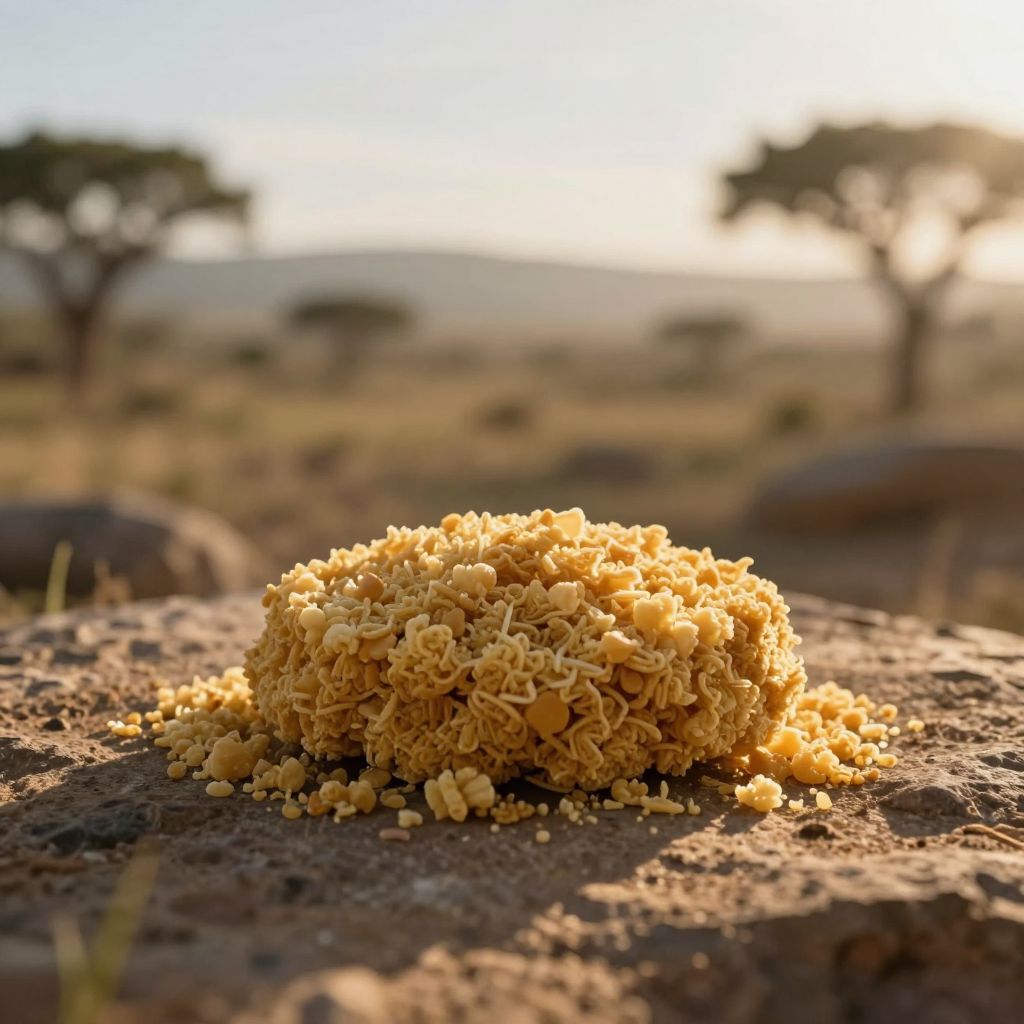
When most Christians read about manna in the Bible, they picture something mysterious and supernatural falling from the sky. That’s not wrong, but it’s incomplete. Manna was God’s daily provision of bread for the Israelites during their forty years in the wilderness, and it reveals something crucial about how God meets our needs, tests our trust, and prepares us for dependence on Him. Understanding manna changes how you view provision, obedience, and the nature of God’s care.
What Is Manna in the Bible?
Manna was a supernatural food that God provided daily to the Israelites in the wilderness after their exodus from Egypt. It appeared each morning as thin flakes on the ground, tasted like wafers made with honey, and sustained an entire nation for forty years in a barren desert where no crops could grow.
The First Appearance of Manna
God introduced manna in Exodus 16, just weeks after Israel crossed the Red Sea. The people complained about hunger, romanticizing their former slavery in Egypt because at least they had food there.
God responded not with rebuke but with bread from heaven. He told Moses that He would rain down food from the sky so the people could gather it daily.
This wasn’t just about filling stomachs. God explicitly stated He was testing them to see whether they would follow His instructions (Exodus 16:4).
What Manna Looked Like and Tasted Like
The Bible describes manna with surprising detail. Exodus 16:14 says it was “thin flakes like frost on the ground,” and the Israelites called it “manna,” which literally means “What is it?”
Here’s what Scripture tells us about manna’s characteristics:
- It appeared white and resembled coriander seed
- It tasted like wafers made with honey (Exodus 16:31)
- It could be ground, boiled, or baked into cakes
- When cooked, it tasted like something made with olive oil (Numbers 11:8)
- It melted when the sun grew hot
This wasn’t bland survival food. God gave them something with flavor, versatility, and enough substance to sustain millions of people daily.
The Spiritual Rules Surrounding Manna
God didn’t just drop food from the sky and leave it at that. He attached specific instructions to manna that tested obedience and taught spiritual lessons about trust.
Gather Only What You Need Each Day
God commanded the Israelites to gather only enough manna for one day (Exodus 16:16-18). No stockpiling, no hoarding, no building up reserves for tomorrow.
Some people ignored this command and kept extra manna overnight. By morning, it bred worms and stank.
God was teaching them that provision comes from His hand each day, not from their ability to secure their own future. He wanted daily dependence, not self-sufficiency.
The Sabbath Exception
On the sixth day of each week, God told the people to gather twice as much manna. This double portion would not spoil overnight because the seventh day was a Sabbath, a day of rest when no manna would fall.
This wasn’t arbitrary. God was building Sabbath observance into the rhythm of their survival, showing that rest is part of His design, not a luxury they could afford only when life got easier.
The manna that spoiled on other days stayed fresh on the Sabbath. God proved that obedience to His rhythm brings blessing, not scarcity.
What Happened to Those Who Disobeyed
Some Israelites went out on the Sabbath looking for manna anyway. They found nothing.
God asked Moses, “How long will you refuse to keep my commands and my instructions?” (Exodus 16:28). The test wasn’t about bread but about trust and obedience.
Manna and the Character of God
Manna reveals specific truths about who God is and how He relates to His people. These aren’t abstract theological ideas but realities you can apply to your own life today.
God Provides Before You Even Ask
The Israelites complained about hunger, but God had already planned to give them manna. He told Moses about the provision before the people even finished grumbling.
This shows that God is not reactive. He doesn’t scramble to meet needs He didn’t see coming.
He knows what you need before you ask, and His provision is already in motion even when you can’t see it yet.
God Tests Through Provision, Not Just Through Lack
Most people assume God tests us by withholding things. But Exodus 16:4 makes it clear that God tested Israel through abundance, not scarcity.
Would they obey His instructions when food was plentiful? Would they trust Him enough not to hoard?
This flips the script. Sometimes the test isn’t whether you’ll trust God when you have nothing but whether you’ll obey Him when you have enough.
God’s Provision Requires Daily Dependence
Manna couldn’t be stored. It forced the Israelites to return to God every single morning.
This wasn’t inefficiency. It was intimacy.
God wanted His people to wake up each day and recognize that their survival depended entirely on Him. He didn’t want them to gather a month’s worth of food and forget about Him for weeks.
Have you ever noticed that Jesus taught us to pray, “Give us this day our daily bread”? He wasn’t being poetic—He was pointing back to manna.
Manna and Jesus Christ
Manna is not just an Old Testament curiosity. Jesus directly connects Himself to manna in the Gospel of John, calling Himself the true bread from heaven.
Jesus as the Bread of Life
In John 6, the crowds followed Jesus because He had just multiplied loaves and fish. They wanted more free food, so Jesus confronted them with a deeper truth.
He said, “Your ancestors ate the manna in the wilderness, yet they died. But here is the bread that comes down from heaven, which anyone may eat and not die” (John 6:49-50).
Jesus wasn’t dismissing manna. He was fulfilling it.
Manna sustained physical life temporarily. Jesus sustains spiritual life eternally.
Manna Pointed Forward to Christ
Manna was always a shadow, a preview of something greater. It kept bodies alive in the desert, but it couldn’t save souls.
Jesus declared, “I am the bread of life. Whoever comes to me will never go hungry, and whoever believes in me will never be thirsty” (John 6:35).
The Israelites had to gather manna every day. But when you come to Jesus, you receive Him once and are filled forever.
The manna in the wilderness was temporary provision for a temporary journey. Jesus is eternal provision for eternal life.
How This Challenges Modern Believers
It’s easy to treat Jesus like manna—something you gather a little of when you feel spiritually hungry. But He offers Himself as the permanent solution to the deepest hunger of your soul.
You don’t need to return to Him each day to get saved again. But you do need to depend on Him daily to live the life He’s called you to.
Practical Lessons From Manna for Today
Manna isn’t just ancient history. The principles embedded in this story apply directly to how you live as a believer right now.
Trust God With Today, Not Just Tomorrow
The Israelites couldn’t gather manna for next week. God wanted them to trust Him one day at a time.
You do the same thing when you worry about next month’s bills, next year’s job security, or whether you’ll have enough in retirement. God hasn’t promised to show you the whole plan—He’s promised to meet your needs as they come.
What would change in your life if you actually believed God would provide for tomorrow the way He provided today?
Obedience Proves Trust
Gathering only one day’s worth of manna was inconvenient. It required the Israelites to believe God’s promise that more would come tomorrow.
Obedience always costs something. It costs control, predictability, the illusion of self-sufficiency.
But disobedience cost them too. The manna they hoarded turned rotten.
What are you holding onto that God has told you to release? What are you stockpiling because you don’t really trust Him to provide again?
Rest Is Part of God’s Provision
God didn’t send manna on the Sabbath, and He provided double the day before so His people could rest. He built rest into their survival, not as an afterthought but as a command.
Rest isn’t laziness. It’s obedience.
If you’re burning out because you never stop, you’re not trusting God’s rhythm. You’re trying to gather manna on the Sabbath, and there’s nothing there.
God’s Provision Often Looks Different Than You Expect
The Israelites had never seen manna before. They literally called it “What is it?” because they didn’t recognize it.
Sometimes God’s provision doesn’t look like what you prayed for. It doesn’t match your expectations, your timeline, or your preferences.
But it’s enough. It’s exactly what you need.
The Jar of Manna in the Ark of the Covenant
God commanded Moses to preserve a jar of manna and place it in the Ark of the Covenant. This wasn’t for practical purposes but for remembrance (Exodus 16:32-34).
God wanted future generations to see physical proof that He had sustained His people in the wilderness. The jar of manna sat inside the Ark alongside the stone tablets of the Law and Aaron’s staff that budded.
All three items pointed to the same truth: God is faithful, God provides, and God keeps His promises even when His people don’t deserve it.
Hebrews 9:4 confirms that the golden jar of manna was kept in the Ark, a perpetual reminder that God’s provision is as central to His character as His holiness and His covenant faithfulness.
When the Manna Stopped
Manna fell every day for forty years. Then, the day after Israel ate the produce of the Promised Land, the manna stopped (Joshua 5:12).
God didn’t stop providing. He just changed the method.
In the wilderness, they needed supernatural bread because nothing grew there. In the Promised Land, He gave them fields, vineyards, and crops they didn’t plant.
The provision continued, but the form shifted. God meets you where you are with what you need.
Sometimes that looks like manna from heaven. Sometimes it looks like fruit from a tree you didn’t sow.
What Manna Teaches You About Walking With God
Manna was never just about food. It was about forming a people who knew how to depend on God, obey His voice, and trust His timing.
God could have given them a year’s supply of bread all at once. But He chose daily provision because He wanted daily relationship.
He could have let them gather as much as they wanted and manage it themselves. But He set limits because He wanted to teach them that His way is better than their way, even when it doesn’t make sense.
The manna reveals a God who is generous, intentional, patient, and deeply committed to shaping His people through the way He provides for them.
Every flake of manna that fell in the wilderness whispered the same truth: God is enough, and He will be enough again tomorrow.
When Jesus called Himself the Bread of Life, He wasn’t introducing a new concept. He was fulfilling an old promise that started in the desert and ends at the cross.
Manna sustained life. Jesus gives life. Manna fed the body. Jesus feeds the soul. Manna was temporary. Jesus is eternal.
If you’ve been trying to live on yesterday’s provision, go back to the source. If you’ve been hoarding because you’re afraid there won’t be enough tomorrow, let it go.
God hasn’t changed. He still provides what you need, when you need it, in the way that draws you closest to Him.
Trust Him with today. He’s already prepared tomorrow.
If you found this exploration of manna helpful and want to continue growing in your understanding of Scripture and Christian living, you’ll find more biblical teaching and faith-building content at The Bible Christian, where timeless truths meet everyday life.