
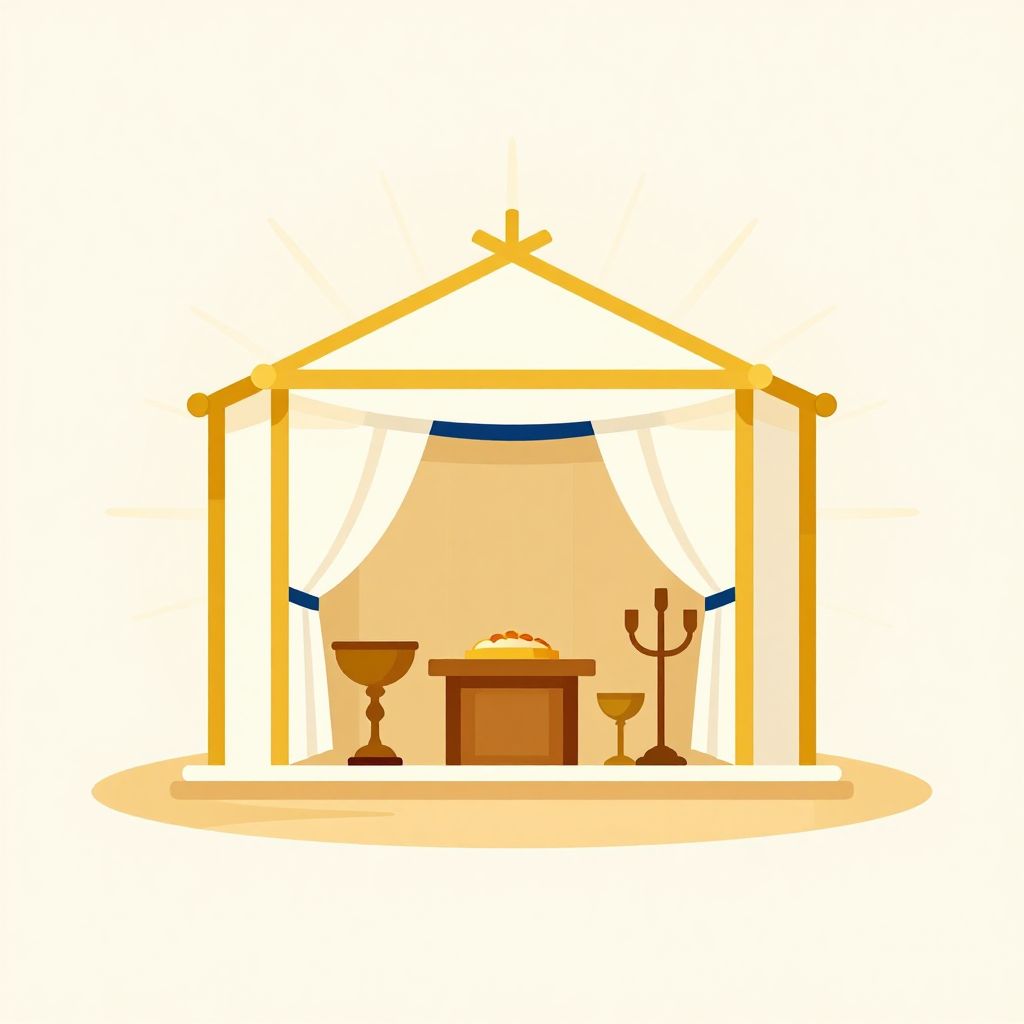
The tabernacle stands as one of the most detailed structures God ever commanded His people to build, yet many believers today barely understand what it was or why it mattered. This portable sanctuary carried profound meaning for ancient Israel and points forward to truths about God’s presence that still shape how we worship and approach Him today.
God gave Moses precise instructions for the tabernacle because it represented something far greater than a tent. It was where heaven touched earth, where a holy God dwelt among sinful people, and where the entire plan of redemption played out in symbol and shadow.
What Is the Tabernacle in the Bible?
The tabernacle was a portable sanctuary God commanded Israel to build in the wilderness, serving as His dwelling place among His people and the center of their worship. Described in detailed instructions spanning multiple chapters in Exodus, this tent-like structure housed the Ark of the Covenant and provided the location where priests offered sacrifices and interceded for the nation.
A Dwelling Place for God’s Presence
God told Moses, “Have them make a sanctuary for me, and I will dwell among them” (Exodus 25:8, NIV). This wasn’t just religious architecture.
The tabernacle solved a profound problem: how could a holy God live among people who constantly broke His laws? The answer involved careful design, specific materials, and a system of sacrifices that kept the relationship intact.
Portable by Design
Unlike the temple Solomon would later build, the tabernacle moved with Israel through the wilderness. God designed it to disassemble, transport, and reassemble wherever His people camped.
This mobility mattered because Israel was on the move for forty years. God’s presence wasn’t tied to a location but to a people, and the tabernacle traveled with them through every desert mile.
The Structure and Layout of the Tabernacle
God gave Moses exact specifications for every measurement, material, and piece of furniture. Nothing about the tabernacle happened by accident or personal preference.
The structure consisted of three main areas, each with increasing levels of holiness and restricted access. Understanding this layout helps us grasp how God was teaching Israel about approaching Him.
The Outer Court
The outer court formed a rectangular enclosure measuring 150 feet by 75 feet, surrounded by linen curtains hung on bronze posts. This space was visible and accessible to all Israelites who came to worship.
Two key items stood in this court: the bronze altar where animals were sacrificed, and the bronze basin where priests washed before serving. Both pointed to foundational truths about cleansing and atonement that every worshiper needed to understand.
The Holy Place
Moving through the entrance of the tabernacle itself, priests entered the Holy Place, a room approximately 30 feet long and 15 feet wide. Only priests could enter this space to perform daily duties.
This room contained three pieces of furniture: the table of showbread on the north side, the golden lampstand on the south side, and the altar of incense directly before the veil. Each item represented aspects of relationship with God that required regular attention and care.
The Most Holy Place
The Most Holy Place, or Holy of Holies, was a perfect cube measuring 15 feet in every direction. A thick veil separated it from the Holy Place, and only the high priest could enter once per year on the Day of Atonement.
Inside this sacred space sat the Ark of the Covenant, a gold-covered chest containing the stone tablets of the Ten Commandments, a jar of manna, and Aaron’s staff that budded. The mercy seat formed the lid of the ark, where God’s presence dwelt between two golden cherubim.
The Materials God Required
God specified exact materials for constructing the tabernacle, and the people brought offerings willingly. The list reveals something about God’s character and what He values in worship.
The materials fell into three categories that teach us how worship works. Examining what God asked for shows us what matters to Him when His people approach.
Precious Metals and Valuable Materials
God requested gold, silver, and bronze in specific amounts for different parts of the tabernacle. Gold covered the furniture in the Holy Place and Most Holy Place, while bronze was used in the outer court.
The progression from bronze to silver to gold as you moved inward wasn’t random. It reflected increasing degrees of holiness and the costliness of approaching God’s immediate presence.
Fine Fabrics and Colors
The tabernacle featured fine linen in blue, purple, and scarlet, along with goat hair, ram skins dyed red, and fine leather. These colors and materials created beauty but also communicated theological truths.
Blue represented heaven, purple signified royalty, scarlet pointed to sacrifice and blood, and white linen symbolized purity. Every color choice preached a sermon about who God is and what He requires.
Offerings From Willing Hearts
God told Moses to receive offerings “from everyone whose heart prompts them to give” (Exodus 25:2, NIV). He wanted voluntary worship, not reluctant compliance.
The Israelites responded so generously that Moses eventually had to tell them to stop bringing materials. What does that say about hearts fully engaged with God’s purposes?
The Furniture and Its Meaning
Each piece of furniture in the tabernacle served a specific function and pointed to deeper spiritual realities. God doesn’t waste symbols or miss opportunities to teach His people about redemption.
Walking through the tabernacle from the entrance to the Most Holy Place takes you on a journey that mirrors how sinners approach a holy God. The furniture marks the path.
The Bronze Altar
The bronze altar stood immediately inside the gate, impossible to miss and unavoidable for anyone entering. This is where priests offered burnt offerings, grain offerings, and sin offerings daily.
Blood flowed constantly at this altar because sin requires a life to atone for it. No one bypassed this altar to get closer to God, a truth that points directly to the cross where Jesus became our once-for-all sacrifice.
The Bronze Basin
Between the altar and the tabernacle entrance stood the bronze basin filled with water. Priests washed their hands and feet here before entering the Holy Place or offering sacrifices.
This washing wasn’t optional; God commanded it on pain of death (Exodus 30:20-21). The lesson? Cleansing must follow sacrifice before service begins, reminding us that holiness matters in God’s presence.
The Golden Lampstand
Inside the Holy Place, the golden lampstand (or menorah) provided the only light. Made of pure gold and beaten into shape, it held seven lamps that burned continually.
Priests tended these lamps daily, ensuring the light never went out. The symbolism speaks to Christ as the light of the world and to believers as lights reflecting His glory in a dark place.
The Table of Showbread
Twelve loaves of bread sat on a golden table, representing the twelve tribes of Israel constantly before God’s presence. Priests replaced the bread weekly and ate the old loaves as a holy meal.
This bread symbolized God’s provision and the communion He desires with His people. Jesus later declared Himself the bread of life, fulfilling what the showbread foreshadowed.
The Altar of Incense
The golden altar of incense stood directly before the veil separating the Holy Place from the Most Holy Place. Priests burned fragrant incense here every morning and evening, and Scripture connects incense with prayer (Psalm 141:2, Revelation 5:8).
The smoke rising toward heaven pictured prayers ascending to God. The location of this altar, closest to God’s presence yet still outside the veil, showed how prayer draws us near to Him.
The Ark of the Covenant
The ark was the most sacred object in Israel’s possession, a gold-covered chest topped by the mercy seat where God’s glory appeared. It contained physical reminders of God’s law, provision, and chosen leadership.
Once a year, the high priest sprinkled blood on the mercy seat to atone for the nation’s sins. This act pictured how God’s justice and mercy meet at the place of blood sacrifice, a truth fully realized in Jesus Christ.
The Priesthood and Tabernacle Service
God appointed Aaron and his sons to serve as priests, mediating between Him and the people. This wasn’t a role anyone could assume; God chose and consecrated specific men for specific tasks.
The priests’ daily work reveals patterns of worship and service that still apply today. Their responsibilities show us what it means to maintain relationship with a holy God.
Daily Duties and Sacrifices
Priests offered sacrifices every morning and evening, tended the lampstand, burned incense, and replaced the showbread weekly. These tasks required consistency, attention to detail, and obedience to exact instructions.
The repetitive nature of these duties taught Israel that worship isn’t a one-time event. Relationship with God requires daily attention, regular maintenance, and consistent faithfulness.
The Day of Atonement
Once each year on the Day of Atonement, the high priest entered the Most Holy Place with blood to make atonement for himself and the people (Leviticus 16). This was the most solemn day in Israel’s calendar.
The high priest wore white linen instead of his colorful garments, emphasizing purity over glory. He sprinkled blood on the mercy seat while the nation waited outside, their fate dependent on whether God accepted the sacrifice.
How the Tabernacle Points to Jesus
The New Testament reveals that everything about the tabernacle was a shadow pointing to Jesus Christ. God didn’t design it as an end in itself but as a teaching tool preparing people for the Messiah.
Understanding these connections transforms the tabernacle from ancient history into living theology. Every curtain, every sacrifice, every piece of furniture preached the gospel in advance.
The Torn Veil
When Jesus died, the veil separating the Holy Place from the Most Holy Place tore from top to bottom (Matthew 27:51, NIV). God Himself ripped open the barrier that kept people at a distance.
This wasn’t vandalism; it was declaration. The way into God’s presence now stands open because Jesus became both the sacrifice and the high priest, offering His own blood once for all.
Christ Our High Priest
The book of Hebrews explains that Jesus serves as our high priest, but unlike Aaron’s descendants, He never needs to offer sacrifices for His own sins. He entered the true Most Holy Place in heaven with His own blood, securing eternal redemption.
Earthly priests served in a copy and shadow of heavenly realities. Jesus serves in the actual throne room of God, where His priesthood never ends and His sacrifice never needs repeating.
Our Access to God
What once required priests, sacrifices, and careful rituals now requires only faith in Jesus. Hebrews 10:19-22 invites believers to enter the Most Holy Place with confidence through Jesus’ blood.
The tabernacle taught Israel to fear approaching God carelessly, but grace teaches us to approach boldly. Both truths matter: we come confidently but never casually, boldly but never flippantly.
What the Tabernacle Teaches Us Today
The tabernacle isn’t just historical information for curious Bible readers. It reveals God’s character, His standards, and His plan to dwell with His people despite their sin.
Christians don’t build physical tabernacles anymore, but the truths it taught remain foundational to how we understand worship, holiness, and access to God. These lessons still shape genuine faith.
God Desires to Dwell With His People
The tabernacle’s central message is that God wants to live among His people. He didn’t give Israel elaborate instructions for a building He didn’t care about or a presence He didn’t intend to give.
This desire culminates in Jesus, called Immanuel, meaning “God with us,” and continues as the Holy Spirit indwells believers. The tabernacle was the beginning, not the end, of God’s dwelling with humanity.
Approaching God Requires a Sacrifice
No one entered the tabernacle without acknowledging the bronze altar and the blood it represented. God established this pattern to teach a non-negotiable truth: sin creates a barrier that only death can remove.
Grace doesn’t eliminate this requirement; it fulfills it. Jesus became the sacrifice so that we don’t have to, but the principle remains: blood must be shed for sins to be forgiven.
Holiness Still Matters
The tabernacle’s careful divisions, strict rules, and severe consequences for disobedience all communicated one message: God is holy, and approaching Him demands reverence. Modern worship sometimes forgets this.
Familiarity with God is a gift of grace, but it should never breed contempt or carelessness. The God who tore the veil is still the God who consumed those who offered unauthorized fire.
We Are God’s Temple Now
Paul tells believers that their bodies are temples of the Holy Spirit (1 Corinthians 6:19, NIV). The dwelling place of God shifted from a tent to the incarnate Christ to individual believers and the collective church.
This truth carries implications for how we live, what we allow into our lives, and how we steward what God has made holy by His presence. The tabernacle principles apply personally now.
Living as God’s Dwelling Place
If God’s presence now dwells in believers, then the tabernacle’s lessons about purity, sacrifice, and consecration aren’t outdated. They’ve become internalized and personal.
The question shifts from “How do we build a place for God?” to “How do we maintain hearts where God chooses to live?” The standards haven’t lowered; the location has changed.
Daily Cleansing and Renewal
Just as priests washed at the bronze basin daily, believers need regular cleansing through confession and repentance. First John 1:9 promises that if we confess our sins, God is faithful and just to forgive and cleanse us.
This isn’t about losing salvation and getting it back. It’s about maintaining fellowship with a holy God who lives within us and removing barriers that hinder that relationship.
Worship as a Way of Life
The tabernacle centered Israel’s camp and schedule, shaping everything around God’s presence. Worship wasn’t one activity among many; it was the activity that defined all others.
What would it look like for modern believers to organize life around God’s presence rather than squeezing Him into margins? The tabernacle challenges us to make worship central, not supplemental.
The Importance of Obedience
God gave Moses detailed instructions, and Moses followed them exactly. The refrain “just as the Lord commanded Moses” appears repeatedly in Exodus, showing that obedience to God’s specific instructions mattered.
Grace doesn’t make obedience optional. It makes obedience possible and joyful rather than burdensome and impossible, but God still cares how we approach Him and how we live as His dwelling place.
Conclusion
The tabernacle was God’s solution to the problem of how to dwell among sinful people without destroying them. It taught Israel about sacrifice, mediation, holiness, and worship through tangible objects and repeatable rituals.
Every element pointed forward to Jesus, who fulfilled what the tabernacle foreshadowed. He became the sacrifice, the high priest, the mercy seat, and the dwelling place of God among humanity.
Now believers themselves are God’s temple, carrying His presence wherever they go. The tabernacle’s lessons about purity, consecration, and reverent approach to God remain relevant because the God who dwelt between the cherubim now dwells in human hearts.
Ask yourself: do you live as though God’s presence dwells in you? Does your daily life reflect the holiness and care that the tabernacle demanded?
Let the tabernacle deepen your appreciation for what Christ accomplished. Let it increase your reverence for God’s holiness and your gratitude for access that was bought with blood.
As you continue exploring the richness of Scripture, you might find it helpful to learn more about the Passover and its connection to Christ’s sacrifice, or to deepen your understanding of biblical covenants that frame God’s relationship with His people. These topics work together to reveal the beautiful consistency of God’s redemptive plan from Genesis to Revelation.