
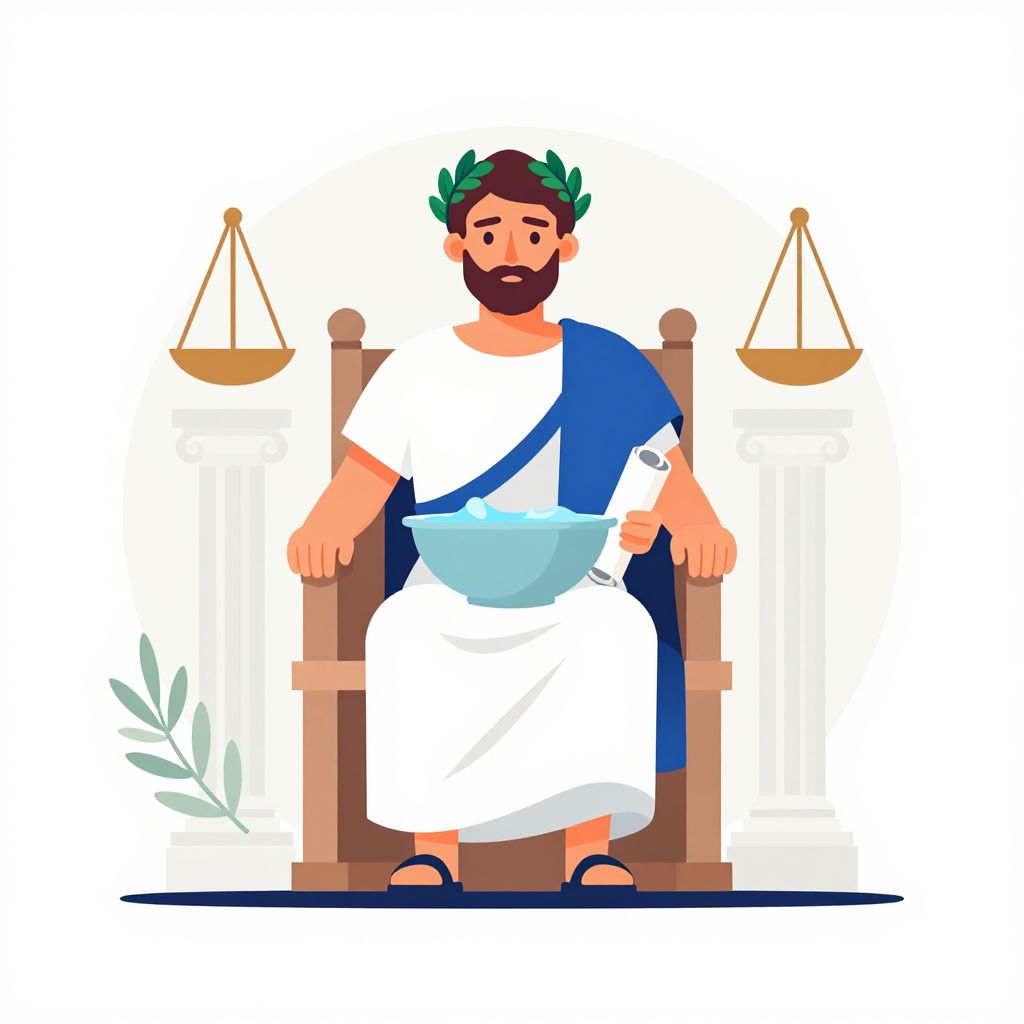
Pontius Pilate appears in all four Gospels at the most critical moment in human history, yet most people know him only as the man who washed his hands. He stands at the intersection of Roman power and divine purpose, a figure who had every earthly authority but wielded it in the worst possible way. Understanding who Pilate was helps us see how God’s plan unfolds even through the failures of corrupt leaders.
His story matters because it reveals something startling about human nature and God’s sovereignty. Pilate had the power to release Jesus but chose political survival over justice, and in doing so, he became a permanent fixture in the Apostles’ Creed and a warning for every generation.
Who Was Pilate in the Bible?
Pontius Pilate was the Roman governor of Judea from approximately AD 26 to 36 who presided over the trial and crucifixion of Jesus Christ. He served as the prefect under Emperor Tiberius, holding both military and judicial authority over the Jewish territories. Scripture presents him as a political pragmatist who knew Jesus was innocent yet sentenced Him to death anyway to appease an angry crowd and protect his own position.
His Position and Power
Pilate ruled as Rome’s official representative in one of the empire’s most volatile regions. The Roman prefect held absolute authority over capital punishment, which is why the Jewish leaders had to bring Jesus to him in the first place.
His headquarters sat in Caesarea Maritima along the coast, but he traveled to Jerusalem during major Jewish festivals to maintain order. This explains why he was present during Passover when Jesus stood trial, as recorded in Matthew 27, Mark 15, Luke 23, and John 18-19.
Historical records outside the Bible confirm Pilate’s governance. The Jewish historian Josephus and the Roman historian Tacitus both mention him, and archaeologists discovered the “Pilate Stone” in 1961, an inscription bearing his name and title.
His Character in Scripture
The Gospels paint Pilate as a man caught between conviction and convenience. John 18:38 records him declaring, “I find no basis for a charge against him,” yet he still handed Jesus over to be crucified.
He tried multiple tactics to avoid making the decision. He sent Jesus to Herod Antipas when he learned Jesus was Galilean, hoping to pass off responsibility (Luke 23:6-12).
He offered the crowd a choice between Jesus and Barabbas, a known insurrectionist, apparently expecting them to choose Jesus. They didn’t.
He had Jesus flogged, perhaps hoping the brutal punishment would satisfy the mob’s bloodlust. It didn’t work either.
What Did Pilate Do During Jesus’ Trial?
Pilate’s handling of Jesus reveals both Roman judicial procedure and the governor’s moral weakness. The trial unfolded in stages, each one showing Pilate’s growing desperation to escape responsibility.
The Early Morning Interrogation
The Jewish leaders brought Jesus to Pilate early in the morning after their own illegal nighttime trial. They refused to enter the Roman headquarters to avoid ceremonial uncleanness before Passover, so Pilate came out to them (John 18:28-29).
Pilate asked what charges they brought against Jesus. Their answer was evasive at first, but they eventually accused Him of claiming to be a king and forbidding payment of taxes to Caesar (Luke 23:2).
These were political charges designed to force Pilate’s hand. Rome tolerated many things, but not rival kings.
The Private Conversation
Pilate took Jesus inside and asked Him directly, “Are you the king of the Jews?” What follows in John 18:33-38 is one of the most profound exchanges in Scripture.
Jesus explained that His kingdom was not of this world. If it were, His servants would fight to prevent His arrest.
Pilate asked, “What is truth?” and then walked out without waiting for an answer. He had just heard Truth incarnate speak, but he didn’t recognize it because he wasn’t really looking for it.
The Political Maneuvering
After declaring Jesus innocent, Pilate learned He was from Galilee and sent Him to Herod Antipas. Herod questioned Jesus at length, but Jesus remained silent (Luke 23:8-9).
Herod and his soldiers mocked Jesus, dressed Him in an elegant robe, and sent Him back to Pilate. Luke 23:12 notes that Herod and Pilate became friends that day, though they had been enemies before.
Shared guilt often creates strange alliances. Both men knew Jesus was innocent, and both chose expedience over justice.
The Crowd’s Choice
Pilate proposed releasing Jesus as part of a Passover custom. He presented the crowd with a choice: Jesus or Barabbas, a rebel who had committed murder during an insurrection.
The chief priests and elders persuaded the crowd to ask for Barabbas. When Pilate asked what he should do with Jesus, they shouted, “Crucify him!” (Matthew 27:20-23).
Pilate asked why, pointing out that Jesus had done nothing wrong. The crowd only shouted louder for crucifixion.
The Symbolic Gesture
Matthew 27:24 records the moment Pilate became infamous: “He took water and washed his hands in front of the crowd. ‘I am innocent of this man’s blood,’ he said. ‘It is your responsibility!'”
Pilate thought he could wash away guilt with a bowl of water. He couldn’t.
The crowd’s response was chilling: “His blood is on us and on our children!” They accepted responsibility that Pilate tried to avoid, but Scripture makes clear that both parties were guilty.
Why Did Pilate Condemn Jesus?
Pilate had the authority to release Jesus and the conviction that He was innocent. So why did he order the crucifixion?
Fear of Political Consequences
The Jewish leaders made a calculated threat in John 19:12: “If you let this man go, you are no friend of Caesar. Anyone who claims to be a king opposes Caesar.”
This was more than rhetoric. Pilate already had a troubled relationship with the Jewish people, having provoked them multiple times with his insensitivity to their customs.
Historical records indicate he had faced complaints to Rome before. Another major incident could end his career or worse.
Moral Cowardice
Pilate knew what was right but lacked the courage to do it. He repeatedly declared Jesus innocent yet still handed Him over to be killed.
His wife even sent him an urgent message during the trial: “Don’t have anything to do with that innocent man, for I have suffered a great deal today in a dream because of him” (Matthew 27:19). He ignored her warning.
Pilate represents everyone who knows the truth but chooses convenience over conviction. Have you ever compromised what you knew was right because standing for it seemed too costly?
Contempt for the Jewish People
Pilate’s question “What is truth?” wasn’t sincere philosophical inquiry. It was cynical dismissiveness.
His inscription on the cross, “Jesus of Nazareth, the King of the Jews,” written in three languages, seems designed to mock the Jewish leaders as much as to identify Jesus. When they protested, asking him to change it to “He claimed to be king of the Jews,” Pilate refused (John 19:19-22).
His contempt for those he governed made their manipulation of him through political threats even more effective. He cared nothing for them but everything for his position.
What Happened to Pilate After the Crucifixion?
Scripture falls silent about Pilate after the resurrection accounts. The Gospels mention him only in connection with Joseph of Arimathea requesting Jesus’ body for burial (Matthew 27:57-58).
Historical sources provide some details about his later years. Josephus records that Pilate violently suppressed a Samaritan religious gathering around AD 36, which led to formal complaints to his superior, Vitellius, the governor of Syria.
Vitellius removed Pilate from office and sent him to Rome to answer to Emperor Tiberius. Church tradition holds various accounts of his fate, including exile and suicide, but none can be verified with certainty.
What we know for sure is that his name lives on in infamy. Every time Christians recite the Apostles’ Creed and say Jesus “suffered under Pontius Pilate,” they anchor the crucifixion in real history and identify the human authority responsible.
What Can We Learn from Pilate?
Pilate’s story carries warnings and insights that remain painfully relevant. God preserved his account in Scripture not just as historical record but as spiritual instruction.
Truth Demands a Response
Pilate stood face to face with Jesus and asked, “What is truth?” then walked away. He treated the question as rhetorical when it was actually the most important question he would ever face.
Jesus said in John 14:6, “I am the way and the truth and the life. No one comes to the Father except through me.” Truth is not a concept to debate but a Person to know.
Neutrality toward Jesus is actually rejection. Pilate tried to avoid choosing, but his avoidance became a choice with eternal consequences.
Authority Comes with Accountability
Jesus told Pilate, “You would have no power over me if it were not given to you from above” (John 19:11). Even Roman authority existed only because God permitted it.
Pilate thought his position gave him ultimate power, but he was accountable to a higher authority he didn’t recognize. Every leader, every authority figure, every person with power over others will answer to God for how they used it.
This includes parents, employers, church leaders, and government officials. Authority is a stewardship, not a possession.
Compromise Destroys Character
Pilate made a series of small compromises that led to the greatest miscarriage of justice in history. He flogged an innocent man hoping it would be enough.
He offered a choice between Jesus and a murderer. He tried to shift responsibility to Herod.
Each compromise made the next one easier until he found himself ordering the execution of someone he knew was innocent. Sin works this way, progressively hardening the heart and dulling the conscience.
Public Opinion Is a Terrible Master
Pilate made his final decision based on the crowd’s demands and the threat to his political standing. He governed by polls rather than principle.
The same crowd that shouted “Crucify him!” had welcomed Jesus into Jerusalem days earlier. Public opinion shifts like sand.
Leaders who govern by popularity rather than conviction will eventually find themselves authorizing evil. The same applies to anyone who makes moral decisions based on what others think rather than what God says.
Guilt Cannot Be Washed Away by Ritual
Pilate’s hand-washing ceremony was empty theater. He declared himself innocent while simultaneously ordering an execution he knew was unjust.
You cannot perform a symbolic act and expect it to erase real guilt. Only the blood of Jesus, whom Pilate condemned, can wash away sin (1 John 1:7).
How many people today try to ease their conscience through religious rituals while refusing to repent of actual sin? Pilate’s basin of water saved neither Jesus nor himself.
How Does Pilate Point Us to the Gospel?
Pilate’s failure highlights the gospel’s necessity and beauty. His story shows why we needed a Savior and what that Savior endured to rescue us.
The Depth of Human Sin
Pilate represents the best the Roman world had to offer: educated, powerful, with access to justice systems and philosophical thought. Yet he still chose evil when it served his interests.
Romans 3:23 declares, “For all have sinned and fall short of the glory of God.” Pilate illustrates this truth at the highest levels of human authority.
If a Roman governor with every advantage still condemned the innocent Son of God, what hope do any of us have apart from grace? None.
The Sovereignty of God
Pilate thought he was in control, but God was orchestrating redemption through his very wickedness. Acts 4:27-28 explains that Herod, Pilate, the Gentiles, and the people of Israel did what God’s “power and will had decided beforehand should happen.”
This doesn’t excuse their guilt. They acted according to their own evil desires.
But God used their sin to accomplish His greatest work: the salvation of everyone who believes. This is the mystery of divine sovereignty and human responsibility working together.
The Innocence of Jesus
Pilate declared Jesus innocent multiple times. Even the pagan Roman governor recognized that Jesus had done nothing wrong.
This matters for our salvation. 2 Corinthians 5:21 says, “God made him who had no sin to be sin for us, so that in him we might become the righteousness of God.”
Jesus had to be innocent to be the perfect sacrifice. Pilate’s testimony confirms what Scripture declares throughout: Jesus was without sin, making His death a substitution rather than a punishment He deserved.
The Cost of Redemption
Pilate had Jesus flogged before crucifixion. The Gospels don’t dwell on the physical details, but Roman flogging was brutal, often fatal on its own.
Jesus endured this torture, then carried His cross to Golgotha and suffered crucifixion. All of this happened because Pilate, representing human authority and justice, failed completely.
The cost of your redemption was immense. Jesus didn’t die peacefully in old age; He was tortured and executed by people like Pilate and religious leaders who should have known better.
Pilate’s Question for Every Soul
Pilate asked the crowd, “What shall I do, then, with Jesus who is called the Messiah?” (Matthew 27:22). It’s the question every person must answer.
You can try to wash your hands of Him like Pilate did. You can ignore Him, mock Him, or declare that you find no fault in Him yet still refuse to follow Him.
But you cannot avoid the question. Jesus stands before every human soul, and your response determines your eternity.
Pilate had Jesus physically before him and still made the wrong choice. You have the complete testimony of Scripture, the witness of the Holy Spirit, and two thousand years of Christian witness.
What will you do with Jesus? The question demands more than a philosophical discussion or a symbolic gesture.
It requires a decision that transforms everything: repentance from sin and faith in the One whom Pilate condemned but whom God raised from the dead. Romans 10:9 promises, “If you declare with your mouth, ‘Jesus is Lord,’ and believe in your heart that God raised him from the dead, you will be saved.”
Pilate’s story warns us about the danger of knowing truth and rejecting it. Don’t make his mistake.
Recognize that Jesus is exactly who He claimed to be: the King of kings, the Truth incarnate, the only way to the Father. Pilate had the power to release Jesus but chose not to.
You have the opportunity to receive Him. Choose wisely, because unlike Pilate, you’ve been told how the story ends.
If you found this exploration of Pilate’s role in Scripture helpful, we invite you to continue studying the people and events that shaped biblical history. Our article on who was Pilate in the Bible offers additional insights into this pivotal figure and his encounter with Jesus. May your study of God’s Word deepen your faith and draw you closer to the Truth that Pilate questioned but never embraced.