
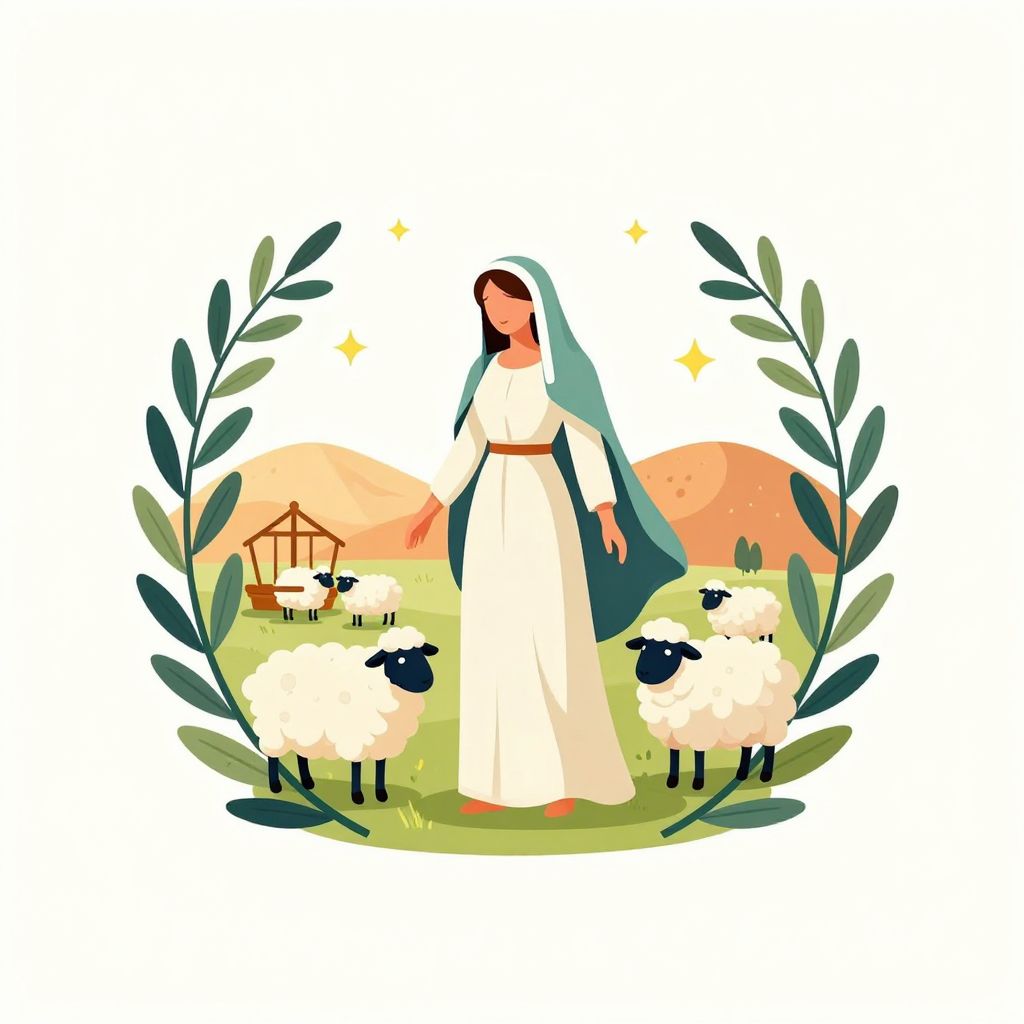
Rachel stands as one of the most beloved yet complex women in Scripture, capturing hearts with her beauty and breaking them with her struggles. Her story weaves through jealousy, barrenness, faith, and ultimately God’s faithfulness in ways that still speak to women today.
The Bible presents Rachel not as a perfect saint but as a real woman whose life reveals both human frailty and divine grace. Her narrative teaches us about God’s sovereignty, the cost of favoritism, and how He works through imperfect people to accomplish His perfect plans.
Who Was Rachel in the Bible?
Rachel was the younger daughter of Laban and the beloved wife of Jacob, whose love story became one of Scripture’s most famous romances. She served as one of the four matriarchs of Israel, though her path to motherhood proved painful and prolonged.
Rachel’s Family Background
Rachel belonged to the family line of Abraham through his brother Nahor. Her father Laban lived in Paddan-aram, the region where Abraham had originally sent his servant to find a wife for Isaac.
The Bible describes her as “beautiful in form and appearance” (Genesis 29:17, ESV), a detail that Scripture rarely emphasizes about women. This beauty would both bless and complicate her life in unexpected ways.
The Shepherdess at the Well
Rachel first appears in Genesis 29 as a shepherdess tending her father’s flocks. She met Jacob at a well, where he had stopped during his flight from his brother Esau’s anger.
When Jacob saw Rachel approaching with the sheep, he rolled away the heavy stone covering the well’s mouth. This act of strength and service foreshadowed the fourteen years of labor he would willingly give for her hand in marriage.
Rachel’s Marriage and Family Life
A Love Worth Waiting For
Jacob’s love for Rachel burned so intensely that he agreed to work seven years for Laban to marry her. Genesis 29:20 tells us these years “seemed to him but a few days because of the love he had for her.”
Yet Laban deceived Jacob on the wedding night, giving him Leah, Rachel’s older sister, instead. Jacob discovered the switch only the next morning, leading to a confrontation that would define his household for generations.
The Sister Rivalry
Jacob received Rachel as his second wife after agreeing to work another seven years for Laban. However, this arrangement created a bitter rivalry between the sisters that poisoned the household atmosphere.
Genesis 29:30 states clearly that “Jacob loved Rachel more than Leah,” setting up a dynamic that would cause pain for everyone involved. God saw Leah’s rejection and opened her womb while keeping Rachel barren.
The Struggle for Children
Rachel’s barrenness became her defining struggle for many years of marriage. While Leah bore son after son, Rachel remained childless, watching her sister gain favor through motherhood.
Her desperation reached such depths that she cried out to Jacob, “Give me children, or I shall die!” (Genesis 30:1, ESV) This raw emotion reveals how deeply the cultural shame of barrenness affected her identity and security.
Rachel’s Character Through Scripture
Faith Mixed with Manipulation
Rachel’s response to barrenness shows both faith and human scheming working side by side. She gave her servant Bilhah to Jacob as a surrogate mother, following the cultural practices of her time.
When Bilhah bore Dan and Naphtali, Rachel declared that God had heard her and judged in her favor. Her faith in God’s involvement remained real, even when her methods reflected human wisdom rather than divine leading.
The Stolen Household Gods
When Jacob finally decided to leave Laban’s household, Rachel secretly stole her father’s household gods (teraphim). This act reveals the incomplete nature of her faith and her connection to pagan practices.
She hid the idols by sitting on them and claiming she couldn’t rise due to “the way of women.” Her deception succeeded, but it demonstrated how even believers can cling to worldly securities alongside their faith in God.
Answered Prayer and Tragedy
God finally “remembered Rachel” and opened her womb (Genesis 30:22, ESV), giving her the son she had longed for throughout her marriage. She named him Joseph, meaning “may he add,” expressing hope for additional children.
Her second son came during a difficult childbirth that cost Rachel her life. With her dying breath, she named him Ben-oni (“son of my sorrow”), though Jacob changed it to Benjamin (“son of the right hand”).
What Rachel Teaches Modern Believers
God’s Timing Versus Our Desires
Rachel’s years of waiting teach us that God’s timeline rarely matches our own expectations. Her barrenness served purposes beyond her understanding, including positioning Joseph for his crucial role in Israel’s future.
Do you find yourself demanding that God work according to your schedule? Rachel’s story reminds us that delays often serve divine purposes we cannot see in the moment.
The Danger of Comparison
The rivalry between Rachel and Leah illustrates how comparison poisoned what should have been a sisterly relationship. Rachel’s beauty and Jacob’s preference couldn’t satisfy her while Leah bore children and she remained barren.
Each sister possessed what the other desperately wanted, yet neither found contentment in God’s specific gifts to her. This dynamic warns us about the destructive power of measuring our lives against others.
Incomplete Faith
Rachel’s theft of the household gods reveals how believers can maintain areas of incomplete surrender to God. She trusted Him for children but apparently felt she needed backup security through pagan objects.
Her example challenges us to examine where we might be hedging our bets rather than trusting God completely. What “household gods” do we cling to when faith feels insufficient?
Rachel’s Legacy in Biblical History
Mother of Joseph and Benjamin
Though Rachel died young, her two sons played crucial roles in Israel’s history. Joseph saved the family from famine and laid groundwork for their multiplication in Egypt.
Benjamin’s tribe later produced King Saul and the apostle Paul, showing how God used Rachel’s limited motherhood for far-reaching purposes. Her brief time with her sons still generated lasting impact.
Prophetic Significance
The prophet Jeremiah later used Rachel as a symbol of Israel’s mourning (Jeremiah 31:15), and Matthew applied this prophecy to Herod’s slaughter of the innocents in Bethlehem. Her story transcended her personal struggles to represent national grief and hope.
This prophetic dimension shows how individual stories in Scripture often carry meanings beyond their immediate context. God weaves personal narratives into His larger redemptive plan.
Lessons from Rachel’s Faith Walk
Honest Struggle with God
Rachel never pretended her struggles didn’t matter or that she felt content with childlessness. She brought her pain directly to God and to Jacob, expressing her needs honestly.
Her example encourages believers to wrestle with God over their deepest longings rather than maintaining a false spirituality that denies real emotions. God can handle our honest complaints and desperate prayers.
Growth Through Waiting
The years between Rachel’s demand for children and God’s opening of her womb likely involved significant spiritual growth. Her naming of Joseph showed gratitude and continued hope rather than bitterness.
Waiting seasons serve purposes in shaping our character and deepening our trust in God’s goodness. Rachel’s story demonstrates that breakthrough often comes after extended preparation periods.
Rachel’s Place in God’s Plan
Rachel’s life demonstrates how God works through imperfect people to accomplish His perfect purposes. Her beauty attracted Jacob’s love, her barrenness taught patience, and her sons carried forward God’s promises to Abraham.
She reminds us that maturity doesn’t require perfection, and that God’s favor rests on His character rather than our performance. Her story encourages every believer who struggles with waiting, comparison, or incomplete faith.
Consider how Rachel’s example might speak to your current season of life. Are you waiting for God’s timing in some area, or struggling with comparison to others around you? Her story offers both comfort for the struggle and hope for God’s faithfulness in bringing His purposes to completion.
Rachel’s legacy continues to speak across the centuries, reminding us that God sees our struggles, hears our cries, and works all things together for His glory and our good. Take heart from her example, and trust that your story too serves purposes beyond what you can currently see.
As you explore the rich stories of biblical characters, you might find it helpful to learn more about Jacob and his complex relationship with God. For deeper insights into biblical truths that shape our faith, discover what the Bible says about the questions that matter most in Christian living.