
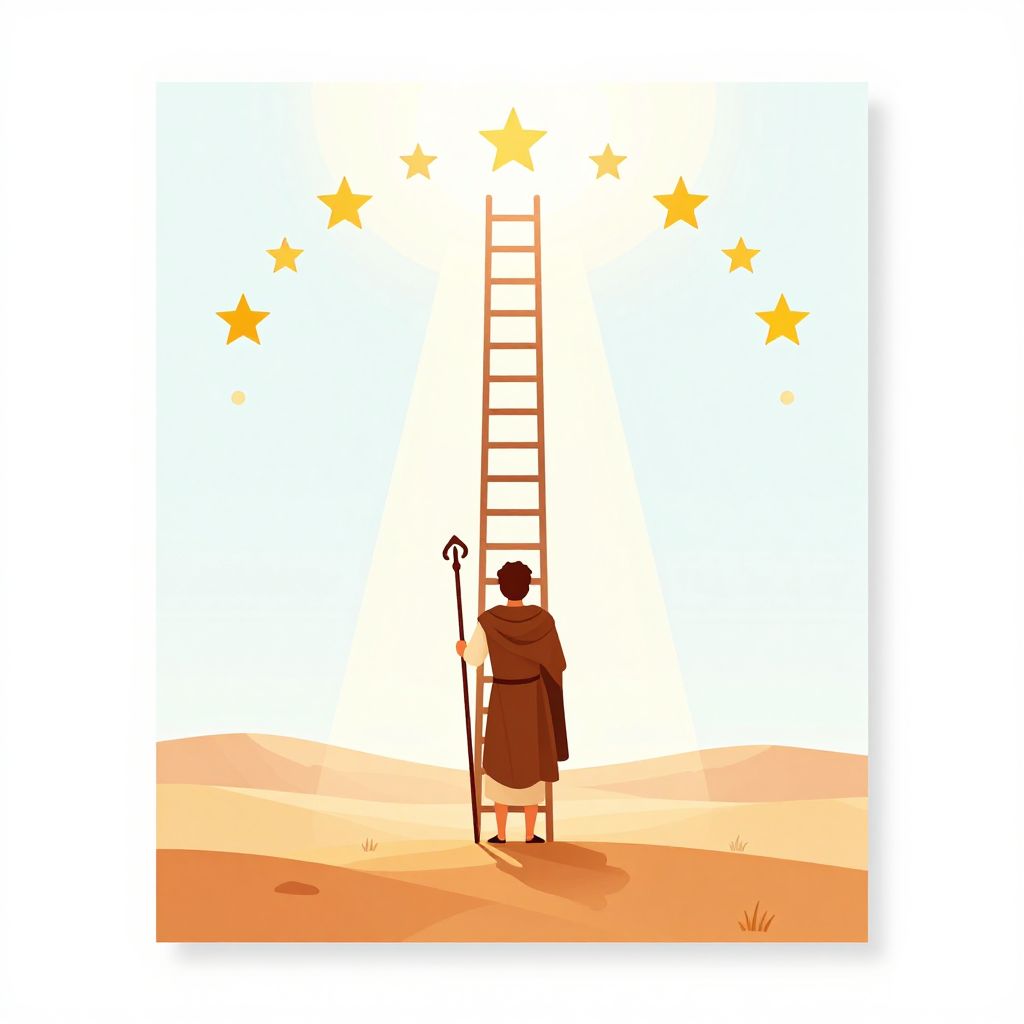
Jacob stands as one of Scripture’s most complex and compelling figures—a man whose very name meant “deceiver” yet became the father of God’s chosen people. His story reads like a divine masterpiece of transformation, showing us how God works through flawed humanity to accomplish His perfect purposes.
From heel-grabbing birth to nighttime wrestling matches with the Almighty, Jacob’s life reveals profound truths about God’s character and His covenant faithfulness. Understanding Jacob means understanding how God shapes us through struggle, discipline, and unexpected grace.
Who Was Jacob in the Bible?
Jacob was the son of Isaac and Rebekah, twin brother to Esau, and the third patriarch of Israel whose twelve sons became the fathers of the twelve tribes of Israel. God chose Jacob to carry forward the covenant promises given to Abraham and Isaac, despite Jacob’s deceptive nature and moral failings.
Jacob’s Family Background and Birth
Jacob entered the world grasping his twin brother Esau’s heel, a prophetic picture of the struggle that would define much of his early life. Genesis 25:26 tells us his name literally means “heel-grabber” or “supplanter”—one who takes another’s place by force or scheming.
His parents, Isaac and Rebekah, had waited twenty years for children after their marriage. When Rebekah finally conceived, the Lord told her that two nations were in her womb and the older would serve the younger (Genesis 25:23).
This divine prophecy set the stage for everything that followed. God had chosen Jacob before his birth, not because of his character, but according to His sovereign purposes.
The Tale of Two Brothers
Jacob and Esau couldn’t have been more different in personality and interests. Esau grew into a skilled hunter who loved the outdoors, while Jacob preferred staying near the tents.
Their parents played favorites—Isaac loved Esau for his wild game, while Rebekah loved Jacob. This family dynamic created the perfect storm for deception and conflict that would tear their household apart.
Jacob’s Major Life Events and Their Spiritual Significance
The Stolen Birthright and Blessing
Jacob’s first major act of deception involved purchasing Esau’s birthright for a bowl of stew. When Esau came in famished from hunting, Jacob seized the moment and refused to feed his brother unless Esau sold him the rights of the firstborn.
Esau despised his birthright (Genesis 25:34), showing his lack of regard for spiritual things. Jacob, for all his flaws, valued the promises of God—even if he went about obtaining them the wrong way.
Years later, Jacob and Rebekah conspired to steal Isaac’s final blessing intended for Esau. Jacob disguised himself as his hairy brother and lied directly to his nearly blind father.
The deception worked, but the consequences were severe. Esau threatened to kill Jacob, forcing him to flee to his uncle Laban’s house in Haran.
The Dream at Bethel
On his journey to Haran, Jacob stopped for the night and used a stone as a pillow. There, God gave him a remarkable dream of a ladder reaching from earth to heaven with angels ascending and descending.
God spoke directly to Jacob, confirming the covenant promises given to Abraham and Isaac (Genesis 28:13-15). Despite Jacob’s deceptive behavior, God declared His commitment to bless Jacob and his descendants.
Jacob woke up and declared, “Surely the Lord is in this place, and I was not aware of it” (Genesis 28:16). He named the place Bethel, meaning “house of God,” and made his first recorded vow to serve the Lord.
Twenty Years with Uncle Laban
Jacob’s time with Laban reads like poetic justice. The deceiver met his match in an uncle who proved even more cunning.
Jacob worked seven years to marry Rachel, only to have Laban substitute her older sister Leah on the wedding night. He had to work another seven years for Rachel, learning firsthand what it felt like to be deceived.
During these twenty years, Jacob married Leah and Rachel, and also had children with their servants Bilhah and Zilpah. His twelve sons—Reuben, Simeon, Levi, Judah, Dan, Naphtali, Gad, Asher, Issachar, Zebulun, Joseph, and Benjamin—became the fathers of the twelve tribes of Israel.
God blessed Jacob’s flocks and herds abundantly, even when Laban repeatedly changed his wages and tried to cheat him. The deceiver was learning to trust God’s provision rather than his own schemes.
Jacob’s Wrestling Match with God
The Night That Changed Everything
As Jacob returned to Canaan after twenty years, he learned that Esau was coming to meet him with four hundred men. Fearing for his life, Jacob sent gifts ahead and spent the night alone by the Jabbok River.
There, a man wrestled with him until daybreak (Genesis 32:24). This mysterious figure was no ordinary opponent—He was God Himself appearing in human form.
The wrestling match represents Jacob’s entire spiritual journey. For decades, he had struggled against God’s will, trying to fulfill God’s promises through his own strength and cunning.
When the divine wrestler touched Jacob’s hip socket and dislocated it, Jacob finally understood he couldn’t win this fight through his own power. Yet he clung to his opponent and refused to let go until he received a blessing.
From Jacob to Israel
God changed Jacob’s name to Israel, meaning “he struggles with God,” because Jacob had wrestled with God and men and had overcome (Genesis 32:28). This wasn’t a victory through strength, but through persistent faith and surrender.
Jacob limped away from that encounter, bearing both a new name and a permanent reminder of his weakness. The heel-grabber had become a prince with God, not through scheming but through brokenness and dependence.
Have you ever reached the point where you stopped trying to manipulate circumstances and simply held onto God’s promises? Jacob’s wrestling match shows us that true spiritual victory often comes disguised as defeat.
Jacob’s Character Development and Spiritual Growth
Learning to Trust God’s Timing
Jacob’s early years were marked by impatience and self-reliance. He couldn’t wait for God’s promises to unfold naturally, so he tried to force them through deception.
His twenty years with Laban taught him patience and dependence on God’s provision. When he finally returned to Canaan, he was a different man—still imperfect, but more willing to trust God’s timing and methods.
From Deceiver to Worshiper
The young Jacob who stole his brother’s blessing gradually transformed into a man who built altars and worshiped God publicly. Genesis 35 records Jacob removing all foreign gods from his household and commanding his family to purify themselves.
This wasn’t just external compliance—Jacob’s heart had genuinely changed. The man who once trusted in his own cleverness now sought to honor God in everything.
A Father’s Broken Heart
Jacob’s later years were marked by profound grief when he believed his beloved son Joseph had been killed by wild animals. His other sons had actually sold Joseph into slavery, deceiving their father just as Jacob had once deceived his own.
This season of loss deepened Jacob’s faith and taught him to lean entirely on God’s sustaining grace. When he finally learned that Joseph was alive and ruling in Egypt, Jacob’s joy knew no bounds.
Jacob’s Prophetic Blessings and Death
Blessing His Grandsons
Near the end of his life, Jacob blessed Joseph’s two sons, Ephraim and Manasher. In a move that echoed his own life, Jacob crossed his hands and gave the greater blessing to the younger son, Ephraim.
When Joseph protested, Jacob insisted that he knew what he was doing. The old deceiver had become a prophet, acting according to God’s revealed will rather than human preference.
Final Blessings for the Twelve Tribes
Genesis 49 records Jacob’s prophetic blessings over his twelve sons, outlining the future of each tribe of Israel. His words carried divine authority, revealing God’s plans for His chosen people.
Jacob’s blessing of Judah proved especially significant, prophesying that “the scepter will not depart from Judah” (Genesis 49:10). This pointed forward to the coming Messiah, who would be born from Judah’s lineage.
Death and Burial
Jacob died in Egypt at age 147, but his body was carried back to Canaan for burial in the cave of Machpelah alongside Abraham, Sarah, Isaac, and Rebekah. Even in death, Jacob demonstrated his faith in God’s promise to give the land to his descendants.
His burial in the Promised Land served as a powerful testimony to his family that Egypt was not their permanent home. God had greater plans for them as His covenant people.
What Jacob’s Life Teaches Us Today
God Works Through Imperfect People
Jacob’s story demolishes any notion that God only uses perfect people to accomplish His purposes. The third patriarch lied, deceived, played favorites among his children, and made numerous mistakes.
Yet God chose Jacob and remained faithful to His covenant promises despite Jacob’s failures. This gives hope to every believer who struggles with sin and feels unworthy of God’s love.
True Change Takes Time
Jacob’s transformation from deceiver to faithful patriarch didn’t happen overnight. God patiently worked in his life over decades, using circumstances, consequences, and direct encounters to shape his character.
Don’t get discouraged if your spiritual growth feels slow. God is more interested in lasting change than quick fixes, and He’s committed to completing the good work He began in you.
Wrestling with God Leads to Blessing
Jacob’s wrestling match teaches us that honest struggle with God is better than superficial compliance. God wants us to bring our doubts, fears, and questions to Him rather than pretending we have it all figured out.
Sometimes God allows us to wrestle with difficult circumstances or unanswered prayers because He’s preparing to bless us in ways we never imagined. The key is clinging to Him even when we don’t understand His methods.
Jacob in God’s Eternal Plan
Father of the Twelve Tribes
Jacob’s greatest legacy was fathering the twelve tribes of Israel, God’s chosen nation through whom the Messiah would come. Every Old Testament story about Israel traces back to this one transformed man.
Through Jacob’s lineage came Moses, David, and ultimately Jesus Christ. The heel-grabber became an essential link in God’s plan of salvation for all humanity.
A Testament to God’s Faithfulness
Jacob’s name appears throughout Scripture as a reminder of God’s covenant faithfulness. When God wanted to remind Israel of His unchanging love, He called Himself “the God of Abraham, Isaac, and Jacob.”
This wasn’t just historical reference—it was a declaration that the same God who transformed a deceiver into a patriarch would remain faithful to His promises in every generation. What comfort this brings to struggling believers today who wonder if God will stick with them through their failures and setbacks.
Jacob’s story reminds us that God specializes in taking broken, flawed people and transforming them into instruments of His grace. His life encourages us to trust God’s timing, embrace His discipline, and never give up hope for genuine transformation. Whether you’re struggling with deception like early Jacob or wrestling with God’s will like the man at Jabbok, remember that our faithful God delights in turning heel-grabbers into princes. Take time today to thank God for His patient work in your life, and ask Him to continue the good work He began in you. For more inspiring biblical insights and character studies like Isaiah’s prophetic ministry, continue exploring how God shapes ordinary people for extraordinary purposes.