
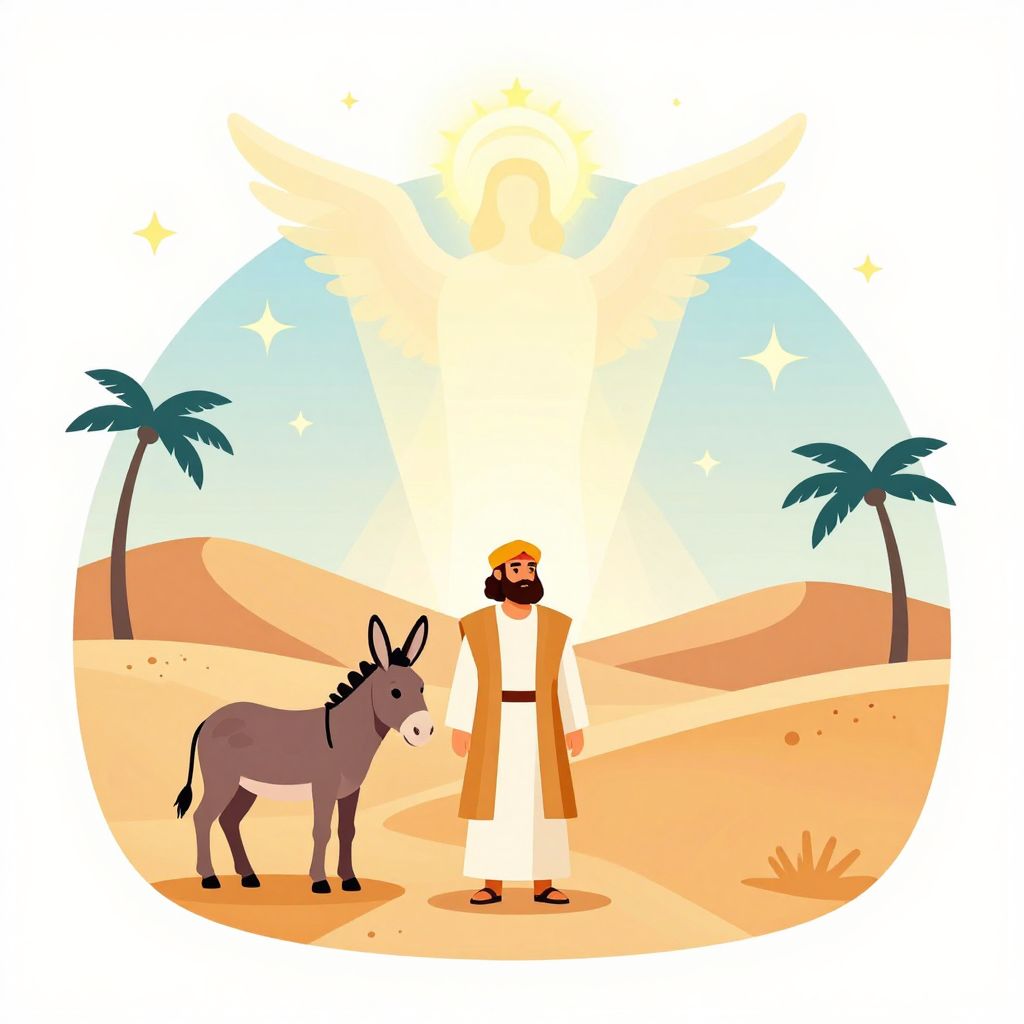
The name Balaam appears in the Old Testament as both a blessing and a warning wrapped into one mysterious figure. Most Christians know him as the prophet whose donkey spoke, but his story reveals much deeper truths about spiritual compromise and the dangerous allure of money over obedience.
Balaam stands as one of Scripture’s most complex characters—a man who heard from God yet chose personal gain over divine will. His account spans Numbers 22-24 and resurfaces in the New Testament as a cautionary tale about false teaching and spiritual corruption.
Who Was Balaam in the Bible?
Balaam was a Mesopotamian prophet who could hear from God but ultimately chose money and status over faithful obedience to the Lord’s commands. Though he possessed genuine prophetic abilities, his love for profit led him to become a hired gun for kings who wanted to curse God’s people.
Balaam’s Background and Reputation
Balaam lived in Pethor, near the Euphrates River, and had built a reputation as a prophet-for-hire. Kings and rulers knew that whoever Balaam blessed would prosper and whoever he cursed would fall.
This reputation reached Balak, king of Moab, who watched in terror as the Israelites camped on his borders. Numbers 22:6 records Balak’s urgent plea: “Come and put a curse on these people, because they are too powerful for me.”
The Prophet Who Could Hear God
What makes Balaam’s story remarkable is that God actually spoke to him directly. Numbers 22:12 shows the Lord telling Balaam clearly: “Do not go with them. You must not put a curse on those people, because they are blessed.”
This wasn’t a case of mistaken identity or false prophecy. God genuinely communicated with Balaam, which makes his subsequent choices all the more tragic.
The Famous Talking Donkey
Why Balaam’s Donkey Spoke
The talking donkey represents one of Scripture’s most vivid examples of God using creation to rebuke human foolishness. When Balaam saddled up to meet Balak despite God’s clear prohibition, the Lord opened the donkey’s mouth to confront the prophet’s spiritual blindness.
Three times the donkey saw the angel of the Lord blocking their path, and three times she turned aside to protect her master. Each time, Balaam beat the animal for disobedience while remaining completely oblivious to the supernatural intervention happening around him.
The Spiritual Lesson Behind the Miracle
Numbers 22:33 reveals the donkey’s life-saving actions: “She saw me and turned away from me these three times. If she had not turned away, I would certainly have killed you by now, but I would have spared her.” The very animal Balaam considered beneath him possessed more spiritual discernment than the renowned prophet.
This ironic reversal shows how spiritual pride and greed can blind us to God’s clear direction. When we prioritize personal gain over obedience, we often become less spiritually aware than the creation around us.
Balaam’s Prophecies and God’s Sovereignty
Forced to Bless Instead of Curse
Despite Balaam’s willingness to curse Israel for payment, God turned every attempted curse into a powerful blessing. Four times Balaam opened his mouth to curse God’s people, and four times beautiful prophecies of blessing poured out instead.
Numbers 24:17 contains one of his most famous prophecies: “A star will come out of Jacob; a scepter will rise out of Israel.” Many scholars see this as a messianic prophecy pointing toward Christ, spoken through the mouth of a compromised prophet.
God’s Sovereignty Over Human Schemes
Balaam’s forced blessings demonstrate a crucial biblical truth: no human scheme can ultimately thwart God’s purposes for His people. Even when spiritual leaders compromise and kings conspire, the Lord’s protective hand remains over those He has chosen.
This doesn’t excuse Balaam’s greed or Balak’s hostility, but it shows how God can work even through flawed vessels to accomplish His will. Have you ever witnessed God turning intended harm into unexpected blessing in your own life?
Balaam’s Ultimate Downfall
The Doctrine of Balaam
Though Balaam couldn’t curse Israel directly, he found another way to harm God’s people. Numbers 31:16 reveals his wicked counsel: “They were the ones who followed Balaam’s advice and enticed the Israelites to be unfaithful to the Lord.”
Balaam advised the Moabites to use sexual temptation and idol worship to corrupt Israel from within. If he couldn’t curse them externally, he would seduce them into cursing themselves through compromise.
Why the New Testament Condemns Balaam
The New Testament references Balaam three times, each highlighting different aspects of his spiritual failure. 2 Peter 2:15-16 warns of those “who have left the straight way and wandered off to follow the way of Balaam son of Bezer, who loved the wages of wickedness.”
Jude 11 speaks of “Balaam’s error”—the mistake of thinking God’s gifts can be bought and sold. Revelation 2:14 condemns “the teaching of Balaam”—using spiritual influence to lead others into compromise.
What Balaam Teaches Modern Christians
The Danger of Spiritual Gifts Without Character
Balaam possessed genuine prophetic abilities but lacked the character to use them faithfully. His story warns that spiritual gifts without godly character lead to devastating compromise.
Modern believers must remember that hearing from God, having biblical knowledge, or possessing ministry abilities means nothing without a heart fully surrendered to Christ. The most dangerous false teachers often display impressive spiritual gifts while pursuing selfish gain.
Money as a Spiritual Test
Balaam’s love for “the wages of unrighteousness” (2 Peter 2:15) reveals how money exposes the true condition of our hearts. He knew God’s will clearly but chose financial reward over faithful obedience.
Every Christian faces this same test in different forms. Will we compromise our convictions for financial advancement, take shortcuts that contradict biblical principles, or use our spiritual influence for personal profit?
The Importance of Complete Obedience
God told Balaam not to go with Balak’s messengers, but when the king sent a second delegation with better offers, Balaam asked God again. Sometimes God allows us to pursue what we want while making clear it’s not His best for us.
Balaam received permission to go but encountered the angel of the Lord as an adversary. Partial obedience often leads to divine opposition rather than blessing.
Lessons for Christian Leaders
The Responsibility of Spiritual Influence
Balaam’s greatest sin wasn’t his initial greed but his ongoing advice that led Israel into sexual immorality and idol worship. Those with spiritual influence bear responsibility for how they use their platform.
Christian leaders must guard against using their position to promote personal agendas rather than God’s truth. The same gifts that can build up God’s people can also lead them astray when motivated by selfish ambition.
Recognizing False Teaching
Balaam’s methods provide a blueprint for identifying false teaching in the modern church. Look for leaders who prioritize financial gain over truth, use spiritual language to justify compromise, or lead people away from biblical standards through subtle influence.
True shepherds protect the flock from spiritual danger; false shepherds like Balaam expose the sheep to harm for personal benefit. The difference often becomes clear through their fruit over time.
Finding Hope in God’s Sovereignty
Despite Balaam’s corruption and schemes, God’s protective purposes for His people remained unchanged. The Lord turned every curse into blessing and ultimately held Balaam accountable for his wickedness.
When you encounter spiritual leaders who compromise truth for gain or face opposition from those who should support you, remember that God’s sovereignty trumps human schemes. He can use even flawed vessels to speak truth and will ultimately judge those who use His name for selfish purposes.
Balaam’s story calls us to examine our own hearts honestly. Do we seek God’s will genuinely or simply want His approval for our predetermined plans? Are we willing to sacrifice financial gain for faithful obedience?
The same God who spoke through a donkey to rebuke a greedy prophet continues working in our world today. He calls us to learn from Balaam’s failure and choose the narrow path of complete surrender over the broad road of spiritual compromise.
As you continue growing in your faith, consider exploring more biblical characters and their lessons for modern believers. You might find it helpful to understand where to begin your biblical studies or discover what Scripture teaches about other important spiritual topics that strengthen your walk with Christ.