
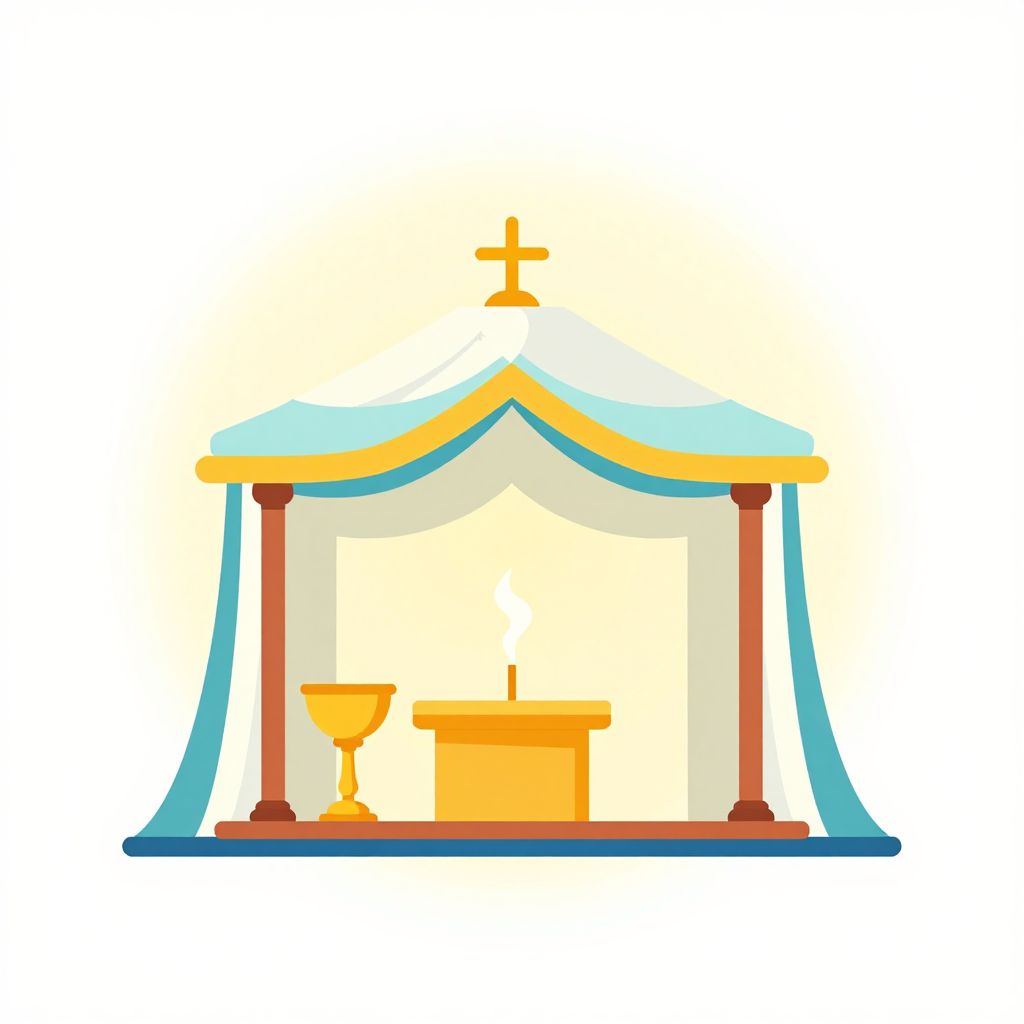
The word “tabernacle” appears throughout Scripture, yet many believers find themselves puzzled by its meaning and significance. This sacred structure represents far more than an ancient tent—it reveals God’s heart to dwell among His people and foreshadows the ultimate fulfillment found in Christ.
Understanding the tabernacle unlocks profound truths about worship, God’s holiness, and His desire for relationship with humanity. The tabernacle serves as a bridge between the Old and New Testaments, pointing us toward the greater reality of God’s presence among us.
What is a Tabernacle in the Bible?
A tabernacle in the Bible is a portable sanctuary that God commanded Moses to build as a dwelling place where the Almighty would meet with His people during their wilderness wanderings. The Hebrew word “mishkan” literally means “dwelling place” or “residence,” emphasizing God’s desire to live among the Israelites.
The Divine Blueprint
God didn’t leave the tabernacle’s design to human creativity or cultural preferences. Exodus 25:9 records God’s precise instruction: “Make this tabernacle and all its furnishings exactly like the pattern I will show you.”
This divine blueprint reveals something crucial about God’s character—He cares about details because He cares about relationship. Every measurement, every material, and every piece of furniture carried spiritual significance that pointed to deeper truths about approaching the holy God.
A Tent with Eternal Purpose
The tabernacle consisted of a rectangular enclosure surrounded by linen curtains, measuring approximately 150 feet long and 75 feet wide. Within this courtyard stood the actual tabernacle structure—a tent divided into two rooms: the Holy Place and the Most Holy Place (Holy of Holies).
God designed this portable sanctuary to travel with the Israelites wherever they went. Numbers 9:17 describes how “whenever the cloud lifted from above the tent, the Israelites set out; wherever the cloud settled, the Israelites encamped.”
The Sacred Layout and Furnishings
Each element of the tabernacle served a specific purpose in Israel’s worship and pointed to spiritual realities that extend far beyond the wilderness period. The layout itself tells a story of approaching God.
The Outer Court
Entering through the single gate, worshippers first encountered the bronze altar where animal sacrifices were offered for sin. This altar stood as an unmistakable reminder that approaching God requires the shedding of blood for the forgiveness of sins.
Beyond the altar sat the bronze basin where priests washed their hands and feet before entering the Holy Place. This washing symbolized the cleansing necessary to serve in God’s presence—a truth that takes on new meaning when Jesus washes His disciples’ feet in John 13.
The Holy Place
Inside the tabernacle tent, the Holy Place contained three pieces of furniture that speak to our relationship with God today. The golden lampstand provided light, representing God as our illumination and Christ as the light of the world.
The table of showbread held twelve loaves representing the twelve tribes of Israel, demonstrating God’s provision and fellowship with His people. The altar of incense, positioned closest to the Most Holy Place, carried the prayers of the people upward as fragrant offerings to God.
The Most Holy Place
Behind a thick veil lay the Most Holy Place, containing only the Ark of the Covenant topped with the mercy seat. This sacred space represented God’s throne room on earth, where His presence dwelt among the Israelites.
Only the high priest could enter this space, and only once a year on the Day of Atonement. The restriction emphasized God’s holiness and the serious nature of sin that separated people from their Creator.
The Deeper Spiritual Significance
The tabernacle wasn’t merely a religious building—it was a living illustration of spiritual truths that find their fulfillment in Jesus Christ. Every detail points to God’s plan of redemption and His desire to dwell with His people.
God’s Heart for Relationship
Exodus 25:8 reveals God’s motivation: “Then have them make a sanctuary for me, and I will dwell among them.” The word “among” here doesn’t mean God lived in a building—it means He chose to make His presence known in the midst of His people’s daily lives.
This divine desire to dwell with humanity threads throughout Scripture, from the Garden of Eden to the New Jerusalem. The tabernacle represents a crucial step in God’s unfolding plan to restore the broken fellowship that sin destroyed.
A Picture of Christ’s Ministry
The New Testament reveals that the tabernacle served as a shadow of greater realities found in Christ. Hebrews 9:11 explains that “Christ came as high priest of the good things that are now already here. He went through the greater and more perfect tabernacle that is not made with human hands.”
Consider these connections between the tabernacle and Christ’s work:
- The bronze altar points to Christ’s sacrifice on the cross
- The veil that separated the Holy Places was torn when Jesus died (Matthew 27:51)
- Christ serves as our eternal High Priest who entered the heavenly sanctuary
- The mercy seat prefigures Christ as our propitiation for sin
Practical Lessons for Modern Believers
While we no longer worship in a physical tabernacle, the spiritual principles embedded in its design remain powerfully relevant for Christian living today. These ancient truths shape how we approach God and understand our relationship with Him.
The Necessity of Sacrifice
The bronze altar’s central position reminds us that approaching God always requires sacrifice. For Old Testament believers, this meant animal offerings that temporarily covered sin.
For believers today, Christ’s once-for-all sacrifice provides permanent access to God’s presence. We don’t bring bulls and goats—we come through the blood of Jesus that speaks of better things than Abel’s sacrifice.
The Importance of Cleansing
The bronze basin teaches us that serving God requires ongoing cleansing from sin’s defilement. 1 John 1:9 promises that “if we confess our sins, he is faithful and just and will forgive us our sins and purify us from all unrighteousness.”
Do you regularly bring your failures and shortcomings to God for cleansing? The tabernacle reminds us that holiness isn’t optional for those who would draw near to God.
Prayer as Sacred Incense
The altar of incense teaches us that our prayers rise before God as fragrant offerings. Revelation 8:3-4 connects this Old Testament imagery to New Testament prayer, showing our intercessions mixed with incense rising before God’s throne.
This truth transforms our prayer lives from mere wish lists into acts of worship that please God and bring heaven’s power into earthly situations.
From Tabernacle to Temple to Church
The tabernacle’s story doesn’t end in the wilderness—it continues through Israel’s history and finds its ultimate fulfillment in the church age. God’s dwelling place has evolved, but His desire to live among His people remains constant.
Solomon’s Temple
King Solomon eventually built a permanent temple in Jerusalem based on the tabernacle’s design and purpose. This magnificent structure served as God’s dwelling place until the Babylonians destroyed it, and later Herod’s temple met the same fate in 70 AD.
The temple’s destruction wasn’t the end of God’s presence among His people—it marked the beginning of something far greater.
Believers as God’s Temple
1 Corinthians 6:19 reveals the stunning truth: “Do you not know that your bodies are temples of the Holy Spirit, who is in you, whom you have received from God?” God no longer dwells in buildings made with hands—He lives within every believer through His Spirit.
This truth should revolutionize how we view our daily lives. Every conversation, every decision, and every action takes place in God’s temple because His presence goes with us wherever we go.
The Ultimate Fulfillment
The book of Revelation unveils the tabernacle’s final fulfillment in the New Jerusalem, where God will dwell with His people forever. Revelation 21:3 proclaims, “Look! God’s dwelling place is now among the people, and he will dwell with them.”
The tabernacle that began as a temporary tent in the wilderness finds its eternal expression in the new heavens and new earth. No temple will be needed there because the Lord God Almighty and the Lamb are its temple.
Understanding the tabernacle enriches our appreciation for God’s patient plan to restore relationship with humanity. From the wilderness wanderings to the eternal city, God’s heart remains the same—He desires to dwell among His people.
Take time to reflect on this amazing truth: the same God who designed the intricate tabernacle system has chosen to make His home in your heart through faith in Christ. How does this reality change your perspective on worship, prayer, and daily Christian living?
Continue exploring the rich depths of Scripture and discover how God’s Word speaks to every aspect of life and faith. You might find it helpful to examine what the Bible says about other important topics, or learn about what is manna in the Bible to deepen your understanding of God’s provision during Israel’s wilderness journey.