
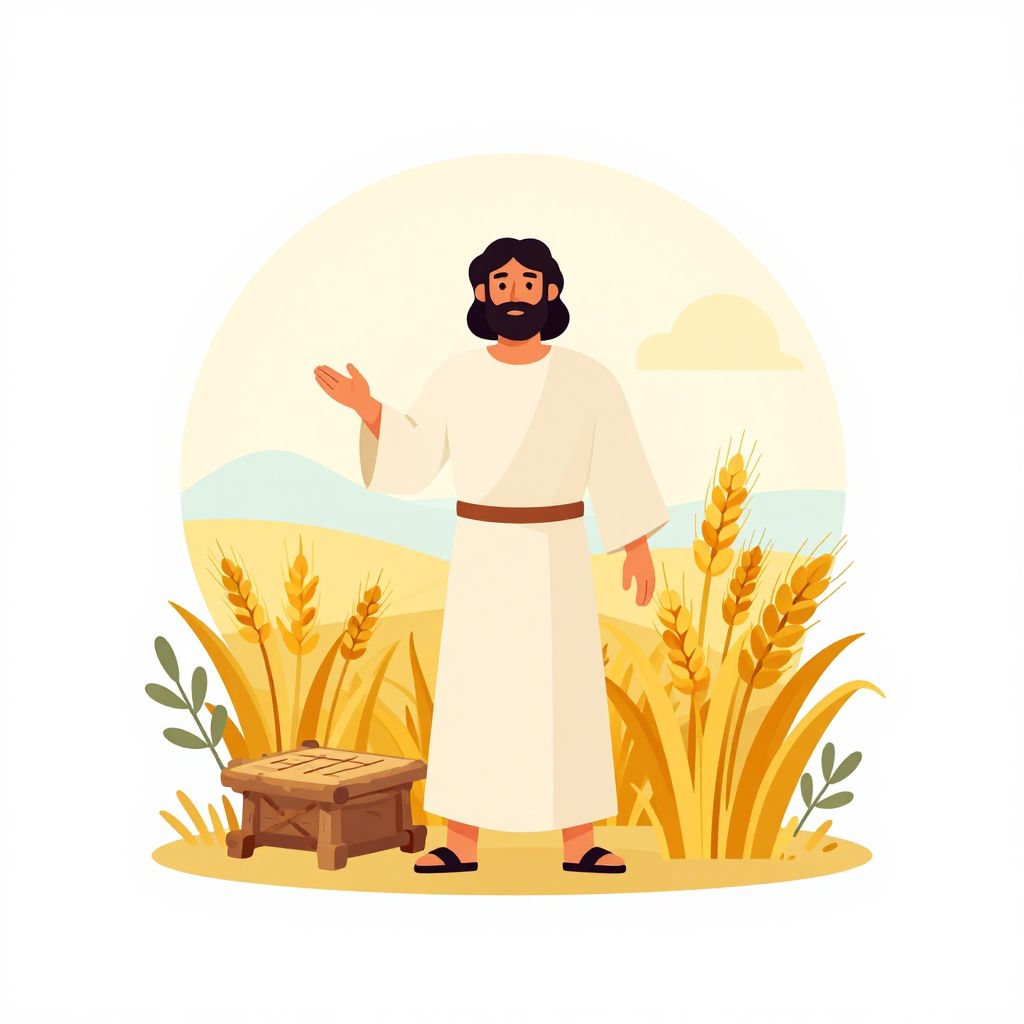
The name Boaz appears in Scripture as more than just a character in an ancient love story. He stands as one of the most compelling examples of godly manhood, redemptive love, and God’s sovereign plan unfolding through ordinary people who choose to live with extraordinary faithfulness.
When you read the book of Ruth, you encounter a man whose actions reveal the very heart of God toward His people. Boaz demonstrates how God works through faithful individuals to accomplish His eternal purposes, even when they cannot see the full picture of what He is doing.
Who Is Boaz in the Bible?
Boaz was a wealthy landowner in Bethlehem during the time of the judges who became the kinsman-redeemer for Ruth and Naomi, ultimately marrying Ruth and becoming an ancestor of King David and Jesus Christ. His story unfolds in the book of Ruth as a man of noble character who embodies God’s faithfulness and covenant love.
Boaz’s Background and Position
Scripture introduces Boaz as “a man of standing from the clan of Elimelek” (Ruth 2:1, NIV). The Hebrew phrase suggests he possessed both wealth and an excellent reputation in his community.
Boaz owned significant land holdings around Bethlehem and employed numerous workers during harvest season. His prosperity came not through exploitation or greed, but through honest work blessed by God during difficult times in Israel’s history.
His Character Revealed
Boaz’s character shines through his treatment of his workers and his response to Ruth’s presence in his fields. He greets his harvesters with “The Lord be with you!” and they respond “The Lord bless you!” (Ruth 2:4).
This exchange reveals a man who acknowledged God’s presence in everyday work and fostered an environment where others felt comfortable speaking of God’s blessings. His faith was not compartmentalized into religious ceremonies but flowed naturally into his business dealings and relationships.
Boaz as Kinsman-Redeemer
Understanding the Role
The concept of kinsman-redeemer comes from God’s law given to Moses, designed to protect vulnerable family members from destitution. A kinsman-redeemer was a close relative who had both the right and responsibility to buy back family property, marry a childless widow to continue the family line, and provide protection for family members in distress.
This role required sacrifice, as the redeemer spent his own resources to restore what others had lost. God built this provision into His law because He cares about justice, family preservation, and protecting the vulnerable.
Boaz’s Willing Heart
When Ruth approached Boaz at the threshing floor and asked him to spread his garment over her as her kinsman-redeemer, his response revealed his heart. He called her request an act of kindness greater than her loyalty to Naomi, because Ruth could have pursued younger men but chose to seek security through God’s provision (Ruth 3:10).
Boaz did not hesitate or make excuses. He immediately began working to fulfill his role properly, even though a closer relative had the first right of redemption.
The Redemption Process
Honoring God’s Order
Despite his desire to redeem Ruth, Boaz followed God’s law precisely by approaching the closer relative first. At the city gate, before the town elders, he presented the opportunity for redemption to the unnamed relative (Ruth 4:1-4).
When that relative declined because redeeming Ruth would jeopardize his own estate, Boaz stepped forward. He publicly committed to redeem both Naomi’s property and Ruth herself, accepting full responsibility for continuing Elimelek’s family line.
A Public Commitment
The elders and witnesses at the gate blessed Boaz’s decision with remarkable words: “May the Lord make the woman who is coming into your home like Rachel and Leah, who together built up the family of Israel” (Ruth 4:11). They recognized something significant was happening beyond a simple business transaction.
This public ceremony demonstrated that redemption requires witnesses and accountability. Boaz did not act secretly or shame Ruth through the process, but honored her publicly as his chosen bride.
Boaz’s Greater Significance
A Picture of Christ
Christian readers recognize Boaz as a beautiful picture of Jesus Christ, our ultimate kinsman-redeemer. Just as Boaz willingly paid the price to redeem Ruth from her desperate situation, Christ willingly paid the ultimate price to redeem us from sin and death.
Both redeemers had the right to redeem (Boaz through family connection, Christ through His humanity), the resources to redeem (Boaz through his wealth, Christ through His sinless life), and the willingness to redeem despite the personal cost. Do you see how God wove this picture of gospel truth into Ruth’s story centuries before Christ’s birth?
Ancestor of Kings
The book of Ruth concludes with a genealogy that reveals Boaz’s lasting significance: he became the great-grandfather of King David through his son Obed (Ruth 4:17-22). This places Boaz directly in the messianic line leading to Jesus Christ.
Matthew’s gospel includes Boaz in Christ’s genealogy, specifically mentioning both Boaz and Ruth by name (Matthew 1:5). God chose to highlight this Gentile woman and her faithful redeemer in the lineage of His Son.
Lessons from Boaz’s Life
Faithful in Daily Life
Boaz demonstrates that God notices and uses people who live faithfully in ordinary circumstances. He was not a priest, prophet, or king, but a businessman who honored God in his daily work and relationships.
His kindness to Ruth began with small acts: allowing her to glean in his fields, instructing his workers to leave extra grain for her, and providing her protection from harassment. These seemingly minor kindnesses revealed a character that God could trust with greater purposes.
Wisdom in Relationships
Boaz treated Ruth with respect and honor from their first meeting. He had heard of her loyalty to Naomi and her decision to follow the God of Israel, and he blessed her for taking refuge under the wings of the Lord (Ruth 2:12).
When their relationship deepened, Boaz continued to act with integrity and wisdom. He protected Ruth’s reputation, followed proper legal procedures, and made his intentions clear to everyone involved.
Generous Without Fanfare
Throughout the story, Boaz gives generously without drawing attention to his generosity. He provides food, protection, and eventually full redemption, but never in a way that shames Ruth or makes her feel like a burden.
His generosity flows from a heart that understands God’s own generous character. Have you considered how your own giving reflects your understanding of God’s heart toward you?
The Legacy of Boaz
A Marriage That Mattered
Boaz and Ruth’s marriage produced Obed, whose name means “worshiper” or “servant.” This child, born to a Moabite woman and her Israelite redeemer, became the grandfather of Israel’s greatest king and an ancestor of the world’s greatest King.
Their union demonstrates how God uses unlikely people and circumstances to accomplish His perfect plans. Ruth’s foreign birth and difficult circumstances could not thwart God’s purpose to bring blessing through her lineage.
An Example for Every Generation
Boaz’s example speaks powerfully to every generation of believers. Men see in him a model of godly masculinity that protects, provides, and acts with integrity even when no one is watching.
All believers see in Boaz the beauty of living as people redeemed by grace who extend that same grace to others. He used his resources, position, and influence to lift up the vulnerable and restore what seemed permanently lost.
God continues to work through ordinary people who choose faithfulness in daily life, generosity toward those in need, and trust in His sovereign purposes. The story of Boaz reminds us that our faithful choices today may serve God’s eternal purposes in ways we cannot yet imagine, and that true greatness is found not in seeking our own glory but in reflecting God’s redemptive heart to a world in need.
Consider how God might use your own faithfulness, generosity, and integrity to serve His purposes in the lives of those around you, just as He used Boaz to redeem Ruth and advance His eternal plan of salvation.