
When Moses stood before the burning bush, God called him to lead Israel out of Egypt. Moses immediately protested: “I am slow of speech and tongue” (Exodus 4:10). God’s answer reveals one of the most significant partnerships in biblical history.
God provided Moses with his brother Aaron, who would serve as his spokesman, Israel’s first high priest, and a central figure in establishing the nation’s worship system. Aaron’s life offers profound lessons about leadership, failure, forgiveness, and God’s faithfulness.
Who Was Aaron in the Bible?
Aaron was Moses’ older brother who served as Israel’s spokesman before Pharaoh and became the nation’s first high priest. God appointed him to speak for Moses during the Exodus and established his family line as the perpetual priesthood for Israel.
Aaron’s Early Life and Calling
Aaron belonged to the tribe of Levi and was born during Israel’s slavery in Egypt. Scripture tells us he was three years older than Moses (Exodus 7:7).
When Moses hesitated to accept God’s call at the burning bush, God said, “What about your brother, Aaron the Levite? I know he can speak well” (Exodus 4:14). God chose Aaron to be Moses’ mouthpiece, speaking the words that Moses would give him.
Aaron met Moses in the wilderness after forty years of separation. The text says Aaron “kissed him” (Exodus 4:27), revealing the genuine affection between these brothers who would lead Israel together.
Partnership with Moses
Aaron stood beside Moses throughout the confrontation with Pharaoh. He performed signs and wonders, including throwing down his staff that became a serpent and swallowing the magicians’ serpents (Exodus 7:10-12).
During the ten plagues, Aaron often acted as God’s instrument. He stretched out the rod to bring forth frogs, gnats, and other judgments upon Egypt.
This partnership demonstrates how God uses different gifts in His people. Moses received the revelations; Aaron communicated them clearly to others.
Aaron as High Priest
Divine Appointment
God specifically chose Aaron and his sons for the priesthood. “Bring your brother Aaron to you from among the Israelites, along with his sons… so they may serve me as priests” (Exodus 28:1).
This wasn’t a human decision or political appointment. God sovereignly established Aaron’s priestly line, which would continue for over a thousand years until Christ came as our ultimate High Priest.
The Priestly Garments
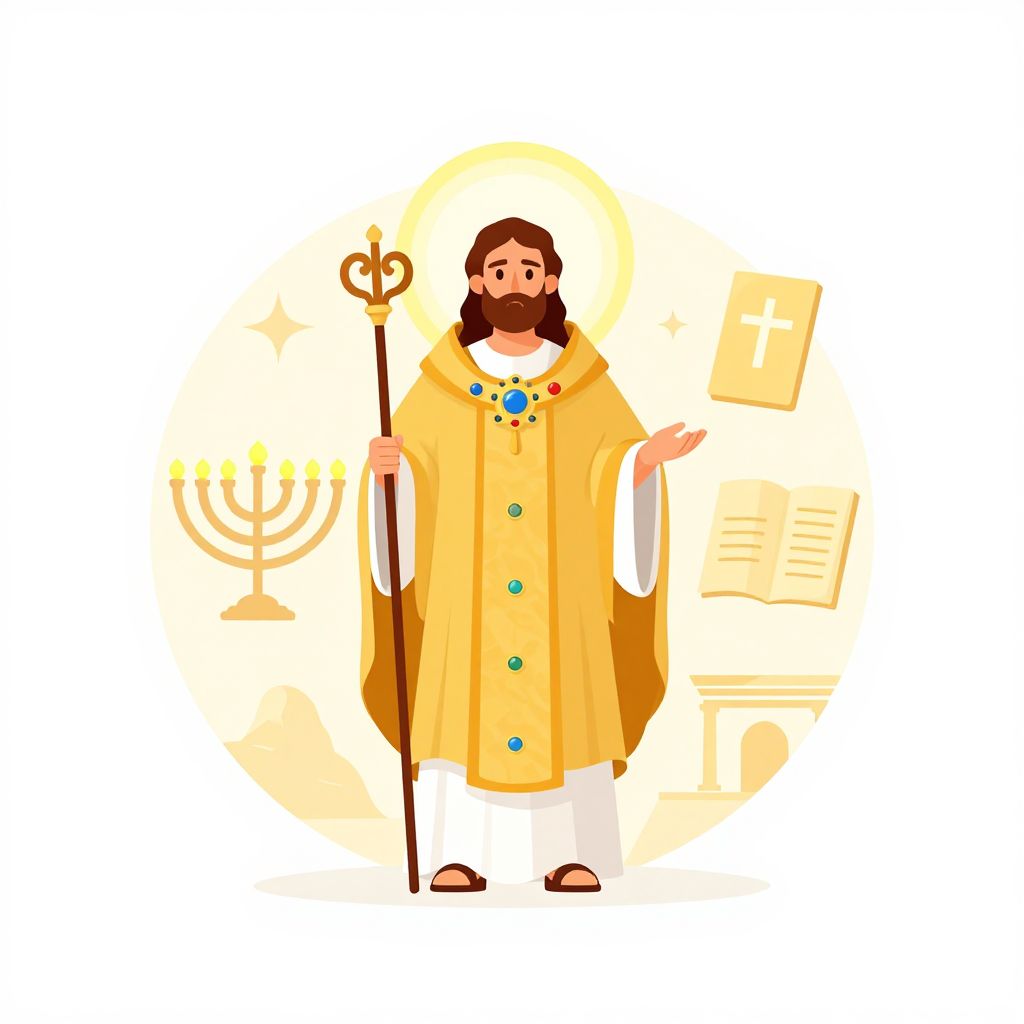
God commanded Moses to make sacred garments for Aaron that were “for glory and beauty” (Exodus 28:2). These included the ephod, breastplate, robe, turban, and golden plate inscribed with “Holy to the Lord.”
Every detail of Aaron’s priestly clothing pointed forward to Christ. The breastplate bore the names of all twelve tribes, showing how the priest carried the people before God in intercession.
Mediator Between God and Israel
Aaron’s primary role was standing between a holy God and sinful people. He offered sacrifices, burned incense, and entered the Most Holy Place once each year on the Day of Atonement.
This priestly work required someone without blemish who could approach God on behalf of others. Yet Aaron himself needed atonement for his own sins, unlike Christ who was sinless.
Aaron’s Greatest Failures
The Golden Calf Incident
Aaron’s most infamous moment came when Moses delayed on Mount Sinai. The people demanded: “Come, make us gods who will go before us” (Exodus 32:1).
Aaron gave in to the pressure and fashioned a golden calf from their jewelry. He even built an altar and proclaimed a festival, saying “These are your gods, Israel, who brought you up out of Egypt” (Exodus 32:4).
When Moses confronted him, Aaron offered a weak excuse: “I threw the gold into the fire, and out came this calf!” (Exodus 32:24). His attempt to minimize his role shows how sin makes us rationalize our failures.
Opposing Moses’ Authority
Later, Aaron joined his sister Miriam in criticizing Moses’ marriage and questioning his unique authority. They asked, “Has the Lord spoken only through Moses? Hasn’t he also spoken through us?” (Numbers 12:2).
God’s response was swift and severe. He afflicted Miriam with leprosy, and Aaron had to plead with Moses for her healing.
These incidents reveal that even godly leaders struggle with pride, fear, and jealousy. Aaron’s failures remind us that all human leaders are flawed and point us to Christ, our perfect High Priest.
God’s Confirmation of Aaron
The Budding Rod
When Korah and others challenged Aaron’s priesthood, God provided dramatic confirmation. He commanded each tribe to place a staff in the Tabernacle overnight.
Only Aaron’s staff budded, blossomed, and produced almonds (Numbers 17:8). This miracle proved that God had chosen Aaron’s family for the priesthood, not human ambition or politics.
The budding rod demonstrated that spiritual authority comes from God alone. Life springs forth only where God has placed His calling and blessing.
Lessons About Divine Calling
Aaron’s confirmation teaches us that God’s gifts and calling are irrevocable (Romans 11:29). Despite Aaron’s failures, God didn’t revoke his priestly appointment.
Do you sometimes doubt God’s calling on your life because of past mistakes? Aaron’s story shows that God’s purposes prevail even through our weaknesses.
Aaron’s Death and Legacy
Barred from the Promised Land
Like Moses, Aaron was prevented from entering the Promised Land because of disobedience at Meribah. When the people complained about water, Moses and Aaron failed to honor God as holy before the assembly (Numbers 20:12).
This consequence shows that spiritual leaders are held to high standards. Greater privilege brings greater responsibility and stricter judgment.
Passing the Torch
Aaron died on Mount Hor at age 123. Before his death, Moses removed Aaron’s priestly garments and placed them on his son Eleazar, symbolically transferring the high priesthood.
The entire nation mourned Aaron for thirty days. Despite his failures, they recognized his faithful service and God’s grace through his ministry.
Aaron Points to Christ
The Perfect High Priest
Aaron’s priesthood was a shadow pointing to Jesus Christ, our eternal High Priest. Where Aaron was flawed, Christ is perfect; where Aaron offered repeated sacrifices, Christ offered Himself once for all.
Hebrews 4:15 tells us that Christ “has been tempted in every way, just as we are—yet he did not sin.” Unlike Aaron, who needed to offer sacrifices for his own sins, Jesus was the sinless sacrifice.
Our Access to God
Aaron could enter God’s presence only once per year with blood sacrifice. Through Christ, we have boldness to enter the Most Holy Place any time through prayer (Hebrews 10:19-22).
What Aaron accomplished temporarily through animal sacrifices, Christ accomplished eternally through His own blood. We no longer need a human mediator because Christ intercedes for us continually.
Practical Lessons from Aaron’s Life
God Uses Imperfect People
Aaron’s story encourages us that God works through flawed individuals. His failures didn’t disqualify him from service, and ours don’t either when we repent and trust God’s grace.
The golden calf incident could have ended Aaron’s ministry, but God’s forgiveness restored him. This demonstrates that our worst moments don’t define our ultimate purpose.
Spiritual Authority Comes from God
Aaron didn’t campaign for the priesthood or inherit it through family tradition. God sovereignly chose him and confirmed that choice supernaturally through signs and wonders.
True spiritual influence flows from divine calling, not human ambition. When we serve in the roles God assigns, He provides the authority and blessing needed.
Leadership Requires Humility
Aaron’s failures often stemmed from pride or fear of man rather than fear of God. The golden calf incident happened because he feared the people’s reaction more than God’s displeasure.
Effective Christian leadership requires humility before God and courage to do right regardless of popular opinion. Aaron’s mistakes teach us to seek God’s approval above human applause.
Aaron’s Enduring Significance
Aaron established patterns of worship that lasted for centuries. His priestly line served in Solomon’s temple, returned from Babylonian exile, and officiated until Christ’s time.
Through Aaron, God taught Israel about holiness, sacrifice, and mediation—concepts that find their ultimate fulfillment in Jesus Christ. Aaron’s life bridges the gap between God’s promises to the patriarchs and their fulfillment in the Messiah.
Aaron reminds us that God chooses unlikely people for significant purposes. A man who once fashioned an idol became the channel through which God taught His people to worship correctly.
His legacy challenges us to see our own potential for both failure and redemption. God’s grace transforms our weaknesses into opportunities for His glory when we surrender to His purposes.
Aaron’s story calls us to embrace the roles God assigns, serve faithfully despite our imperfections, and point others toward Christ—the perfect High Priest who succeeds where all human leaders ultimately fall short. Will you trust God to use your life, weaknesses and all, for His eternal purposes?
For those seeking to deepen their understanding of biblical figures and foundational truths, consider exploring topics like Ten Commandments and the life of Jacob. These studies provide additional insight into God’s character and His work throughout Scripture, helping us understand how individual stories connect to His greater plan of redemption.