
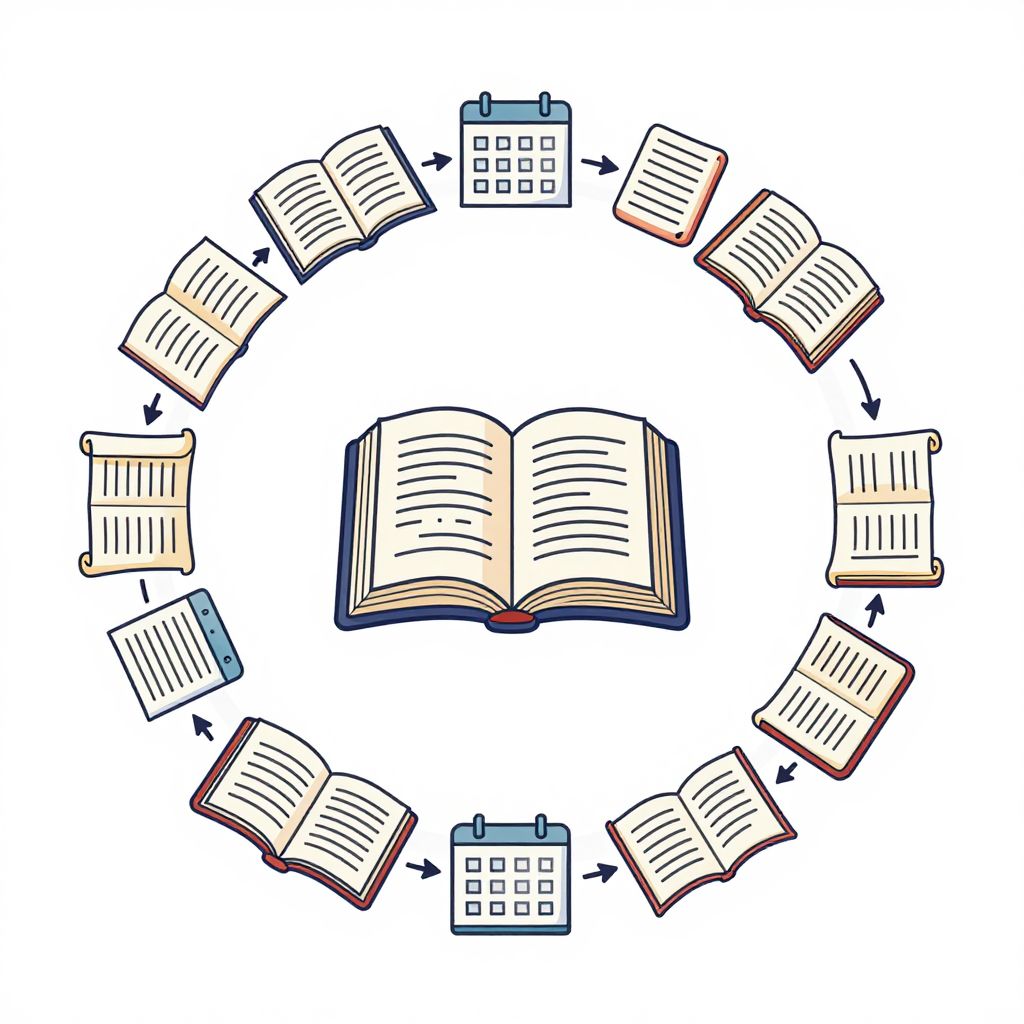
Most Christians read the Bible book by book, but God’s story unfolds across thousands of years in a specific sequence. When you read Scripture chronologically, you follow events as they actually happened in history rather than how the books appear in your Bible.
Reading the Bible in chronological order reveals God’s progressive revelation and helps you understand how each event builds upon the previous ones. This approach transforms isolated stories into one magnificent narrative of God’s redemptive plan.
How Do You Read the Bible in Chronological Order?
Start with Genesis and follow a chronological Bible reading plan that arranges passages by their historical timeline rather than canonical order. This means reading Job during the time of the patriarchs, placing Psalms with David’s life events, and weaving prophetic books into the historical accounts they address.
Understanding Biblical Timeline Basics
The Bible spans approximately 4,000 years of human history from creation to the early church. The Old Testament covers about 2,000 years, while the New Testament events occur within roughly 100 years.
Biblical scholars have studied ancient manuscripts, archaeological evidence, and historical records to determine when events occurred. This chronological framework helps you see how God worked consistently throughout different eras and cultures.
Why Canonical Order Differs from Historical Order
The Bible’s current arrangement groups books by literary type rather than historical sequence. For example, Job likely lived during Abraham’s time, but appears after the historical books because it’s classified as wisdom literature.
The prophetic books present another challenge since they often address events described in Kings and Chronicles. Reading Isaiah during Hezekiah’s reign provides context you miss when reading these books separately.
Getting Started with Chronological Bible Reading
Choose Your Chronological Reading Plan
Several excellent chronological Bible reading plans exist, each with slight variations based on scholarly research. The most important step is selecting one plan and staying consistent with it rather than switching between different chronological arrangements.
Popular chronological reading plans include:
- One Year Chronological Bible: Divides Scripture into 365 daily readings
- Blue Letter Bible Chronological Plan: Provides detailed historical context
- Tyndale Chronological Study Bible: Integrates study notes with chronological text
- Custom chronological schedules: Allow you to set your own pace
Prepare Your Heart and Mind
Chronological reading requires more intentionality than traditional book-by-book reading. You’ll encounter familiar passages in new contexts and discover connections you never noticed before.
Begin each reading session with prayer, asking the Holy Spirit to illuminate God’s Word. As Jesus promised in John 16:13, “When he, the Spirit of truth, comes, he will guide you into all the truth.”
Navigating the Major Chronological Sections
The Foundation Period (Creation to Abraham)
Your chronological reading begins with Genesis 1-11, covering creation, the fall, the flood, and the tower of Babel. These chapters establish fundamental truths about God’s character, human nature, and the need for redemption.
Job fits chronologically during this early period, likely contemporary with the patriarchs. Reading Job after Genesis 11 provides insight into how godly people processed suffering in the ancient world.
The Patriarchal Period (Abraham to Moses)
Genesis 12-50 chronicles God’s covenant with Abraham and his descendants. This section reveals how God chose one family to bless all nations, establishing themes that culminate in Christ.
The chronological approach helps you see how God’s promises to Abraham in Genesis 12:1-3 connect directly to the Great Commission in Matthew 28:19-20. The same God who promised to bless all nations through Abraham sends the church to make disciples of all nations.
The Mosaic Period (Exodus to Joshua)
This section includes Exodus, Leviticus, Numbers, Deuteronomy, and Joshua in their natural sequence. You’ll experience Israel’s liberation from Egypt, wilderness wandering, and conquest of the Promised Land as one continuous story.
Many Psalms written by Moses (like Psalm 90) fit chronologically during the wilderness period. Reading these psalms alongside the historical accounts reveals the emotional and spiritual dimensions of Israel’s wilderness experience.
The Kingdom Period (Judges to Exile)
This complex period requires the most chronological rearrangement. You’ll weave together Judges, Ruth, Samuel, Kings, Chronicles, and numerous prophetic books based on when events occurred.
Reading Psalms during David’s life events transforms your understanding of both the historical accounts and the psalms themselves. Psalm 51 gains profound meaning when read immediately after David’s sin with Bathsheba in 2 Samuel 11-12.
The Prophetic Integration
The prophetic books make much more sense when read during the historical periods they address. Isaiah’s prophecies about the Assyrian invasion carry greater weight when read alongside 2 Kings 18-19.
Chronological reading helps you understand that the prophets weren’t primarily predicting the future. They were calling God’s people back to covenant faithfulness during specific historical crises.
Maximizing Your Chronological Reading Experience
Keep a Bible Timeline Handy
A visual timeline helps you track where you are in biblical history and how much time passes between events. Many people underestimate the centuries between Abraham and Moses or the complexity of the divided kingdom period.
Understanding chronology prevents confusion about genealogies, cultural changes, and historical references. When you know that Daniel lived during the Babylonian exile, his prophecies about world empires make immediate sense.
Notice God’s Progressive Revelation
Chronological reading reveals how God gradually revealed truth throughout history. The sacrificial system in Leviticus prepares you to understand Christ’s sacrifice in Hebrews.
Each new revelation builds upon previous truth without contradicting it. God’s character remains consistent while His methods of relating to humanity develop through different covenant relationships.
Track Recurring Themes Across Time
Certain themes appear throughout biblical history in different forms. The concept of God dwelling with His people evolves from Eden to the tabernacle to the temple to Christ to the church to the New Jerusalem.
Chronological reading helps you trace these themes naturally rather than jumping back and forth between time periods. You see how God’s eternal purposes unfold progressively through human history.
Common Challenges and How to Address Them
Scholarly Disagreements on Dating
Biblical scholars don’t agree on every chronological detail, and different reading plans reflect these disagreements. Don’t let minor dating disputes distract you from the major chronological flow of biblical history.
The goal isn’t perfect chronological precision but understanding God’s story as it unfolds through time. Focus on the clear historical progression rather than debating whether a particular psalm belongs in David’s early or later reign.
Maintaining Reading Momentum
Chronological reading can feel overwhelming, especially during complex periods like the divided kingdom. Some days you’ll read multiple chapters while others contain just a few verses.
Remember that consistency matters more than speed. It’s better to read a little each day than to binge-read large sections sporadically.
Dealing with Repetitive Passages
Chronicles often repeats material from Samuel and Kings, while the Gospels contain parallel accounts of Jesus’ life. Use these repetitions to notice different perspectives and emphases rather than viewing them as redundant.
God included multiple accounts because each contributes unique insights into His character and purposes. Matthew presents Jesus as the Jewish Messiah while Luke emphasizes His concern for outcasts and gentiles.
Practical Tips for Success
Start with Realistic Expectations
Chronological reading takes most people 12-15 months to complete at a comfortable pace. Don’t pressure yourself to finish in exactly one year if that creates stress or diminishes your comprehension.
The goal is encountering God through His Word, not completing a reading challenge. Some passages deserve extended meditation while others provide historical context for deeper study later.
Use Study Resources Wisely
A good study Bible with chronological notes enhances your reading without overwhelming you with details. Look for resources that explain historical context and cross-references without replacing personal Bible reading with commentary study.
Archaeological discoveries and historical research illuminate many biblical passages. However, let Scripture interpret Scripture before consulting external sources.
Share the Experience
Reading chronologically with a friend or small group provides accountability and enriches your understanding. Different people notice different details, and discussion reveals insights you might miss reading alone.
Consider starting a chronological reading group at your church or participating in online communities that follow the same reading schedule. Iron sharpens iron, and God often speaks through the observations of fellow believers.
The Spiritual Benefits of Chronological Reading
Seeing God’s Faithfulness Through Time
Chronological reading demonstrates God’s unwavering faithfulness across centuries and cultures. You witness how God keeps His promises even when His people repeatedly fail Him.
The same God who called Abraham out of Ur sends Jesus to die for sins and will return to establish His eternal kingdom. This continuity strengthens faith and provides hope during difficult seasons.
Understanding Your Place in God’s Story
Reading Scripture chronologically helps you see how the church age fits into God’s eternal purposes. You’re not reading ancient history but participating in the ongoing story that began in Genesis and continues until Christ returns.
Every believer is part of the same covenant community that includes Abraham, David, and the apostles. This perspective transforms how you view your daily Christian life and eternal destiny.
Reading the Bible chronologically offers a transformative approach to understanding God’s Word. This method reveals connections between passages that remain hidden when reading canonically. When you follow God’s story as it unfolds through time, you gain deeper appreciation for His character, His promises, and His perfect timing. Take the step to begin chronological reading, and watch as familiar passages take on new meaning within their proper historical context. For those just beginning their Bible reading journey, exploring where to start reading can provide additional guidance. As you develop this disciplined approach to Scripture, you’ll discover fresh insights about what the Bible teaches on topics you thought you understood completely.