
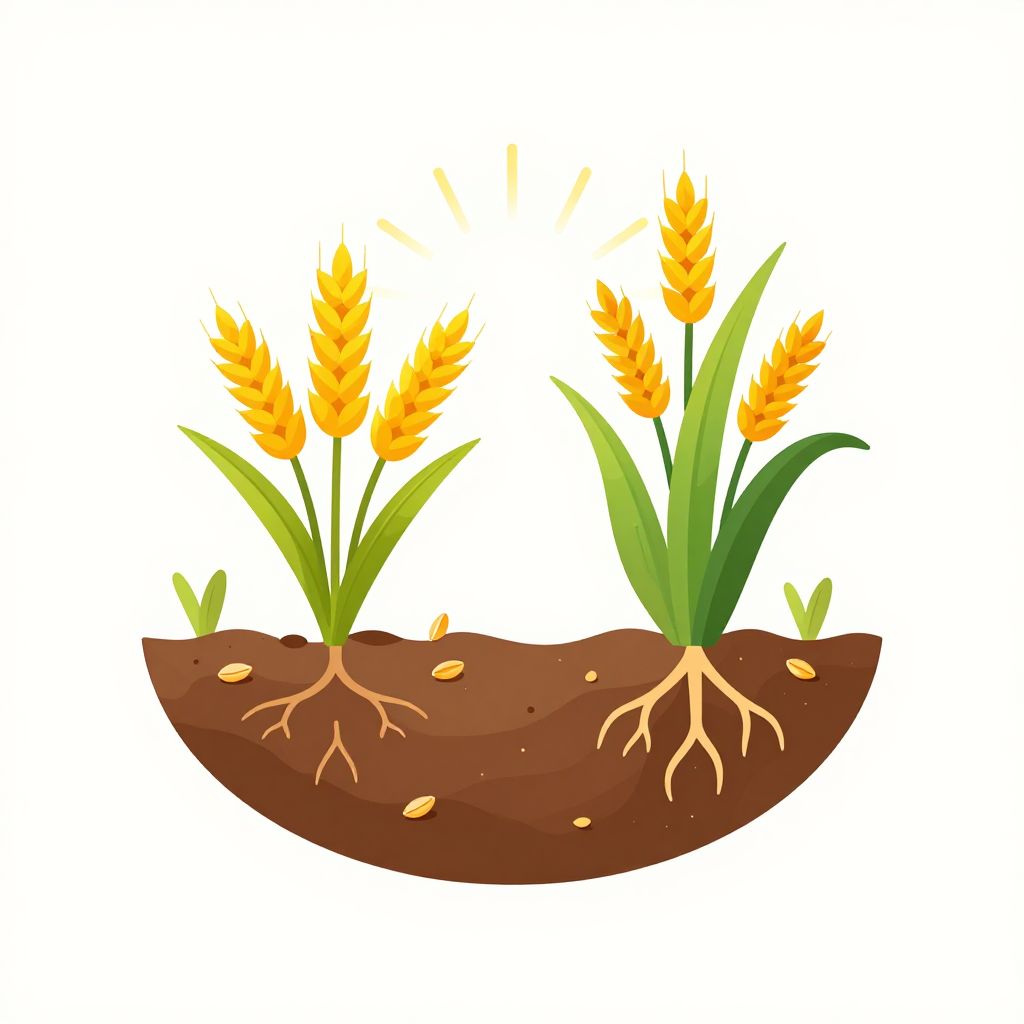
Every action plants a seed, and every seed grows into a harvest you cannot escape. The law of sowing and reaping governs not just agriculture but the entire spiritual realm, shaping your character, relationships, and eternal destiny.
Scripture makes this principle crystal clear: “Do not be deceived: God cannot be mocked. A man reaps what he sows” (Galatians 6:7, NIV). This truth cuts through every excuse and exposes the direct connection between your choices and their consequences.
What Does It Mean to Reap What You Sow According to the Bible?
Biblical sowing and reaping means that God has established an unchangeable spiritual law where your actions, words, and attitudes inevitably produce corresponding consequences in your life. Just as a farmer who plants corn will harvest corn, not wheat, the seeds of behavior you plant will grow into a harvest that matches exactly what you sowed.
The Spiritual Law Behind Sowing and Reaping
God wired creation with cause-and-effect principles that operate whether you acknowledge them or not. Paul warns believers in Galatians 6:7 that God cannot be mocked because this law functions with mathematical precision.
This principle appears throughout Scripture, from the Old Testament through the New Testament. Proverbs 22:8 states, “Whoever sows injustice reaps calamity, and the rod they wield in fury will be broken.”
The law operates in every area of life: your finances, relationships, health, and spiritual growth. You cannot plant seeds of dishonesty and expect a harvest of trust.
Why God Established This Principle
God designed sowing and reaping to teach responsibility and reveal His justice. This system protects the innocent and ensures that evil does not go unpunished forever.
The principle also demonstrates God’s grace when you sow good seeds. Those who sow generously will reap generously, while those who sow sparingly will reap sparingly (2 Corinthians 9:6).
Have you ever wondered why some people seem to get away with wrong behavior for years? The harvest is coming, but God controls the timing.
Biblical Examples of Sowing and Reaping
Old Testament Examples
Cain sowed jealousy and murder, reaping a lifetime of wandering and fear. His brother’s blood cried out from the ground, and God’s justice followed swiftly.
David sowed adultery and murder in the Bathsheba incident. Though God forgave him, David reaped family turmoil, the death of his child, and ongoing conflict in his household.
Jacob deceived his father and brother, stealing Esau’s blessing. Years later, his own sons deceived him about Joseph’s death, and his uncle Laban repeatedly tricked him in business dealings.
New Testament Illustrations
Judas sowed betrayal for thirty pieces of silver. He reaped guilt so overwhelming that he took his own life and lost his eternal reward.
Ananias and Sapphira sowed deception in the early church. They reaped immediate death as God demonstrated the seriousness of lying to the Holy Spirit.
The rich young ruler sowed love of money over love of God. He walked away from eternal life, reaping spiritual emptiness despite his material wealth.
The Different Areas Where You Sow and Reap
Sowing to the Flesh Versus Sowing to the Spirit
Paul contrasts two types of sowing in Galatians 6:8. “Whoever sows to please their flesh, from the flesh will reap destruction; whoever sows to please the Spirit, from the Spirit will reap eternal life.”
Sowing to the flesh means living for immediate gratification, selfish desires, and worldly pursuits. This harvest brings spiritual death, broken relationships, and eternal separation from God.
Sowing to the Spirit involves prayer, Bible study, worship, service to others, and obedience to God’s commands. This produces the fruit of the Spirit: love, joy, peace, patience, kindness, goodness, faithfulness, gentleness, and self-control.
Financial Sowing and Reaping
Scripture teaches clear financial principles through the sowing and reaping metaphor. Proverbs 11:24 reveals: “One person gives freely, yet gains even more; another withholds unduly, but comes to poverty.”
Generous givers often experience God’s provision in unexpected ways. Stingy people frequently struggle with lack, even when they earn substantial incomes.
This does not mean giving guarantees wealth, but it demonstrates God’s faithfulness to those who trust Him with their resources. The widow who gave her last two coins received Jesus’ highest praise.
Relational Seeds and Harvests
Your treatment of others creates the relational climate you will experience. Jesus taught this principle clearly: “Do not judge, or you too will be judged. For in the same way you judge others, you will be judged” (Matthew 7:1-2).
Critical people reap criticism from others. Encouraging people attract encouragement and support when they need it most.
Forgiveness creates an atmosphere where others extend grace to you. Bitterness poisons your own heart and pushes away the very people who might help you heal.
Understanding God’s Timing in the Harvest
Why Some Harvests Take Time
Farmers understand that different crops have different growing seasons. Spiritual harvests also operate on God’s timeline, not human impatience.
God delays some consequences to provide opportunities for repentance. Second Peter 3:9 explains that “The Lord is not slow in keeping his promise, as some understand slowness. Instead he is patient with you, not wanting anyone to perish, but everyone to come to repentance.”
Sometimes God waits because you are not ready to handle the blessing He wants to give. Character must develop before certain harvests arrive.
The Certainty of the Final Harvest
Every person will ultimately face the complete harvest of their life’s sowing. Second Corinthians 5:10 declares: “For we must all appear before the judgment seat of Christ, so that each of us may receive what is due us for the things done while in the body, whether good or bad.”
This final accounting includes every hidden motive, secret action, and whispered word. Nothing escapes God’s notice or justice.
What kind of harvest are you preparing for eternity? The seeds you plant today determine your eternal reward or loss.
How to Sow Good Seeds Daily
Practical Steps for Spiritual Sowing
Start each day by asking God to help you sow seeds that honor Him. This prayer aligns your heart with His purposes before you encounter temptation.
Here are specific ways to sow good seeds:
- Speak words of encouragement instead of criticism or gossip
- Give generously of your time, money, and talents
- Serve others without expecting recognition or reward
- Practice forgiveness quickly when someone hurts you
- Study Scripture to know God’s will for your life
- Pray consistently for your family, church, and community
Overcoming Bad Sowing Patterns
Everyone has sowed bad seeds that produce unwanted harvests. The good news is that repentance can stop destructive patterns and start fresh sowing.
First John 1:9 promises: “If we confess our sins, he is faithful and just and will forgive us our sins and purify us from all unrighteousness.” Confession breaks the power of sin to continue producing bad fruit in your life.
Replace old habits with new ones rooted in Scripture. When you catch yourself starting to sow bad seeds, immediately choose a different response based on God’s truth.
The Ultimate Harvest: Eternal Life
Sowing Faith in Jesus Christ
The most important seed you can sow is faith in Jesus Christ for salvation. This single decision determines your eternal destiny and transforms every other area of sowing.
Romans 10:9 explains the simplicity of this seed: “If you declare with your mouth, ‘Jesus is Lord,’ and believe in your heart that God raised him from the dead, you will be saved.” This seed of faith produces eternal life, forgiveness of sins, and adoption into God’s family.
Once you belong to Christ, the Holy Spirit empowers you to sow good seeds consistently. You cannot produce lasting spiritual fruit through willpower alone.
Living with Eternal Perspective
Understanding that your earthly sowing affects your eternal reward should change how you spend each day. First Corinthians 3:12-15 describes how God will test every person’s work with fire, burning up worthless deeds but rewarding what was done for His glory.
This does not mean you earn salvation through good works, but that your faithfulness as a believer produces eternal rewards. Sow with eternity in mind, not just temporary convenience.
How will you feel when you stand before Jesus and see the complete harvest of your life’s sowing? Let that future moment guide your choices today.
The law of sowing and reaping operates with perfect consistency in your life right now. God has given you the power to choose what seeds you plant through His Spirit. Every word you speak, every action you take, and every attitude you embrace plants a seed that will produce a corresponding harvest. The question is not whether you will reap what you sow, but what kind of harvest you want to receive. Start today by sowing seeds of righteousness, generosity, and love, trusting that God will bring forth a harvest that honors Him and blesses others.
Continue growing in your understanding of biblical principles by exploring more about what does the Bible say on various topics that strengthen your faith. You can also discover the profound wisdom found in passages like Proverbs 31:3 that guide godly living and decision-making in every area of life.