
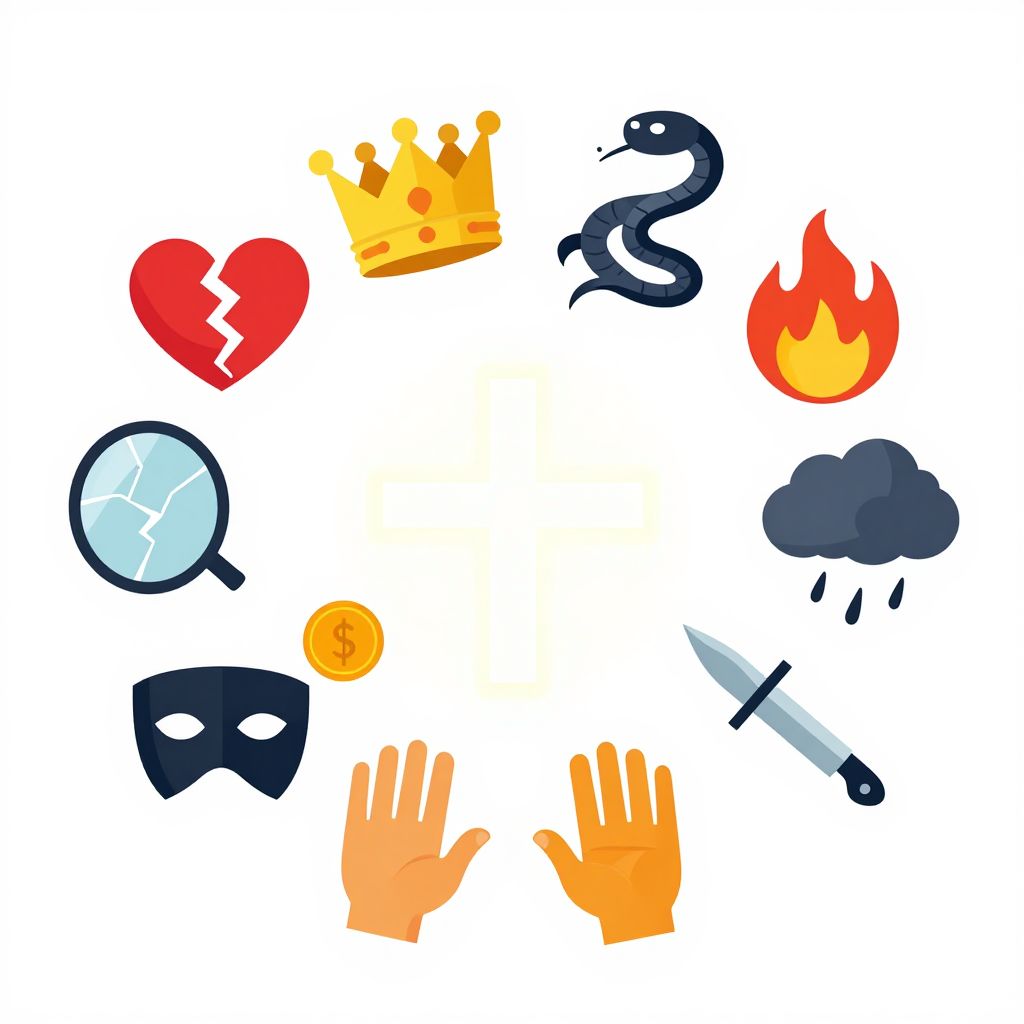
Sin cuts deeper than most Christians realize, and Scripture reveals patterns of rebellion that destroy both individuals and communities. While the Bible doesn’t provide a single list titled “the 12 sins,” it consistently identifies specific categories of sin that separate humanity from God’s holiness.
Understanding these biblical patterns helps believers recognize temptation, pursue repentance, and walk in freedom. Scripture exposes sin not to condemn us, but to lead us toward the grace found in Christ Jesus.
What Are the 12 Sins Most Clearly Identified in Scripture?
The Bible identifies numerous sins through various passages, with the most comprehensive lists found in places like Romans 1:29-31, Galatians 5:19-21, and 1 Corinthians 6:9-10. These passages reveal twelve recurring patterns of sin: pride, idolatry, sexual immorality, murder, theft, lying, covetousness, drunkenness, hatred, gossip, greed, and witchcraft.
Pride – The Root of Rebellion
Pride places self above God and others, making it the foundational sin behind all rebellion. Proverbs 16:18 warns that “pride goes before destruction, a haughty spirit before a fall.”
Pride shows itself when people refuse to acknowledge their need for God’s forgiveness. It whispers that human wisdom surpasses divine truth and that personal desires matter more than God’s commands.
Idolatry – Worshiping False Gods
Idolatry doesn’t just mean bowing to golden statues. It means placing anything above God in priority, affection, or trust.
Modern idolatry includes money, relationships, career success, and even religious activities when they replace genuine devotion to Christ. Exodus 20:3-4 establishes God’s exclusive claim on worship.
Sexual Immorality – Corrupting God’s Design
Sexual immorality encompasses all sexual activity outside marriage between one man and one woman. First Corinthians 6:18 commands believers to “flee from sexual immorality” because it sins against one’s own body.
This category includes adultery, fornication, homosexual behavior, and pornography. God designed sexuality as a sacred gift within marriage, and violations damage both individuals and relationships.
Sins Against Others and Self
Murder – Destroying God’s Image
Murder destroys human life created in God’s image. The sixth commandment declares “You shall not murder” (Exodus 20:13), establishing the sanctity of human life.
Jesus expanded this understanding in Matthew 5:21-22, explaining that hatred and anger toward others violates the spirit behind this command. Have you recognized anger’s destructive power in your own heart?
Theft – Taking What Belongs to Others
Theft violates the eighth commandment and includes stealing property, time, credit, or anything that rightfully belongs to another person. Ephesians 4:28 calls thieves to repentance and honest work.
This sin extends beyond obvious robbery to include tax evasion, workplace dishonesty, and failing to return borrowed items. God calls His people to respect others’ property and rights.
Lying – Opposing God’s Truth
Lying contradicts God’s character as the source of all truth. John 8:44 identifies Satan as “the father of lies,” making dishonesty a partnership with evil.
Lies include false witness, gossip mixed with falsehood, exaggeration for personal gain, and deception in business or relationships. Truth builds trust while lies destroy it.
Sins of Desire and Excess
Covetousness – Craving Others’ Possessions
Covetousness desires what belongs to others and breeds discontentment with God’s provision. The tenth commandment warns against coveting your neighbor’s house, spouse, or possessions (Exodus 20:17).
This sin feeds materialism and destroys gratitude for God’s blessings. Social media often amplifies covetousness by showcasing others’ seemingly perfect lives and possessions.
Drunkenness – Losing Self-Control
Drunkenness represents the broader category of substance abuse that impairs judgment and leads to other sins. Ephesians 5:18 contrasts being drunk with wine versus being filled with the Spirit.
Scripture doesn’t forbid alcohol entirely but condemns its abuse. Any substance that controls a person’s behavior violates the call to Spirit-filled living.
Greed – Pursuing Wealth Above God
Greed makes money and possessions into idols that compete with devotion to Christ. First Timothy 6:10 warns that “the love of money is a root of all kinds of evil.”
Greedy people sacrifice relationships, integrity, and spiritual health for financial gain. They trust wealth more than God’s provision and care.
Sins of Relationship and Spiritual Rebellion
Hatred – Opposing God’s Love
Hatred directly contradicts God’s command to love others and destroys Christian witness. First John 4:20 states that anyone who hates a brother cannot truly love God.
Hatred includes racism, unforgiveness, spite, and malicious treatment of others. It poisons the heart and prevents spiritual growth in the believer’s life.
Gossip – Destroying Reputations
Gossip spreads information about others for entertainment or to damage their reputation. Proverbs 26:20 teaches that “without wood a fire goes out; without a gossip a quarrel dies down.”
This sin includes sharing private information without permission, spreading unverified reports, and discussing others’ failures for personal satisfaction. Does your speech build others up or tear them down?
Witchcraft – Seeking Supernatural Power Apart from God
Witchcraft encompasses all attempts to access supernatural power through sources other than God. Deuteronomy 18:10-12 explicitly forbids divination, sorcery, and consulting spirits.
Modern forms include astrology, tarot cards, séances, and New Age spirituality. These practices seek spiritual power while rejecting God’s authority and wisdom.
God’s Response to Sin and Path to Freedom
The Reality of Divine Justice
God’s holiness demands justice for sin, and Romans 6:23 declares that “the wages of sin is death.” Every person faces judgment for violating God’s perfect standards.
However, the same verse offers hope: “but the gift of God is eternal life in Christ Jesus our Lord.” God’s justice and mercy meet at the cross of Christ.
The Gospel Solution
Christ paid sin’s penalty through His death and resurrection, offering forgiveness to all who believe. Second Corinthians 5:21 explains that God made Christ “to be sin for us, so that in him we might become the righteousness of God.”
Believers receive forgiveness not through good works or religious activity, but through faith in Christ’s finished work. This transforms guilt into freedom and condemnation into acceptance.
Walking in Victory Over Sin
Christians possess new power to overcome sin through the Holy Spirit’s presence. Galatians 5:16 promises that those who “walk by the Spirit” will not “gratify the desires of the flesh.”
Victory requires ongoing repentance, Bible study, prayer, and fellowship with other believers. Sin loses its controlling power when Christ rules the heart, though the battle continues until heaven.
Scripture reveals these patterns of sin to expose humanity’s need for salvation and guide believers toward holiness. Recognition of sin leads to repentance, and repentance opens the door to God’s transforming grace. Have you confessed your sins and received Christ’s forgiveness? Turn to Him today and experience the freedom that comes through His perfect sacrifice.
Continue exploring biblical truth through our comprehensive guides on what the Bible says about life’s important questions. You might also find valuable insight in our study of where the Ten Commandments appear in Scripture and their application to Christian living today.