
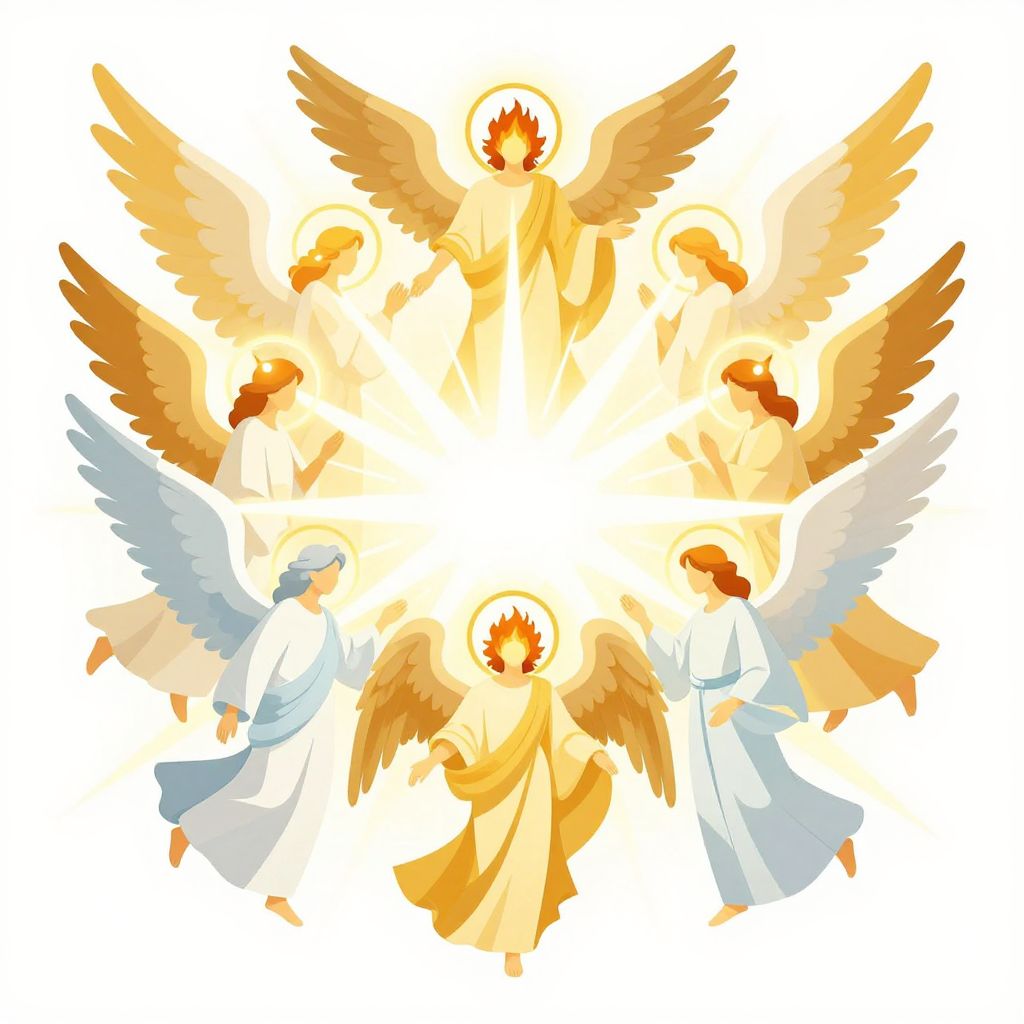
Most people picture angels as gentle beings with flowing robes and feathered wings, but Scripture paints a far more startling picture. The biblical descriptions of angels often leave people overwhelmed, confused, or even terrified by their otherworldly appearance.
God reveals angels in ways that challenge our comfortable assumptions and remind us of the vast difference between heaven and earth. Understanding what angels truly look like according to Scripture helps us grasp the magnitude of God’s glory and the serious nature of His messengers.
What Do Angels Look Like According to the Bible?
Angels in Scripture appear in various forms, from human-like messengers to multi-winged creatures covered in eyes, often causing fear and requiring reassurance with “do not be afraid.” Their appearance reflects their specific roles and the overwhelming holiness of the God they serve.
Angels Often Appear Human-Like
Many biblical encounters show angels appearing as ordinary men who blend into human society. Abraham welcomed three visitors who looked so normal he offered them food and water (Genesis 18:1-8).
The angels who visited Lot in Sodom appeared as men who could walk, talk, and even needed protection from the violent crowd (Genesis 19:1-11). These human-like appearances allowed angels to deliver messages and provide help without causing paralyzing fear.
Even the angel who appeared to Mary looked human enough that she could hold a conversation, though his presence still troubled her (Luke 1:26-38). God often chooses this form when He wants His messengers to communicate clearly with people.
Some Angels Display Overwhelming Supernatural Features
When angels appear in their more divine form, their appearance strikes people with immediate fear and awe. The angel at Christ’s tomb had “an appearance like lightning, and his clothes were white as snow” (Matthew 28:3), causing the guards to shake and become like dead men.
Daniel encountered an angel whose “body was like topaz, his face like lightning, his eyes like flaming torches, his arms and legs like the gleam of burnished bronze” (Daniel 10:6). This vision left Daniel weak and trembling, unable to stand without help.
These supernatural displays reveal the true nature of heavenly beings who exist in God’s immediate presence. Their radiant, powerful appearance reflects the glory of the One they serve.
The Seraphim: Angels of Fiery Worship
Isaiah’s vision in the temple reveals seraphim, a specific type of angel whose name means “burning ones.” These creatures serve directly before God’s throne in continuous worship and praise.
Six Wings with Specific Purposes
Each seraph has six wings: “with two wings they covered their faces, with two they covered their feet, and with two they were flying” (Isaiah 6:2). Even these holy beings must cover themselves in God’s presence, showing reverence for His overwhelming holiness.
The covering of faces and feet demonstrates that even perfect heavenly creatures recognize their unworthiness before God’s absolute purity. Their third pair of wings enables them to move swiftly in service to the Almighty.
Voices That Shake the Temple
When the seraphim called out “Holy, holy, holy is the Lord Almighty” (Isaiah 6:3), their voices shook the doorposts and filled the temple with smoke. Their worship carries such power that it affects the physical realm.
These angels don’t whisper gentle encouragements – they declare God’s holiness with voices that demonstrate the weight and authority of heaven itself. Can you imagine standing in a place where angel voices shake the very foundations?
The Cherubim: Guardians of God’s Holiness
Cherubim appear throughout Scripture as guardians of sacred spaces and symbols of God’s throne. Their descriptions challenge every cute, chubby-cheeked cherub image popular culture has created.
Multiple Faces and Forms
Ezekiel describes cherubim with four faces – human, lion, ox, and eagle – along with four wings and hands like a man under their wings (Ezekiel 10:14, 21). These multiple faces may represent different aspects of creation under God’s authority.
The human face shows intelligence and relationship, the lion displays strength and majesty, the ox represents service and sacrifice, and the eagle symbolizes swiftness and divine perspective. Together, they reflect the completeness of God’s creation and authority.
Wheels Within Wheels
Ezekiel also saw wheels beside the cherubim, described as “wheel intersecting a wheel” with rims “full of eyes all around” (Ezekiel 1:16, 18). These wheels moved in perfect coordination with the cherubim, never turning as they moved.
The countless eyes suggest complete awareness and knowledge, while the intersecting wheels might represent God’s ability to move in any direction without limitation. This vision emphasizes that God’s presence and knowledge extend everywhere simultaneously.
Why Angels Often Say “Do Not Be Afraid”
The phrase “do not be afraid” appears repeatedly when angels encounter humans, suggesting their natural appearance causes immediate terror. This fear response reveals something important about both angels and humans.
Holy Beings Expose Human Sinfulness
When sinful humans encounter perfect holiness, the natural response is overwhelming fear and awareness of unworthiness. Isaiah cried “Woe to me! I am ruined!” when he saw the seraphim and heard their worship (Isaiah 6:5).
Angels don’t try to appear frightening – their holiness and connection to God’s glory naturally overwhelms fallen human beings. This reaction shows us how far we’ve fallen from God’s original design for humanity.
God’s Mercy Provides Comfort
When angels tell people not to fear, they’re extending God’s grace and mercy to calm human hearts. The angel told the shepherds “Do not be afraid. I bring you good news” (Luke 2:10), shifting focus from fear to the joy of Christ’s birth.
God doesn’t want His messengers to paralyze people with fear but to communicate His love, plans, and purposes clearly. The comfort angels provide demonstrates God’s desire for relationship despite the vast difference between divine and human nature.
Angels Reflect God’s Glory, Not Their Own
Every biblical description of angels points beyond their appearance to the God they serve. Their overwhelming presence, supernatural features, and holy attributes all reflect the infinitely greater glory of their Creator.
When we understand what angels truly look like according to Scripture, we gain a deeper appreciation for God’s holiness, power, and the incredible privilege of approaching Him through Christ. Angels remind us that our God is not a comfortable buddy but the holy, all-powerful Creator of heaven and earth.
The next time you read about angels in Scripture, remember that their appearance serves a purpose – to reveal something true about the God who made them and the serious nature of His kingdom. Let their biblical descriptions draw you into deeper worship of the One whose glory they reflect.
Scripture offers rich insights into many spiritual topics that can deepen your understanding of God’s character and His work in the world. Explore more about what the Bible says on various subjects, or discover the fascinating biblical account of what manna represents in God’s provision for His people during their wilderness years.