
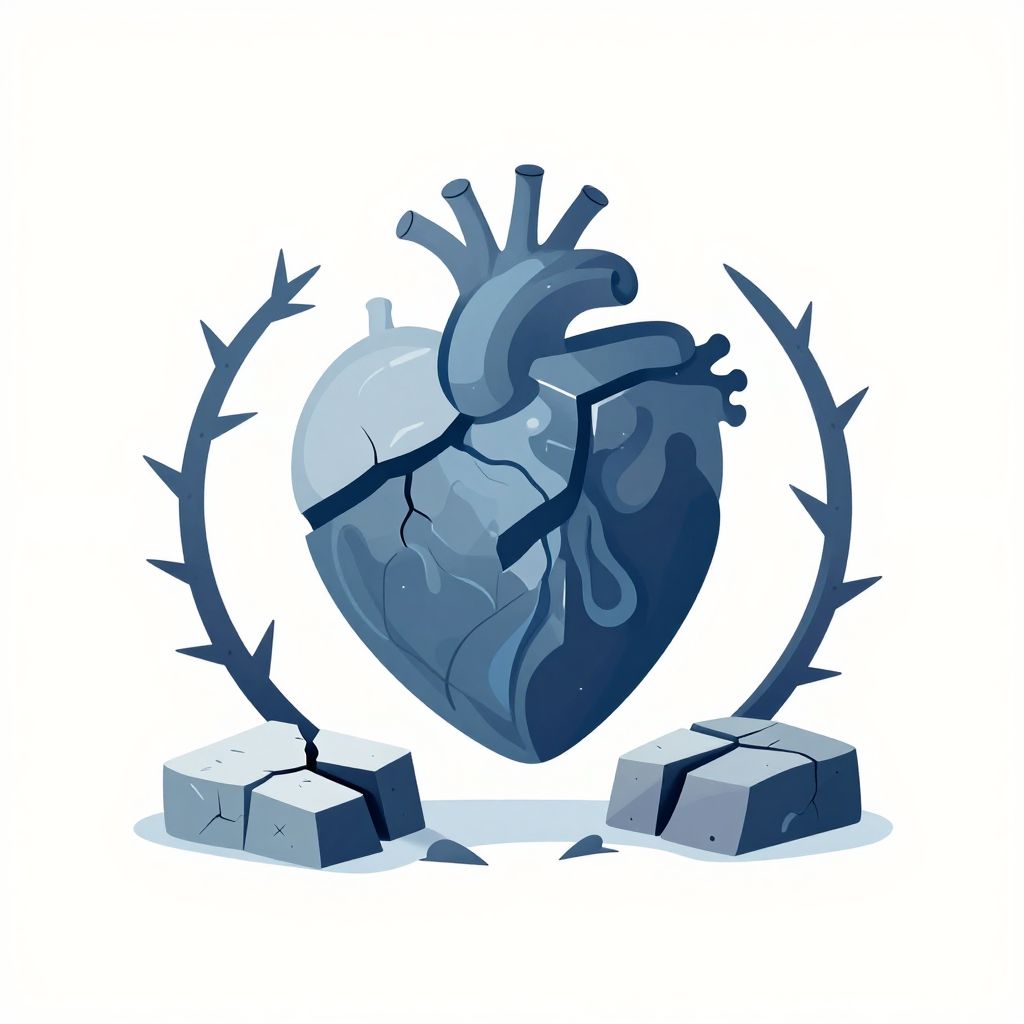
The word “iniquity” appears hundreds of times throughout Scripture, yet many believers struggle to grasp its full meaning. We encounter it in familiar verses like Psalm 51:2 and Isaiah 53:6, but often treat it as just another synonym for sin.
Iniquity carries a deeper, more troubling significance that reveals something profound about the human condition. Understanding what Scripture means by iniquity transforms how we see our need for Christ and His work on the cross.
What Does Iniquity Mean in the Bible?
Iniquity in the Bible refers to moral crookedness or perversity that stems from a twisted heart condition, going beyond individual sinful acts to describe the bent toward evil that corrupts human nature. The Hebrew word “avon” and Greek word “anomia” both convey this sense of moral distortion and lawlessness.
The Hebrew Understanding of Iniquity
The primary Hebrew word translated as “iniquity” is “avon,” which literally means to bend, twist, or distort. This word paints a vivid picture of something that should be straight but has become crooked.
When Scripture uses “avon,” it describes moral corruption that runs deeper than surface behavior. Iniquity represents the internal twist that makes us naturally incline toward rebellion against God.
The Greek Concept of Lawlessness
In the New Testament, “anomia” carries the meaning of lawlessness or being without law. This term appears in passages like Matthew 7:23, where Jesus tells certain people, “I never knew you; depart from me, you workers of lawlessness.”
Anomia describes the condition of operating outside God’s moral order, living as if His standards don’t apply. This goes beyond breaking specific commands to rejecting the very authority of God’s law.
How Iniquity Differs from Sin and Transgression
Scripture often groups three words together: sin, transgression, and iniquity. Each carries distinct meaning that helps us understand the full scope of human moral failure.
Sin: Missing the Mark
The word “sin” comes from an archery term meaning to miss the target. Sin describes falling short of God’s perfect standard, whether through ignorance, weakness, or deliberate choice.
Every human being sins because we cannot consistently hit the bullseye of God’s righteousness. Romans 3:23 captures this reality: “For all have sinned and fall short of the glory of God.”
Transgression: Crossing the Line
Transgression involves deliberately stepping over a known boundary that God has established. When we transgress, we willfully violate a clear command or prohibition.
Adam and Eve committed transgression when they ate from the forbidden tree. They knew God’s command but chose to cross the line anyway.
Iniquity: The Twisted Heart
Iniquity goes deeper than both sin and transgression by addressing the root condition that produces wrong actions. While sin describes our failures and transgression describes our rebellion, iniquity describes our fundamental moral distortion.
David understood this distinction when he prayed in Psalm 51:2: “Wash me thoroughly from my iniquity, and cleanse me from my sin.” He recognized that his adultery and murder stemmed from something twisted within his heart.
Biblical Examples of Iniquity
Scripture provides clear examples that help us recognize iniquity in action. These passages reveal how moral crookedness manifests in human behavior.
Cain’s Jealous Heart
Cain’s murder of Abel emerged from iniquity that had taken root in his heart. His jealousy and anger revealed a twisted perspective that valued his own reputation above his brother’s life.
God warned Cain that sin was crouching at his door, but the iniquity within him had already bent his heart toward violence. The murder was simply the outward expression of internal moral distortion.
Judas’s Betrayal
Judas walked with Jesus for three years, witnessed miracles, and heard the clearest teaching about God’s kingdom. Yet iniquity gradually corrupted his heart until he sold his Master for thirty pieces of silver.
The betrayal revealed that proximity to truth doesn’t automatically straighten a crooked heart. Judas’s iniquity made him capable of betraying the Son of God while maintaining religious appearances.
Israel’s Persistent Rebellion
The book of Hosea describes Israel’s unfaithfulness as iniquity that had become deeply embedded in the nation’s character. Despite experiencing God’s love, provision, and patience, they consistently turned to other gods.
Their idolatry wasn’t just occasional failure but revealed hearts that were fundamentally twisted away from the true God. This iniquity made them prone to repeat the same patterns of rebellion generation after generation.
The Consequences of Iniquity
Scripture teaches that iniquity carries serious consequences that affect both individuals and communities. Understanding these consequences helps us grasp why God takes iniquity so seriously.
Separation from God
Isaiah 59:2 explains that iniquities create separation between us and God: “But your iniquities have separated you from your God; your sins have hidden his face from you, so that he will not hear.” Iniquity doesn’t just displease God—it creates a barrier that blocks fellowship with Him.
This separation isn’t arbitrary punishment but the natural result of moral crookedness. Just as physical crookedness prevents proper alignment, spiritual iniquity prevents proper relationship with a perfectly holy God.
Generational Impact
Exodus 34:7 reveals that God “visits the iniquity of the fathers on the children and the children’s children, to the third and the fourth generation.” This doesn’t mean innocent children bear guilt for their parents’ sins, but that iniquity creates patterns and consequences that affect families across generations.
Children often inherit the twisted perspectives, destructive habits, and broken relationships that flow from their parents’ moral crookedness. What seems like purely personal failure actually impacts entire family lines.
Internal Corruption
Iniquity doesn’t remain static but grows stronger over time. Romans 1:21-24 describes how refusing to honor God leads to increasingly darkened thinking and corrupt desires.
Each act of iniquity makes the next one easier, creating a downward spiral that becomes harder to escape. The heart becomes more twisted, the conscience more seared, and the will more enslaved to patterns of moral failure.
God’s Response to Iniquity
While iniquity is serious, Scripture reveals that God doesn’t abandon humanity to permanent moral crookedness. His response demonstrates both perfect justice and amazing grace.
Divine Judgment
God’s holiness requires Him to judge iniquity. He cannot simply overlook moral crookedness because doing so would compromise His perfect character and enable further corruption.
The flood in Noah’s time came because “the Lord saw that the wickedness of man was great in the earth, and that every intention of the thoughts of his heart was only evil continually” (Genesis 6:5). God’s judgment serves both justice and mercy by preventing iniquity from completely destroying human potential.
Gracious Forgiveness
Despite iniquity’s seriousness, God offers complete forgiveness through Christ’s sacrifice. First John 1:9 promises that “if we confess our sins, he is faithful and just to forgive us our sins and to cleanse us from all unrighteousness.”
This cleansing goes deeper than forgiving individual acts to address the root condition of moral crookedness. God doesn’t just pardon our failures—He provides power to straighten what sin has twisted.
Transforming Grace
Ezekiel 36:26 reveals God’s ultimate solution for iniquity: “And I will give you a new heart, and a new spirit I will put within you. And I will remove the heart of stone from your flesh and give you a heart of flesh.” God addresses iniquity not through external reform but through internal transformation.
This new heart doesn’t eliminate the possibility of sin, but it changes our fundamental orientation from rebellion to obedience, from crookedness to alignment with God’s will.
Christ’s Victory Over Iniquity
The cross represents God’s decisive action against iniquity. Understanding Christ’s work helps us grasp both the problem’s seriousness and the solution’s completeness.
Bearing Our Iniquity
Isaiah 53:6 declares, “All we like sheep have gone astray; we have turned—every one—to his own way; and the Lord has laid on him the iniquity of us all.” Christ didn’t just die for our individual sins but took upon Himself the twisted condition that produces all moral failure.
This means the cross addresses not only what we’ve done wrong but what’s wrong with us. Jesus bore the weight of human moral crookedness so we could be made straight.
Breaking Iniquity’s Power
Romans 6:6 explains that “our old self was crucified with him in order that the body of sin might be brought to nothing, so that we would no longer be enslaved to sin.” Christ’s death breaks iniquity’s enslaving power, freeing us from the compulsive bent toward moral failure.
This freedom doesn’t mean we become incapable of sin, but that we’re no longer helpless victims of our twisted nature. We receive power to choose righteousness rather than being driven by moral crookedness.
Providing New Identity
Second Corinthians 5:21 reveals the great exchange: “For our sake he made him to be sin who knew no sin, so that in him we might become the righteousness of God.” Christ took our iniquity so we could receive His righteousness—not just as a legal declaration but as a new reality.
This righteousness becomes the foundation for gradual moral straightening as the Holy Spirit works within believers to align their hearts with God’s character.
Practical Steps for Dealing with Iniquity
Understanding iniquity should lead to practical action. These steps help believers address moral crookedness in their own hearts and relationships.
Honest Self-Examination
David’s prayer in Psalm 139:23-24 provides a model: “Search me, O God, and know my heart! Try me and know my thoughts! And see if there be any grievous way in me, and lead me in the way everlasting!”
Regular self-examination helps identify areas where our hearts have become twisted away from God’s truth. Ask yourself: What patterns of thinking or behavior reveal moral crookedness in my life?
Genuine Repentance
Addressing iniquity requires more than feeling sorry for specific sins. True repentance involves turning from the twisted thinking that produces wrong behavior.
This means identifying lies we’ve believed about God, ourselves, or others, then replacing those lies with biblical truth. Repentance from iniquity changes not just what we do but how we think.
Pursuing Heart Transformation
Romans 12:2 calls believers to “be transformed by the renewal of your mind, that by testing you may discern what is the will of God, what is good and acceptable and perfect.” Transformation happens as Scripture gradually straightens our twisted perspectives.
Regular Bible study, prayer, and fellowship with other believers creates an environment where the Holy Spirit can address moral crookedness at its root.
Living Free from Iniquity’s Power
Freedom from iniquity isn’t achieved through human effort alone but comes through dependence on Christ’s finished work. This freedom enables believers to live with straightened hearts that naturally incline toward righteousness.
The gospel transforms us from people bent toward evil into people bent toward good, not through religious performance but through the power of Christ’s indwelling Spirit. This transformation takes time but produces real change in how we think, feel, and act.
As you grow in understanding iniquity’s nature and Christ’s victory over it, remember that God’s goal isn’t just to forgive your moral failures but to straighten what sin has made crooked. Trust Him to complete this good work He has begun in you, knowing that His grace is sufficient for every area where your heart needs healing.
Understanding biblical truth transforms how we live and love others. Explore more insights about what the Bible says on important topics, or discover deeper meanings in specific passages like Nahum 3:6 to strengthen your faith and biblical knowledge.