
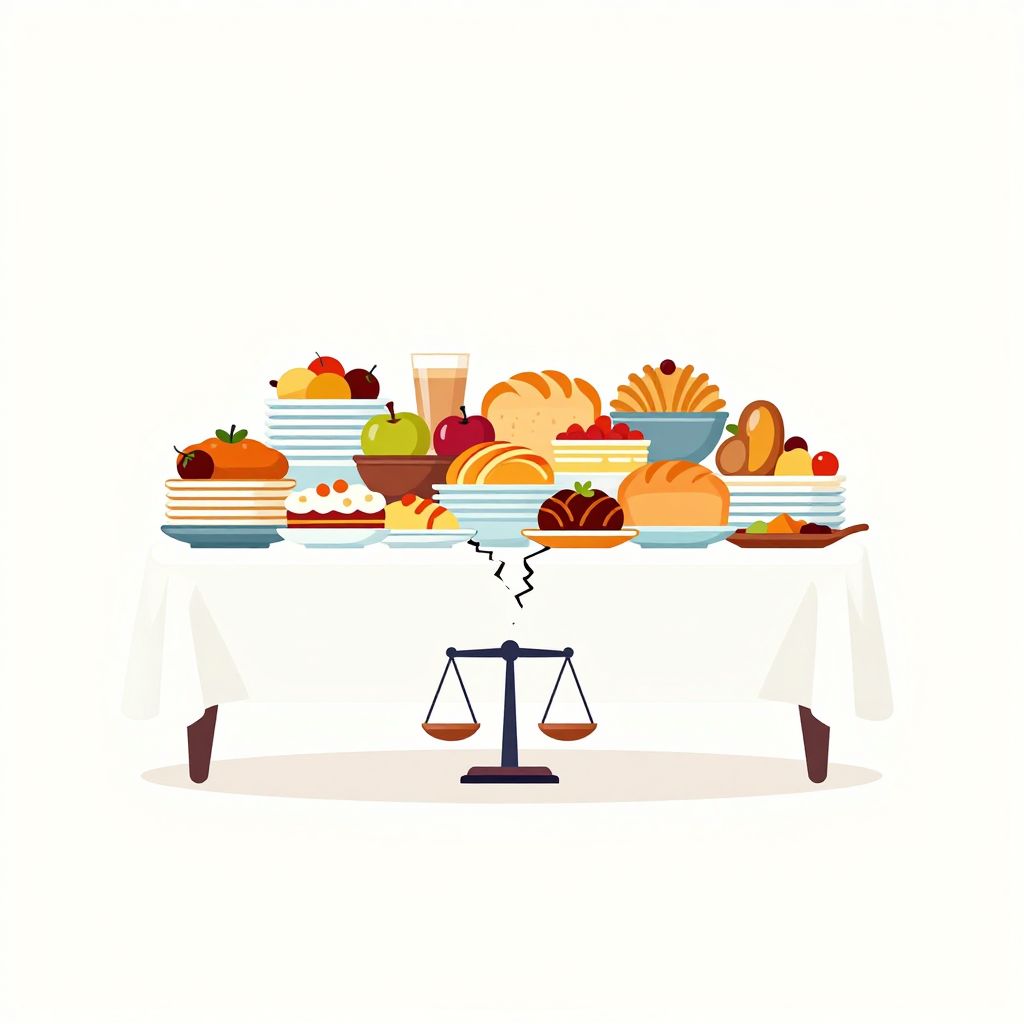
Food surrounds us constantly, and our relationship with it reveals more about our hearts than we might expect. The Bible doesn’t shy away from addressing how we consume, and its wisdom cuts straight to the core of human nature.
When Scripture speaks about gluttony, it reveals God’s design for self-control and exposes the spiritual dangers of excess. This biblical truth shapes how we approach not just food, but every appetite God has given us.
What Does the Bible Say About Gluttony?
The Bible identifies gluttony as excessive consumption that stems from lack of self-control, warning that it leads to spiritual and physical harm while calling believers to practice moderation in all things.
Gluttony Defined in Scripture
The Hebrew word for gluttony, “zalal,” means to be lavish or to squander. Scripture connects this behavior directly to a lack of wisdom and self-discipline.
Proverbs 23:20-21 (ESV) warns: “Be not among drunkards or among gluttonous eaters of meat, for the drunkard and the glutton will come to poverty, and slumber will clothe them with rags.” God places gluttony alongside drunkenness, showing both as forms of dangerous excess.
The New Testament continues this theme through the concept of self-control. Paul lists self-control as a fruit of the Spirit in Galatians 5:22-23, making it clear that believers should govern their appetites rather than being governed by them.
The Heart Behind the Appetite
Gluttony reveals what we truly worship. When food becomes our comfort, our reward, or our escape, we’ve elevated it above its proper place in God’s design.
Philippians 3:19 (ESV) describes those “whose god is their belly, and who glory in their shame, with minds set on earthly things.” This isn’t just about eating too much—it’s about allowing physical appetites to rule our hearts.
Jesus himself addressed this when he said in Matthew 6:25, “Do not be anxious about your life, what you will eat or what you will drink.” He calls us to trust God rather than find security in consumption.
Biblical Examples and Warnings
Old Testament Lessons
The Israelites in the wilderness provide a stark example of how desire can spiral into destructive excess. In Numbers 11:4-6, they craved the food of Egypt despite God’s provision of manna.
Their complaint wasn’t really about food—it was about discontentment with God’s provision. When God gave them quail in response, Numbers 11:33-34 records that many died because they gorged themselves, and the place was called “Graves of Craving.”
Wisdom Literature’s Clear Teaching
Proverbs 25:16 (ESV) counsels: “If you have found honey, eat only enough for you, lest you have your fill of it and vomit it.” Even good things become harmful in excess.
The book of Ecclesiastes reminds us that there’s “a time for every matter under heaven,” including times to feast and times to fast. Balance reflects God’s design for how we should live.
The Spiritual Consequences of Gluttony
Dulled Spiritual Sensitivity
Excess consumption creates spiritual sluggishness. When we’re controlled by physical appetites, we become less sensitive to God’s voice and less responsive to his leading.
Luke 21:34 (ESV) warns: “But watch yourselves lest your hearts be weighed down with dissipation and drunkenness and cares of this life.” Jesus directly connects overindulgence with spiritual dullness.
Damaged Witness
Gluttony affects how others see Christ in us. 1 Corinthians 6:19-20 reminds us that our bodies are temples of the Holy Spirit, purchased with Christ’s blood.
When we abuse this temple through excess, we dishonor both God and the gospel we claim to follow. Our physical habits either point others toward Christ’s lordship or away from it.
God’s Design for Food and Consumption
Food as Gift and Provision
God created food for nourishment and enjoyment. 1 Timothy 4:4-5 (ESV) declares: “For everything created by God is good, and nothing is to be rejected if it is received with thanksgiving, for it is made holy by the word of God and prayer.”
The problem isn’t food itself—it’s our relationship with food. God intends us to receive his provision with gratitude while maintaining proper boundaries.
Feasting and Fasting
Scripture includes both celebrations with abundant food and seasons of fasting. Nehemiah 8:10 encourages God’s people to “eat the fat and drink sweet wine” in celebration of God’s goodness.
Yet Jesus also taught about fasting in Matthew 6:16-18, showing that voluntarily limiting food consumption can draw us closer to God. Both feasting and fasting serve spiritual purposes when done with the right heart.
Practical Steps Toward Biblical Balance
Cultivating Self-Control
Self-control grows through practice and dependence on the Holy Spirit. Start small—choose to stop eating when satisfied rather than when full.
Ask yourself before meals: “Am I eating for nourishment, celebration, or comfort?” Honest answers reveal whether food has taken an inappropriate place in your heart.
Practical Boundaries
Consider these biblical approaches to food:
- Pray before eating: Thank God for his provision and ask for wisdom in consumption
- Eat with gratitude: Focus on God’s goodness rather than using food to fill emotional needs
- Practice moderation: Choose satisfaction over excess in all your eating
- Fast occasionally: Remind yourself that food isn’t your ultimate source of satisfaction
- Share meals: Use food as a means of fellowship and hospitality rather than solitary indulgence
Freedom from Food’s False Promises
Finding True Satisfaction
John 6:35 (ESV) records Jesus saying: “I am the bread of life; whoever comes to me shall not hunger, and whoever believes in me shall never thirst.” Only Christ satisfies the deepest longings of the human heart.
When we try to fill spiritual hunger with physical food, we create an endless cycle of craving and temporary satisfaction. True contentment comes from relationship with God, not consumption of his gifts.
The Gospel and Gluttony
The gospel offers both forgiveness for past gluttony and power for future self-control. Christ’s death covers every sin, including the subtle sin of excess that our culture often overlooks.
His resurrection provides new life that enables us to live differently. 2 Corinthians 5:17 promises that in Christ, we are new creations—free from bondage to appetites that once controlled us.
Walking in Freedom and Wisdom
God calls us to approach food—and all physical appetites—with wisdom, gratitude, and self-control. This isn’t about legalistic rules but about honoring God with every aspect of our lives, including how we eat.
The path forward involves confessing any areas where food has taken God’s place in your heart, asking the Holy Spirit for self-control, and practicing moderation as an act of worship. 1 Corinthians 10:31 reminds us: “So, whether you eat or drink, or whatever you do, do all to the glory of God.”
If you’re interested in exploring more biblical topics, you can discover what the Bible says about various life issues. Many believers also wonder about related topics like biblical drinking, as Scripture addresses multiple aspects of consumption and self-control with the same wisdom and grace.