
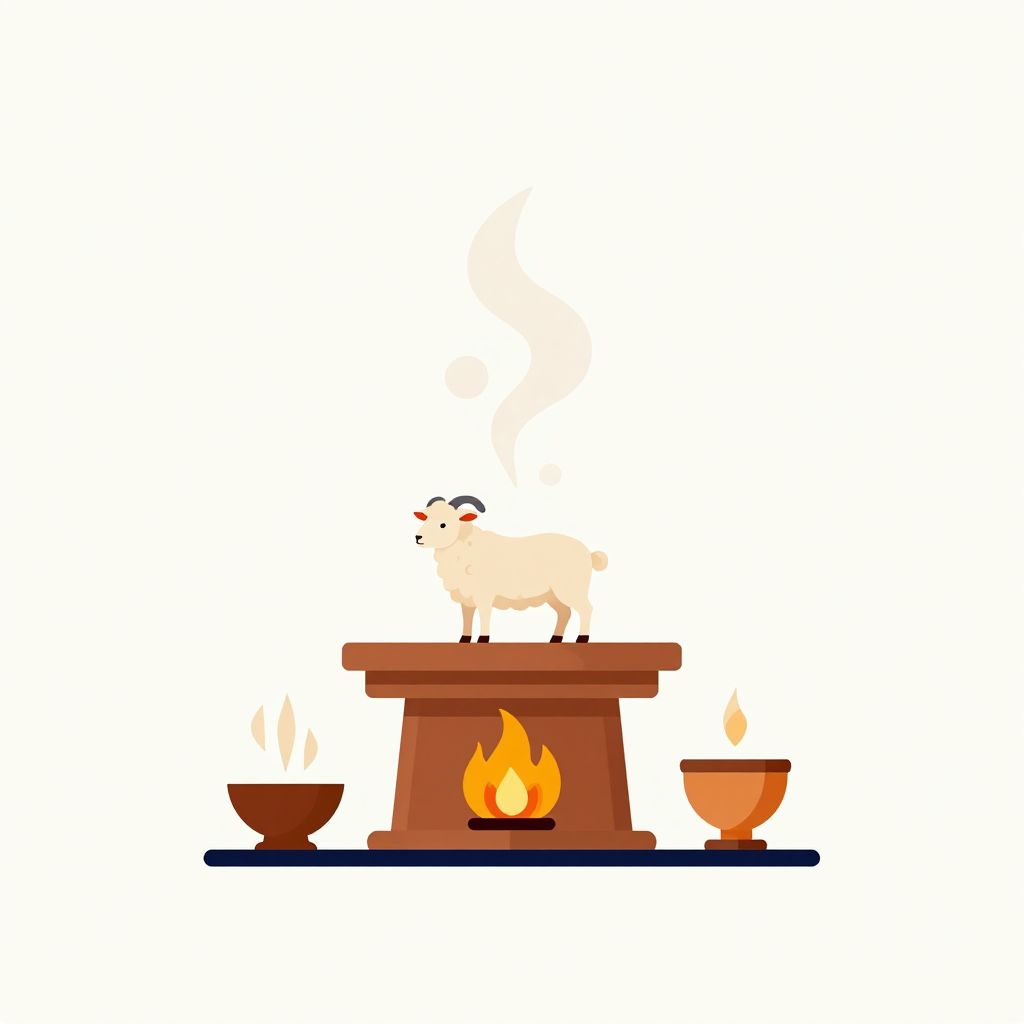
The Old Testament mentions burnt offerings hundreds of times, yet many believers today struggle to understand their meaning and purpose. These sacrifices weren’t arbitrary religious rituals but profound expressions of worship that revealed God’s character and humanity’s desperate need for atonement.
When we grasp what burnt offerings truly represented, we discover how they point directly to Christ’s ultimate sacrifice and transform how we approach worship today.
What Is a Burnt Offering in the Bible?
A burnt offering was a voluntary sacrifice where an animal was completely consumed by fire on the altar as an act of worship and atonement for sin. The Hebrew word “olah” means “to go up,” referring to how the smoke ascended to God as a pleasing aroma (Leviticus 1:9).
The Complete Consumption
Unlike other sacrifices where portions were eaten, the burnt offering was entirely burned except for the hide, which went to the priest. This total consumption symbolized complete surrender and dedication to God.
The worshiper held nothing back—every part of the offering rose as smoke before the Lord. This represented the believer’s desire to offer their whole life to God without reservation.
Animals Used for Burnt Offerings
God specified which animals could serve as burnt offerings based on the worshiper’s economic situation. The wealthy brought bulls, the middle class offered rams or male goats, and the poor could bring doves or pigeons.
Every animal had to be male and without blemish (Leviticus 1:3). This requirement foreshadowed Christ, the perfect and spotless Lamb of God who would offer Himself for our sins.
The Purpose Behind Burnt Offerings
Atonement for Sin
Leviticus 1:4 states the burnt offering would “make atonement” for the person bringing it. The Hebrew word “kaphar” means to cover or make reconciliation—the sacrifice covered the worshiper’s sin before a holy God.
Though these sacrifices couldn’t permanently remove sin, they demonstrated God’s provision for fellowship between sinful humanity and perfect holiness. Each offering pointed forward to the ultimate atonement Christ would provide.
Expression of Worship and Devotion
Burnt offerings weren’t just about sin—they expressed wholehearted worship and dedication to God. The complete consumption of the sacrifice showed the worshiper’s desire to give everything to the Lord.
This wasn’t a grudging religious duty but a joyful response to God’s goodness. The “pleasing aroma” language throughout Leviticus shows God’s delight in sincere worship from His people.
Maintaining Fellowship with God
Regular burnt offerings maintained the covenant relationship between God and His people. The daily morning and evening sacrifices kept the altar fire burning continually, symbolizing unbroken fellowship.
Special occasions like festivals, new moons, and Sabbaths required additional burnt offerings. These rhythms reminded Israel that relationship with God required ongoing attention and devotion.
The Process of Offering a Burnt Sacrifice
Bringing the Animal
The worshiper brought their chosen animal to the entrance of the tabernacle or temple. This public act demonstrated their willingness to approach God according to His prescribed way.
The journey to the sanctuary gave time for reflection and preparation of heart. God wanted sincere worshipers, not people going through empty motions.
Laying on of Hands
The person placed both hands on the animal’s head, symbolically transferring their sin and guilt to the substitute (Leviticus 1:4). This act of faith demonstrated belief that God would accept the sacrifice in their place.
This moment pictures the heart of the gospel—an innocent substitute bearing the penalty that guilty sinners deserve. The animal died so the worshiper could live in fellowship with God.
The Slaughter and Blood Application
The worshiper killed the animal on the north side of the altar, and the priests collected its blood in basins. The blood was then splashed against all sides of the altar (Leviticus 1:5).
Blood represented life, and its application to the altar showed that life had been given to atone for sin. Without the shedding of blood, there could be no forgiveness of sins.
Preparing and Burning the Sacrifice
The priests skinned the animal and cut it into pieces, washing the internal organs and legs with water. Everything was then arranged on the wood and consumed by fire on the altar.
The careful preparation showed reverence for what God had provided. Even in sacrifice, God’s people were to approach Him with dignity and respect.
How Burnt Offerings Point to Christ
The Perfect Sacrifice
Every burnt offering pointed forward to Jesus, who offered Himself as the perfect and final sacrifice for sin (Hebrews 10:10). What bulls and goats could only temporarily cover, Christ permanently removed through His death.
Jesus was the spotless male required for sacrifice—sinless, perfect, and acceptable to God. His offering was voluntary, complete, and effective for all who believe.
Complete Surrender
The total consumption of burnt offerings pictures Christ’s complete surrender to the Father’s will. He held nothing back but gave His entire life for our redemption.
Jesus’ sacrifice was also a pleasing aroma to God—perfect worship that satisfied divine justice and opened the way for sinners to approach the throne of grace.
Our Access to God
What burnt offerings provided temporarily, Christ provides permanently. We now have boldness to enter God’s presence through the blood of Jesus (Hebrews 10:19).
No longer do we need animal sacrifices or priestly mediators. Christ is our great High Priest who offered Himself once for all, securing eternal access to our heavenly Father.
What This Means for Christians Today
Our Reasonable Worship
Romans 12:1 calls believers to present their bodies as “living sacrifices, holy and pleasing to God”—this is our spiritual worship. We offer not dead animals but our living selves in daily surrender.
Like burnt offerings that were completely consumed, God calls us to wholehearted devotion. Half-hearted Christianity misses the point of what Christ accomplished for us.
The Sacrifice of Praise
Hebrews 13:15 describes our “sacrifice of praise” as the fruit of lips that acknowledge God’s name. Our worship and thanksgiving rise like incense before the throne of grace.
Every act of obedience, every expression of gratitude, every moment of surrender becomes our burnt offering to the One who gave everything for us.
Living in Gratitude
Understanding burnt offerings should deepen our appreciation for Christ’s sacrifice. The elaborate Old Testament system shows the seriousness of sin and the costliness of atonement.
When we grasp what it took to provide access to God, worship becomes not a duty but a delight. How can we respond with anything less than our whole hearts?
The burnt offerings of the Old Testament reveal both the holiness of God and His amazing provision for sinful people. Through these sacrifices, we see God’s heart to dwell with His people despite their unworthiness. Most importantly, every burnt offering pointed forward to the perfect sacrifice of Jesus Christ, who gave Himself completely for our salvation. As we reflect on this truth, let our response be like those ancient offerings—complete, willing, and wholly devoted to the God who first loved us.
Continue growing in your understanding of Scripture by exploring more biblical insights. Discover what the Bible says about topics that matter to your faith, or learn about other Old Testament symbols like manna in the Bible to deepen your appreciation for how God provided for His people throughout history.