
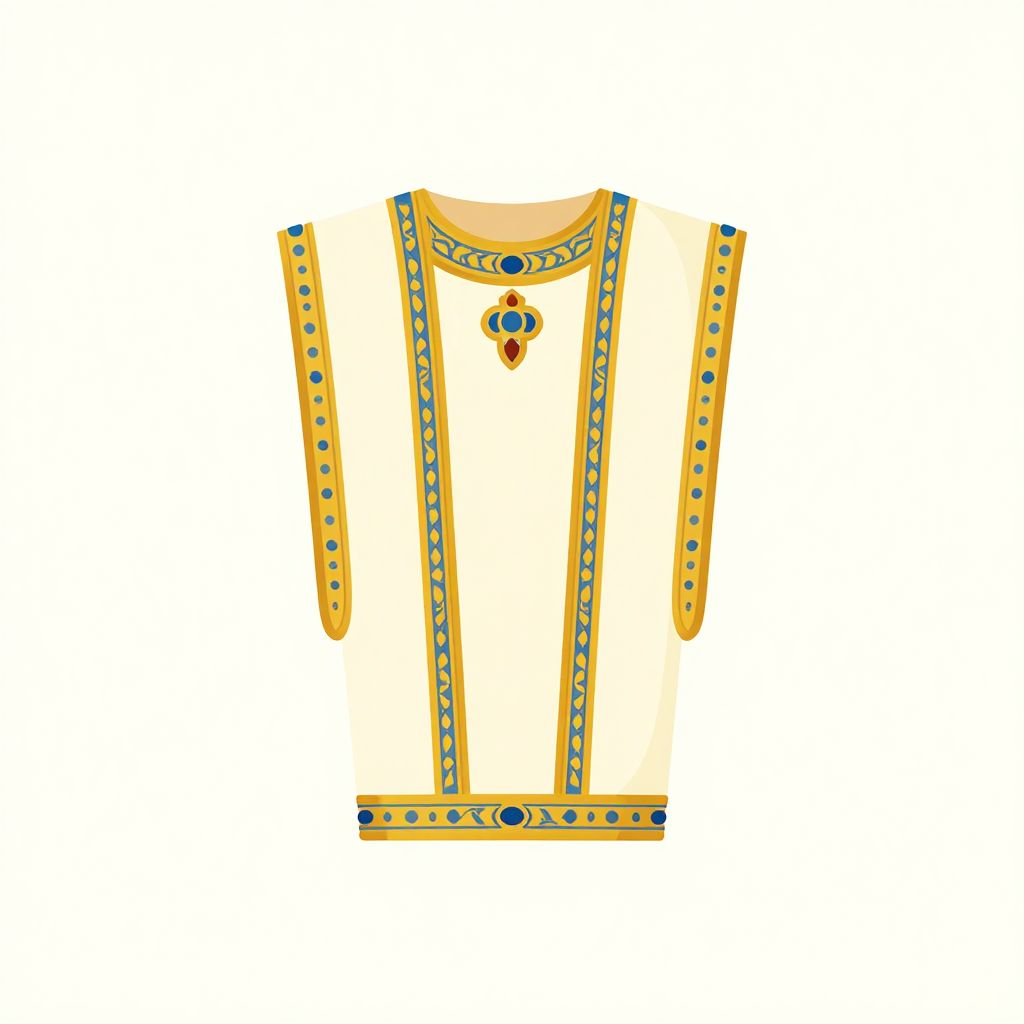
The ephod appears throughout Scripture as one of the most sacred garments in Israel’s worship, yet many believers today have never heard of it. This mysterious priestly vestment carried profound spiritual significance that points directly to Christ and our access to God’s presence.
Understanding the ephod reveals God’s detailed plan for worship and His desire for intimate relationship with His people. The lessons embedded in this ancient garment speak powerfully to modern faith.
What Is an Ephod in the Bible?
An ephod was a sacred vestment worn by Israel’s high priest, designed as an apron-like garment that held the breastplate containing the Urim and Thummim for seeking God’s will. The ephod served as the primary means through which God communicated specific guidance to His people through the high priest.
The High Priest’s Ephod Design
God gave Moses exact specifications for the ephod in Exodus 28:6-14. The garment required the finest materials available – gold thread, blue and purple and scarlet yarn, and finely twisted linen.
Two shoulder pieces connected the front and back sections of the ephod. Gold rings and chains secured the breastplate to the ephod, ensuring the sacred stones remained in place during priestly duties.
The ephod’s beauty reflected God’s glory and the dignity of approaching His presence. Every thread and clasp declared that worship demands our very best offerings to the Lord.
The Stones of Remembrance
Two onyx stones mounted on the ephod’s shoulders carried the names of Israel’s twelve tribes. The high priest literally bore the people on his shoulders before God every time he entered the tabernacle.
This design choice reveals God’s heart for His people. He wanted visual reminders that the priest represented every person, every family, every tribe when seeking the Lord’s face.
Can you imagine the weight of that responsibility? The high priest carried not just stones, but the spiritual burdens and needs of an entire nation.
The Ephod’s Role in Seeking God’s Will
The Urim and Thummim
The breastplate attached to the ephod contained the Urim and Thummim – sacred lots used for receiving yes or no answers from God. When Israel faced critical decisions, the high priest would consult these divine instruments.
1 Samuel 23:9-12 shows David using the ephod through the priest Abiathar to receive specific guidance about military strategy. God answered David’s questions clearly through this sacred system.
The ephod represented direct communication between heaven and earth. God established this method because He wanted His people to seek His wisdom rather than relying on human understanding alone.
Examples of the Ephod in Action
Scripture records several instances where the ephod provided crucial guidance for Israel. David consulted the ephod before pursuing the Amalekites who had raided Ziklag, and God gave him clear direction for victory.
King Saul also sought guidance through the ephod during his reign. However, 1 Samuel 28:6 reveals that God eventually stopped answering Saul through the ephod because of the king’s disobedience.
These accounts demonstrate that the ephod’s effectiveness depended on the spiritual condition of both the priest and the person seeking guidance. God responds to sincere hearts, not religious rituals alone.
Different Types of Ephods
The Simple Linen Ephod
Not all ephods matched the elaborate design of the high priest’s garment. 1 Samuel 2:18 describes young Samuel wearing a simple linen ephod while serving in the temple.
David also wore a linen ephod when he danced before the ark of the covenant in 2 Samuel 6:14. These simpler versions represented service and worship rather than the official priestly function of seeking God’s will.
The distinction matters because it shows how different people participated in worship according to their calling and position. God values both elaborate service and simple devotion.
Counterfeit Ephods
Scripture also warns about illegitimate ephods created for idol worship. Judges 8:27 tells how Gideon made an ephod from golden earrings, and “all Israel played the harlot with it there.”
Even well-meaning attempts to create religious objects outside God’s design lead people away from true worship. The ephod’s power came from God’s appointment, not from the object itself.
This serves as a sobering reminder that religious symbols become dangerous when they replace genuine relationship with God. Form without divine substance breeds spiritual deception.
The Ephod Points to Christ
Jesus as Our High Priest
Hebrews 4:14-16 declares Jesus as our great High Priest who has passed through the heavens. Christ fulfills everything the ephod represented in the Old Testament system.
Just as the high priest bore Israel’s names on his shoulders, Jesus carries believers before the Father continually. His intercession surpasses any earthly priest wearing an ephod.
The ephod required annual maintenance and eventual replacement, but Christ’s priesthood remains forever. We access God’s throne of grace directly through Him without needing physical garments or sacred lots.
Seeking God’s Will Today
Believers no longer need an ephod to discern God’s will because the Holy Spirit guides us into all truth according to John 16:13. God’s Word provides the wisdom we need for every decision.
Prayer replaces the Urim and Thummim as our method for seeking divine guidance. God speaks through Scripture, godly counsel, circumstances, and the inner witness of His Spirit.
How often do you seek God’s will with the same intentionality that David showed when consulting the ephod? The availability of direct access should increase our dependence on God, not decrease it.
Practical Lessons from the Ephod
The Importance of Proper Approach
The ephod’s elaborate design teaches that approaching God requires reverence and preparation. Casual attitudes toward prayer and worship miss the significance of entering the Creator’s presence.
This doesn’t mean Christians need ornate clothing for prayer, but it does mean our hearts should recognize the privilege of communion with God. The ephod’s beauty reflected the glory of the One being approached.
Consider preparing your heart before prayer with the same care that priests took when putting on the ephod. Gratitude and reverence open our spirits to receive God’s guidance more clearly.
Bearing Others Before God
The high priest’s role of carrying the tribes on his shoulders challenges believers to intercede faithfully for others. Intercessory prayer remains one of the most powerful ministries available to Christians today.
Like those ancient stones, the names and faces of family members, friends, and fellow believers should rest heavily on our hearts when we pray. God still responds when His people cry out on behalf of others.
Who has God placed in your life that needs you to bear them before His throne? The ephod reminds us that spiritual leadership involves carrying others’ burdens in prayer.
The Ephod’s Lasting Significance
The ephod reveals God’s desire for clear communication with His people and His provision for accessing divine wisdom. Though the physical garment belongs to the old covenant, its spiritual principles remain vital for believers today.
Christ has become our permanent High Priest, eliminating the need for earthly ephods while fulfilling their ultimate purpose. We can approach God’s throne boldly, knowing that Jesus bears our names before the Father continually.
Take time to thank God for the access to His presence that cost Christ everything to provide. Then step forward confidently in prayer, knowing that the greatest High Priest in history represents you before the throne of grace.
Continue growing in biblical understanding by exploring more topics that deepen your faith. Discover what the Bible says about various subjects, or learn about other significant biblical elements like manna that reveal God’s faithful provision throughout Scripture.