
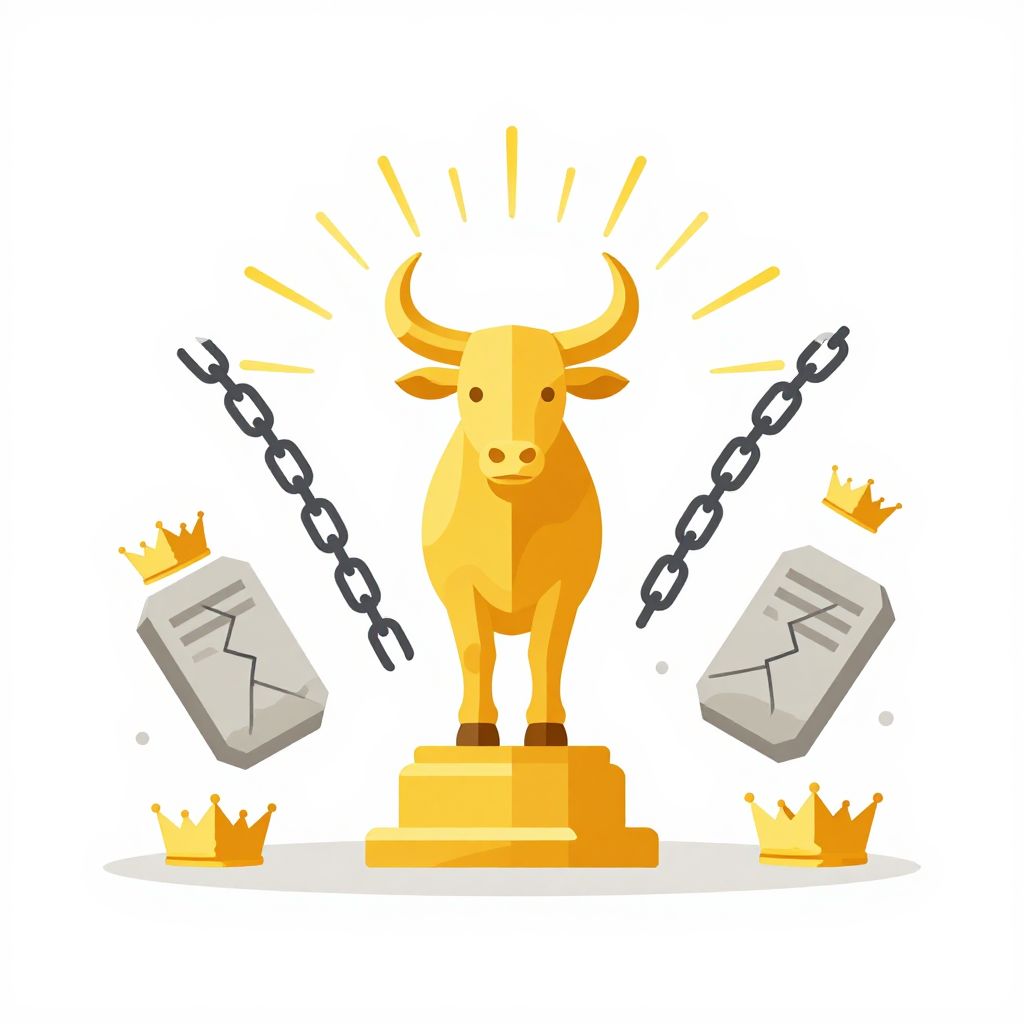
Most Christians recognize golden calves and carved statues as idolatry, but the biblical definition cuts much deeper than obvious religious symbols. When we place anything—career success, relationships, comfort, or even good things—in the position that belongs to God alone, we cross into idolatrous territory.
Scripture reveals idolatry as humanity’s most persistent rebellion against God, woven through every page from Genesis to Revelation. Understanding what idolatry truly means equips believers to recognize and resist the subtle ways it creeps into modern Christian life.
What Is Idolatry in the Bible?
Idolatry in the Bible is the worship, service, or ultimate devotion given to anything other than the one true God. It includes both physical idol worship and the heart condition that elevates created things above the Creator.
The Foundation: God’s Exclusive Claim
God establishes His exclusive right to worship in the very first commandment: “You shall have no other gods before me” (Exodus 20:3, ESV). This command doesn’t merely forbid acknowledging other deities—it demands that nothing rival God’s supreme place in our hearts and lives.
The Hebrew word for idolatry, “avoda zarah,” literally means “strange service.” When we serve anything with the devotion that belongs to God alone, we engage in this strange service that Scripture consistently condemns.
Two Forms of Biblical Idolatry
External idolatry involves physical objects, statues, or religious systems that people worship instead of God. The Israelites’ golden calf (Exodus 32) and their later adoption of Canaanite gods represent this obvious form.
Internal idolatry occurs when our hearts prioritize anything above God, even without physical objects involved. Ezekiel 14:3 speaks of men who “have taken their idols into their hearts”—a condition that requires no statue or shrine.
Old Testament Examples of Idolatry
The Golden Calf Incident
While Moses received the Ten Commandments on Mount Sinai, the Israelites convinced Aaron to craft a golden calf for worship. They declared, “These are your gods, O Israel, who brought you up out of the land of Egypt” (Exodus 32:4, ESV).
This incident reveals how quickly God’s people turn to substitutes when His presence feels distant. The Israelites didn’t abandon their belief in divine power—they simply redirected it toward something they could see and control.
Solomon’s Tragic Turn
King Solomon, blessed with wisdom and wealth beyond measure, fell into idolatry through his foreign wives. “His wives turned away his heart after other gods, and his heart was not wholly true to the Lord his God” (1 Kings 11:4, ESV).
Solomon’s story demonstrates how even the wisest believers can drift into idolatry through seemingly innocent compromises. His relationships gradually pulled his heart away from exclusive devotion to God.
The Northern Kingdom’s Persistent Rebellion
After Israel split into two kingdoms, the northern tribes consistently practiced idolatry under various kings. They worshiped Baal, Asherah, and other Canaanite deities, often blending these practices with token worship of the true God.
This syncretism—mixing true worship with false—eventually led to their exile and destruction. God’s patience has limits when His people persistently choose other gods.
New Testament Understanding of Idolatry
Jesus Addresses Heart Idolatry
Jesus expanded the understanding of idolatry beyond physical objects to heart attitudes. When He told the rich young ruler to sell everything and follow Him, He exposed the man’s true god: his wealth (Matthew 19:16-22).
The ruler’s unwillingness to part with his possessions revealed where his ultimate trust resided. Jesus didn’t condemn wealth itself but the heart condition that made wealth more important than following God.
Paul’s Warnings About Modern Idols
The apostle Paul identified covetousness as idolatry: “Put to death therefore what is earthly in you: sexual immorality, impurity, passion, evil desire, and covetousness, which is idolatry” (Colossians 3:5, ESV). Covetousness makes our desires into gods we serve and obey.
Paul also warned that some people’s “god is their belly” (Philippians 3:19, ESV). Even physical appetites and comfort can become idolatrous when they control our choices and priorities.
John’s Final Warning
The apostle John closes his first letter with a stark command: “Little children, keep yourselves from idols” (1 John 5:21, ESV). This wasn’t addressing pagans but believers—a reminder that Christians remain vulnerable to idolatry throughout their lives.
John understood that idolatry represents Christianity’s constant threat, not just its ancient history.
Modern Forms of Idolatry
The Idol of Success and Achievement
When career advancement, academic achievement, or personal accomplishment becomes our primary source of identity and worth, we’ve created an idol. These pursuits promise the significance and security that only God can provide.
The telltale sign: we feel devastated when these areas disappoint us, and we sacrifice relationships, health, or biblical principles to maintain them.
Relationship Idolatry
Marriage, children, friendships, and romantic relationships become idolatrous when we depend on them for our ultimate happiness and fulfillment. While God designed these relationships as blessings, they cannot bear the weight of being our primary source of joy.
When we need human approval more than God’s approval, we’ve elevated people to a godlike position in our hearts.
Comfort and Security Idols
Money, health, physical safety, and comfortable circumstances become idols when we trust them more than we trust God’s provision and protection. Jesus warned, “You cannot serve God and money” (Matthew 6:24, ESV) because ultimate trust can only flow in one direction.
Fear of losing these comforts often reveals how much we depend on them rather than on God’s promises.
Religious and Spiritual Idolatry
Even good spiritual activities can become idolatrous when we trust them more than we trust Christ. Church attendance, Bible study, prayer disciplines, or theological knowledge become idols when we depend on them for righteousness rather than on Jesus’ finished work.
The Pharisees exemplified this religious idolatry, trusting their spiritual performance while missing the Messiah standing before them.
How to Identify Idolatry in Your Life
Heart-Revealing Questions
What occupies your thoughts during quiet moments? What you naturally think about when your mind wanders often reveals what holds ultimate importance in your heart.
Where do you turn first when facing crisis or disappointment? Your instinctive response during trouble shows where you place your real trust.
The Anxiety Test
What circumstances or losses would devastate you most completely? While grief over loss is natural and biblical, the things whose potential loss creates overwhelming anxiety often function as idols in our lives.
Jesus taught, “Do not be anxious about your life, what you will eat or what you will drink, nor about your body, what you will put on” (Matthew 6:25, ESV) because anxiety often reveals misplaced trust.
The Sacrifice Test
What are you unwilling to give up for Christ? What activities, relationships, possessions, or pursuits feel non-negotiable in your life?
While God doesn’t call everyone to literal poverty or singleness, our unwillingness to surrender anything to Him exposes potential idols.
Breaking Free from Idolatry
Repentance and Recognition
Breaking free from idolatry begins with honest recognition and genuine repentance. God calls idol worshipers to “turn from these vain things to a living God” (Acts 14:15, ESV).
True repentance involves more than feeling sorry—it requires turning away from the idol and turning toward God with renewed trust and devotion.
Replacing Idols with God
Simply removing idols creates a vacuum that other idols will fill unless we actively replace them with proper worship of God. Jesus taught that when an unclean spirit is cast out but the house remains empty, seven worse spirits return (Matthew 12:43-45).
Victory over idolatry requires cultivating genuine love for God, not just hatred for idols.
Practical Steps for Freedom
Develop regular practices that remind you of God’s supremacy: daily Bible reading, prayer, worship, and fellowship with other believers. These spiritual disciplines don’t earn God’s favor, but they help reorient your heart toward Him.
Practice gratitude specifically for God’s character and promises, not just His gifts. This shifts focus from what God gives to who God is.
God’s Heart Toward Idol Worshipers
Divine Jealousy
Scripture describes God as jealous for His people’s exclusive devotion: “You shall worship no other god, for the Lord, whose name is Jealous, is a jealous God” (Exodus 34:14, ESV). This jealousy isn’t petty or insecure—it flows from love and concern for our wellbeing.
God knows that idols always disappoint and destroy their worshipers. His jealousy protects us from the devastating consequences of misplaced trust.
Patient Love and Restoration
Despite Israel’s repeated idolatry, God consistently offered restoration and forgiveness to repentant hearts. The book of Hosea pictures God as a faithful husband pursuing His adulterous wife with persistent love.
This same patient love extends to modern believers who struggle with idolatry. God’s goal isn’t condemnation but restoration to proper worship and joy.
Understanding biblical idolatry equips believers to recognize the subtle ways created things compete with the Creator for our ultimate devotion. God deserves and demands our exclusive worship not because He’s insecure, but because He alone can satisfy our deepest needs and longings. Take time to examine your heart honestly—what competes with God for your trust, time, and affection? Begin today by repenting of any idols you discover and redirecting your worship toward the one true God who loves you perfectly and deserves your complete devotion.
For deeper biblical insights and answers to important spiritual questions, explore what the Bible says about various topics. You can also discover biblical foundations like where the Ten Commandments appear in Scripture to strengthen your understanding of God’s moral law and character.