
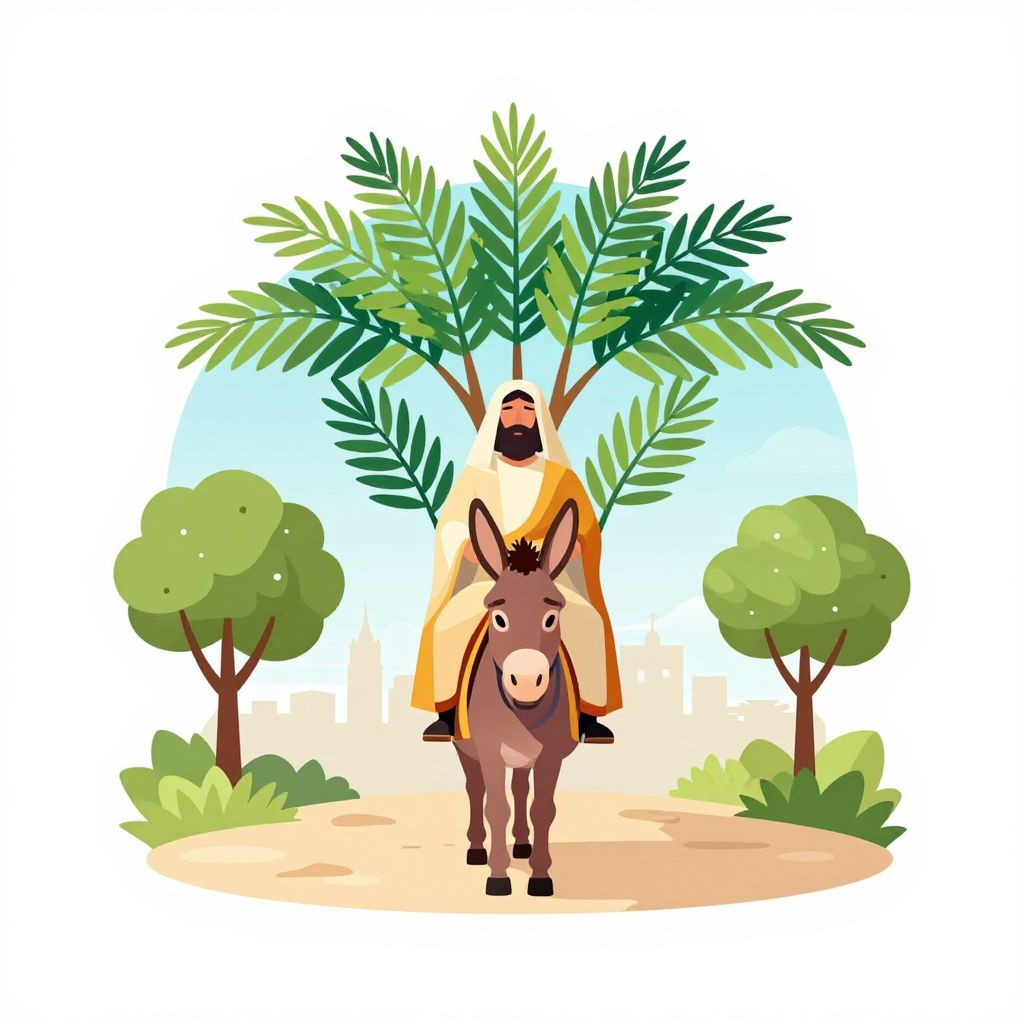
Picture crowds lining dusty Jerusalem streets, waving palm branches and shouting praises as a humble king rides by on a donkey. This scene marks one of the most significant moments in Scripture, yet many Christians miss its deeper meaning.
Palm Sunday represents the triumphant entry of Jesus into Jerusalem just days before His crucifixion, fulfilling ancient prophecies and setting the stage for humanity’s redemption. This event bridges the gap between Christ’s ministry and His sacrificial death, revealing both His identity as King and His mission as Savior.
What Is Palm Sunday in the Bible?
Palm Sunday commemorates Jesus Christ’s triumphant entry into Jerusalem, recorded in all four Gospels, when crowds welcomed Him as King while He rode on a donkey, fulfilling Messianic prophecy. This event occurred on the Sunday before His crucifixion, marking the beginning of what Christians call Passion Week.
The Biblical Account
Matthew, Mark, Luke, and John all record this pivotal moment, though each Gospel writer emphasizes different details. Matthew 21:1-11 describes how Jesus sent two disciples to retrieve a donkey and her colt, exactly as He had predicted they would find them.
The crowds spontaneously began laying their cloaks on the road and cutting palm branches to wave before Jesus. They shouted “Hosanna to the Son of David! Blessed is he who comes in the name of the Lord!” (Matthew 21:9)
John’s Gospel adds the crucial detail that many people were in Jerusalem for the Passover festival. These pilgrims had heard about Jesus raising Lazarus from the dead, which explains the massive crowd that gathered to welcome Him.
The Prophetic Significance
Jesus deliberately fulfilled Zechariah 9:9, which prophesied that Israel’s king would come “gentle and riding on a donkey.” This wasn’t coincidence – it was divine orchestration spanning centuries.
The prophet Zechariah wrote these words about 500 years before Christ’s birth. Every detail mattered: the humility, the specific animal, and the peaceful nature of this king’s arrival.
Matthew explicitly connects this prophecy to Palm Sunday, showing his Jewish readers that Jesus met every requirement for the promised Messiah. The crowds recognized this too, calling Jesus “Son of David,” a distinctly Messianic title.
Why Did Jesus Choose a Donkey?
Kings in the ancient world rode horses when going to war but donkeys when coming in peace. Jesus chose the donkey to demonstrate that His kingdom operates through peace, not violence.
This choice also highlighted His humility. Roman emperors and earthly kings preferred elaborate chariots and powerful war horses to display their might.
Jesus rode an unbroken colt, which normally would buck and resist a rider. Yet this young donkey carried the Creator of the universe peacefully through Jerusalem’s streets – a quiet miracle that demonstrated Christ’s authority over creation itself.
What Do the Palm Branches Represent?
Palm branches symbolized victory, peace, and celebration in Jewish culture. The crowds waved them to honor Jesus as a conquering king, though they misunderstood the type of victory He would achieve.
These same branches appear in Revelation 7:9, where the redeemed from every nation hold palm branches while praising the Lamb who was slain. The symbolism comes full circle – from earthly celebration to eternal worship.
The Cry of “Hosanna”
“Hosanna” means “save now” or “save, we pray.” The crowds unknowingly prophesied Christ’s mission while celebrating His kingship.
They wanted political salvation from Roman oppression. Jesus came to provide spiritual salvation from sin’s oppression – a far greater deliverance than they imagined.
The Tragedy Hidden in Triumph
Luke’s Gospel reveals that Jesus wept over Jerusalem during this celebration. He saw past the crowds’ praise to their coming rejection and the city’s eventual destruction.
Within days, many of these same voices would shout “Crucify Him!” Human praise proves fickle, but God’s purposes remain unshakeable.
Jesus knew that true victory required His death. The path to the throne led through the cross, and Palm Sunday marked the beginning of that final journey.
A King Unlike Any Other
Every earthly king seeks to preserve his life and extend his reign. Jesus willingly entered Jerusalem knowing it meant His death, because losing His life would secure eternal life for His people.
The crowds expected a political revolutionary who would overthrow Rome. Instead, Jesus came as a spiritual revolutionary who would overthrow sin, death, and hell itself.
Palm Sunday’s Message for Today
This ancient event speaks directly to modern believers about worship, expectations, and the nature of Christ’s kingdom. True worship acknowledges Jesus as King while surrendering our own agenda for His will.
Do you find yourself wanting Jesus to solve your immediate problems while missing His deeper work in your soul? The Palm Sunday crowds made this exact mistake.
Lessons About Genuine Faith
Crowd enthusiasm doesn’t equal genuine faith. Many people who praised Jesus on Sunday abandoned Him by Friday.
Real discipleship costs more than waving palm branches and shouting praise. It requires following Christ even when He doesn’t meet our expectations or fulfill our immediate desires.
Consider your own faith: does it depend on circumstances, or does it rest on Christ’s character and promises? Palm Sunday challenges believers to examine whether their worship runs deeper than emotion.
The Call to Humble Service
Jesus demonstrated that true greatness comes through humble service, not self-promotion or power-seeking. His choice of a donkey over a war horse teaches every Christian about leadership and influence.
In a world obsessed with status and recognition, followers of Christ must choose the narrow path of servanthood. The kingdom of God operates by completely different principles than earthly kingdoms.
How Palm Sunday Connects to Easter
Palm Sunday gains its full meaning only when viewed alongside Good Friday and Easter Sunday. The triumphal entry makes no sense without the cross and resurrection that follow.
Jesus entered Jerusalem as King to die as a sacrifice. His coronation occurred not in a palace but on Calvary, where He defeated humanity’s greatest enemies.
The crown of thorns proved more significant than any crown of gold. Through apparent defeat, Jesus accomplished the greatest victory in human history.
Living Between the Triumphs
Christians today live between Palm Sunday and the Second Coming. We acknowledge Jesus as King while waiting for His kingdom to come in fullness.
This means living with tension – celebrating Christ’s victory while still battling sin, proclaiming His peace while surrounded by conflict. Palm Sunday teaches us to worship faithfully even when we cannot see the complete picture.
Practical Applications for Believers
Understanding Palm Sunday should transform how Christians approach worship, expectations, and daily obedience. This event calls believers to examine their motives and deepen their commitment.
Here are key ways to apply Palm Sunday’s lessons:
- Worship Christ for who He is, not just for what He does for you
- Choose humility over self-promotion in your daily interactions
- Trust God’s timing even when His plans don’t match your expectations
- Prepare your heart to follow Christ through difficult seasons
- Remember that God’s victories often look like defeats to human eyes
How does your worship compare to the Palm Sunday crowds? Do you praise Jesus loudly in good times but question His goodness when circumstances get difficult?
The Challenge of Consistent Discipleship
True followers of Christ maintain their devotion through both palm branches and thorny crowns. Fair-weather faith crumbles under pressure, but genuine faith grows stronger through trials.
Palm Sunday reminds believers that following Jesus means accepting His methods as well as His goals. He accomplishes His purposes through ways that often confuse and challenge human wisdom.
Palm Sunday stands as one of Scripture’s most significant events, revealing Christ’s identity, mission, and the nature of His kingdom. This triumphant entry teaches believers about genuine worship, humble service, and faithful discipleship. The crowds waved palm branches while missing the deeper truth that their King came to die for them. Modern Christians must avoid the same mistake by worshiping Christ consistently, whether circumstances bring celebration or suffering. As you reflect on Palm Sunday’s meaning, ask yourself: will you praise Jesus only when life goes well, or will you trust His character and plans even through the valley? True discipleship begins with recognizing Jesus as King and continues with following Him faithfully through every season of life.
For deeper insight into biblical truths and their practical applications, explore more resources about what the Bible says on important topics. You might also find it meaningful to study other significant biblical symbols, such as what is manna and how it points to Christ as the bread of life.