
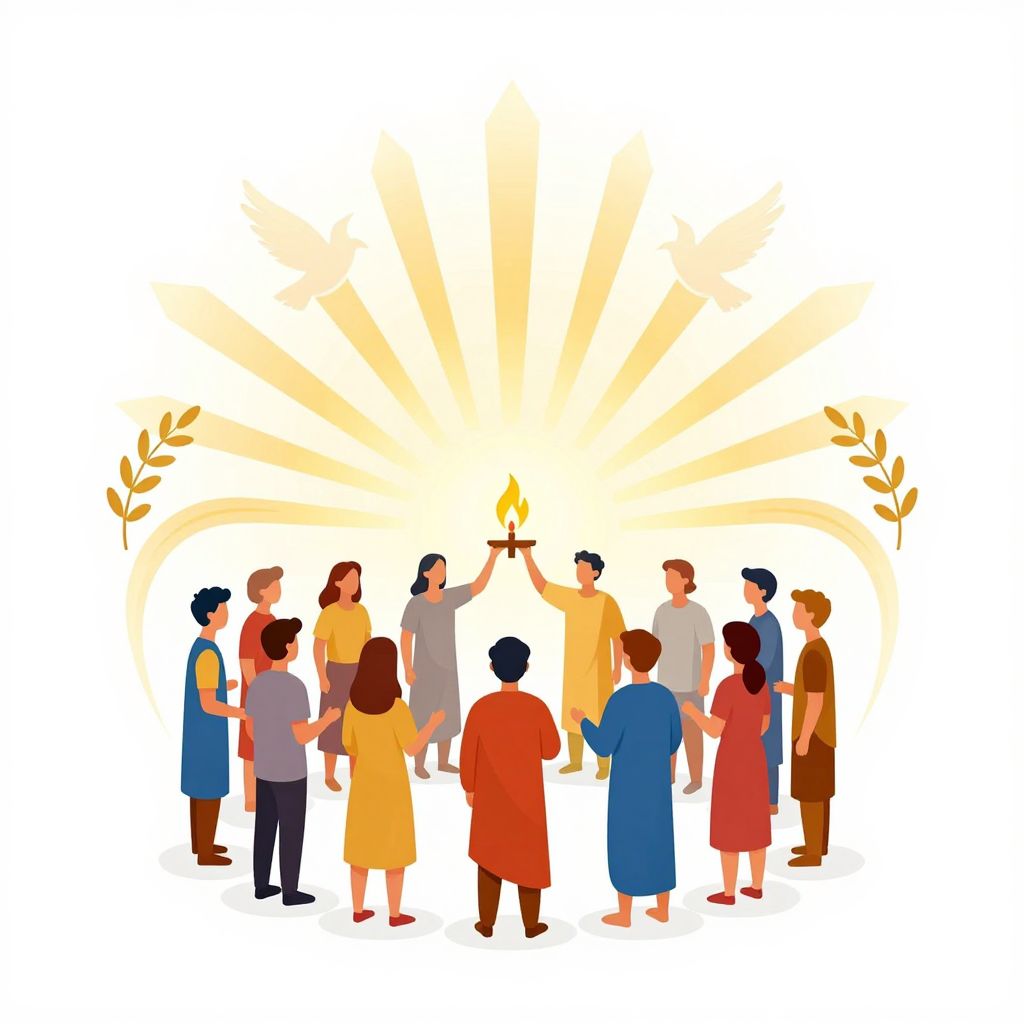
Most Christians know Pentecost happened, but many miss why it matters so deeply for their daily faith. The day the Holy Spirit descended wasn’t just a historical event—it was God fulfilling His promise to never leave His people powerless or alone.
Pentecost marks the birth of the church and the arrival of God’s Spirit to dwell permanently within believers. Understanding this pivotal moment changes how we view our relationship with God and our calling as His people.
What Is Pentecost in the Bible?
Pentecost is the day when the Holy Spirit descended on Jesus’ disciples, empowering them to spread the gospel and establishing the New Testament church. This event occurred fifty days after Jesus’ resurrection, fulfilling His promise that believers would receive divine power.
The Historical Setting
Pentecost originally was a Jewish harvest festival, also called the Feast of Weeks. Jews from across the Roman Empire gathered in Jerusalem to celebrate God’s provision and remember His covenant.
This timing wasn’t coincidental—God chose this moment when devout people from many nations filled the city. The harvest festival became the perfect backdrop for the first great harvest of souls into the church.
The Promise Behind Pentecost
Before His ascension, Jesus told His disciples, “Do not leave Jerusalem, but wait for the gift my Father promised, which you have heard me speak about” (Acts 1:4, NIV). He wasn’t sending them out empty-handed to change the world.
The disciples had walked with Jesus for three years, yet they still needed divine power to fulfill their mission. This shows us that even intimate knowledge of Christ requires the Spirit’s empowerment for effective ministry.
What Happened on the Day of Pentecost?
Acts 2 records the dramatic events that unfolded when God’s Spirit arrived. The supernatural signs weren’t just for show—they announced a new era in God’s relationship with humanity.
The Sound and the Fire
“Suddenly a sound like the blowing of a violent wind came from heaven and filled the whole house where they were sitting” (Acts 2:2, NIV). This wasn’t a gentle breeze—it was the rushing, powerful presence of God arriving with unmistakable force.
Tongues of fire rested on each disciple, symbolizing purification and divine commissioning. Fire represents God’s holiness and His refining work in our lives.
Speaking in Tongues
The disciples began speaking in languages they had never learned, declaring God’s wonders to the international crowd. This wasn’t gibberish—it was clear communication that broke down language barriers.
Each person in the crowd heard the gospel in their native tongue, showing that God’s message transcends cultural and linguistic divisions. The confusion of Babel was reversed as God’s Spirit united people through His truth.
Peter’s Bold Proclamation
The same Peter who had denied Jesus three times now stood boldly before thousands to preach Christ crucified and risen. The Holy Spirit transformed cowardly disciples into fearless witnesses.
Peter’s sermon resulted in three thousand people accepting Christ and being baptized that day. This demonstrates the Spirit’s power to make ordinary believers effective in sharing the gospel.
Why Pentecost Matters for Christians Today
Pentecost wasn’t a one-time event that ended in the first century. The same Spirit who empowered the early church lives in every believer today.
The Spirit’s Permanent Residence
Unlike the Old Testament, where God’s Spirit came upon specific people for specific tasks, the Holy Spirit now dwells permanently in every Christian. You don’t have to wonder if God’s power is available to you.
Paul reminds us, “Do you not know that your bodies are temples of the Holy Spirit, who is in you, whom you have received from God?” (1 Corinthians 6:19, NIV). This isn’t a metaphor—it’s the reality of Spirit-filled life.
Power for Daily Living
The same power that raised Jesus from the dead works within believers today. This power helps us resist temptation, love difficult people, and persevere through trials.
Many Christians live as if they’re running on empty, forgetting they have access to divine strength. Have you been trying to live the Christian life in your own power instead of depending on the Spirit?
Gifts for Service
Pentecost inaugurated the age of spiritual gifts—supernatural abilities the Spirit gives for building up the church. These include wisdom, faith, healing, prophecy, and many others described in 1 Corinthians 12.
Every believer receives spiritual gifts, not for personal glory but for serving others. The Spirit doesn’t distribute gifts randomly—He gives exactly what each person needs to fulfill their role in God’s kingdom.
The Church’s Mission Begins
Pentecost marked the transition from Jesus’ earthly ministry to the church’s global mission. The disciples finally understood their calling to take the gospel to all nations.
From Jerusalem to the Ends of the Earth
Jesus had promised, “You will receive power when the Holy Spirit comes on you; and you will be my witnesses in Jerusalem, and in all Judea and Samaria, and to the ends of the earth” (Acts 1:8, NIV). Pentecost provided the power for this worldwide mission.
The early church didn’t spread through human strategy or political influence. The Spirit’s power working through ordinary believers turned the Roman Empire upside down within a few generations.
Unity in Diversity
The multinational crowd at Pentecost foreshadowed the global church. People from different backgrounds, cultures, and languages became one family through the Spirit’s work.
This unity wasn’t based on human similarities but on shared life in Christ. The church demonstrates God’s heart for all peoples, breaking down the walls that divide humanity.
How Pentecost Shapes Our Understanding of God
Pentecost reveals the Trinity in action—the Father sending the Spirit, as promised by the Son. This event helps us understand how the three persons of the Trinity work together for our salvation.
God’s Faithfulness to His Promises
God had promised through the prophet Joel that He would pour out His Spirit on all people. Pentecost proved that God keeps every promise He makes, even when fulfillment seems delayed.
When God’s timing seems slow, remember that His delays are not denials. He fulfills His word perfectly when the moment is right.
The Trinity at Work
Jesus accomplished salvation through His death and resurrection. The Father validated His work by sending the promised Spirit.
The Holy Spirit applies salvation to individual hearts and empowers the church for ministry. All three persons work in perfect harmony for our redemption and God’s glory.
Living in the Power of Pentecost
Understanding Pentecost should change how we approach Christian living. We’re not meant to struggle alone or depend solely on human wisdom and strength.
Practical Steps for Spirit-Filled Living
Walking in the Spirit’s power requires intentional choices and practices:
- Surrender daily to the Spirit’s control instead of relying on your own understanding
- Study Scripture regularly to learn how the Spirit guides through God’s Word
- Pray for wisdom and boldness as the early church did in Acts 4:29-31
- Use your spiritual gifts to serve others rather than keeping them to yourself
- Seek the Spirit’s fruit—love, joy, peace, patience, kindness, goodness, faithfulness, gentleness, and self-control
Avoiding Common Mistakes
Some Christians either ignore the Spirit entirely or focus so much on dramatic experiences that they miss His daily work. The Spirit’s primary ministry is glorifying Christ and conforming us to His image.
Others try to manipulate spiritual experiences instead of submitting to the Spirit’s timing and methods. God’s power operates according to His wisdom, not our preferences.
The Ongoing Impact of Pentecost
The church today exists because of what happened on Pentecost. Every time someone comes to faith, gets baptized, or serves in ministry, we see the continuing effects of that day.
Pentecost reminds us that Christianity is not a human religion but a divine movement powered by God’s Spirit. We serve a living Christ who works through His people by His Spirit to accomplish His purposes in the world.
The same Spirit who empowered Peter to preach, gave Stephen boldness to die as a martyr, and sent Philip to reach an Ethiopian official wants to work through your life today. Are you available for what God wants to do through His Spirit in and through you?
Pentecost teaches us that God never intended His people to live powerless lives. He has equipped you with everything needed to follow Christ faithfully and serve Him effectively. Trust the Spirit who lives within you, and watch how God uses ordinary believers to accomplish extraordinary things for His kingdom.
As you continue exploring the depth of Scripture, consider learning about what the Bible says on various topics or discovering the significance of manna in the Bible. These studies will deepen your understanding of God’s faithfulness and provision throughout biblical history.