
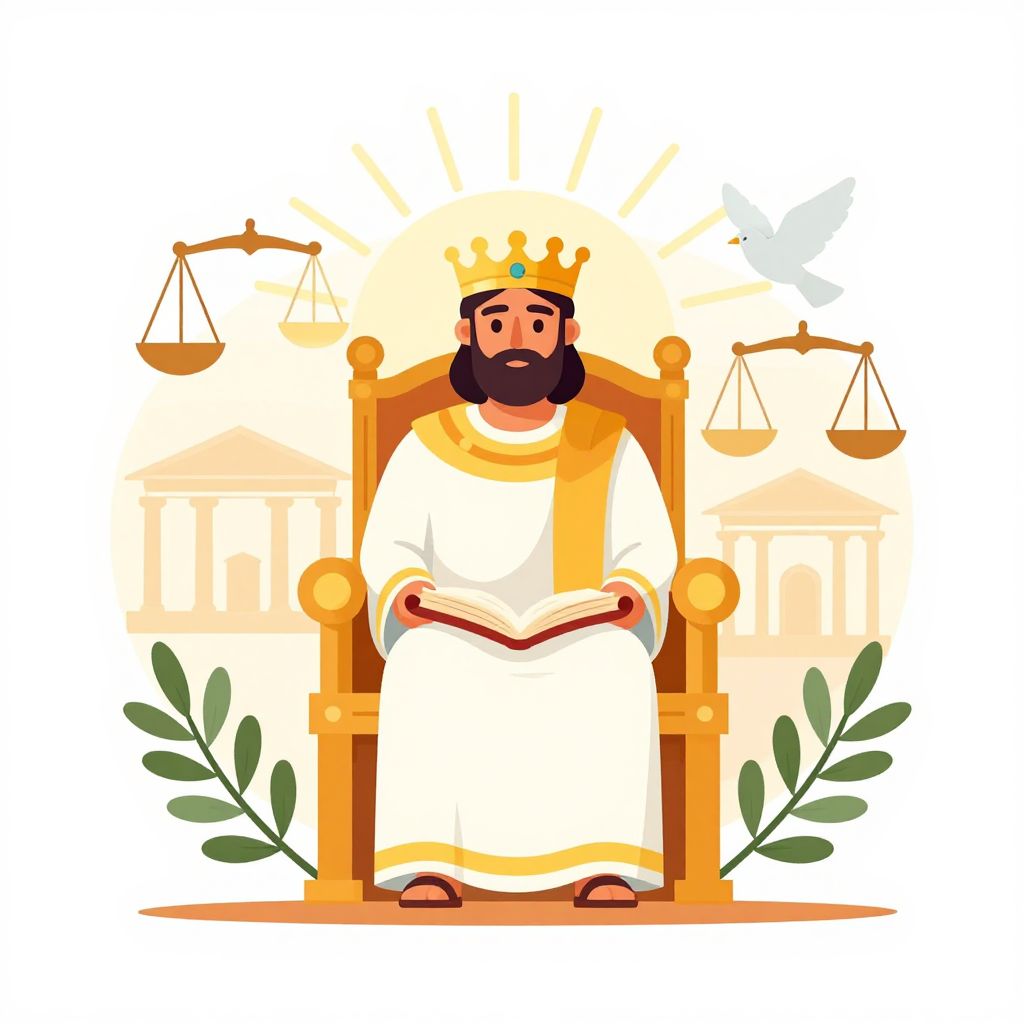
When people think of biblical wisdom, one name rises above all others: Solomon. His reputation for wisdom echoes through centuries, yet many believers know little about the man behind the legend.
Solomon stands as the third king of Israel, the son of King David, and the builder of the first temple in Jerusalem. His story reveals both the heights of divine blessing and the depths of human failure, offering profound lessons about wisdom, obedience, and the consequences of turning away from God.
Who Was Solomon in the Bible?
Solomon was the third king of Israel, reigning from approximately 970 to 931 BC, known primarily for his God-given wisdom, wealth, and construction of the first temple in Jerusalem. He ruled during Israel’s golden age, expanding the kingdom’s influence and establishing it as a major power in the ancient Near East.
Solomon’s Royal Lineage
Solomon emerged from a complex family history that reveals God’s grace in unexpected ways. His mother was Bathsheba, the woman with whom King David had committed adultery, leading to the death of her husband Uriah.
Despite this dark beginning, God chose Solomon to succeed David on the throne. Second Samuel 12:24-25 tells us that “the Lord loved him” and gave him the name Jedidiah, meaning “beloved of the Lord.”
The Succession to David’s Throne
Solomon’s path to kingship wasn’t automatic or peaceful. His older brother Adonijah attempted to seize the throne while David lay on his deathbed, gathering support from key military and religious leaders.
But David had promised Bathsheba that Solomon would be his successor. With the support of the prophet Nathan and Bathsheba’s intervention, David publicly declared Solomon as the next king (1 Kings 1:28-40).
Solomon’s Request for Wisdom
Early in his reign, God appeared to Solomon in a dream at Gibeon with an extraordinary offer. “Ask for whatever you want me to give you” (1 Kings 3:5) – imagine receiving that invitation from the Creator of the universe!
Solomon’s response reveals the condition of his heart at this point in his life. Instead of requesting personal gain, military victory, or long life, he asked for wisdom to govern God’s people well.
God’s Generous Response
God was so pleased with Solomon’s request that He granted not only wisdom but also riches and honor. First Kings 3:12 records God’s promise: “I will give you a wise and discerning heart, so that there will never have been anyone like you, nor will there ever be.”
This divine gift manifested immediately in Solomon’s famous judgment between two women claiming the same baby. His solution – to divide the child with a sword – revealed the true mother’s heart and demonstrated his supernatural discernment.
Solomon’s Major Accomplishments
Solomon’s reign marked the pinnacle of Israel’s power and prosperity. His achievements stretched across military, economic, architectural, and literary domains.
Building the Temple
Solomon’s most significant accomplishment was constructing the temple in Jerusalem. David had gathered materials and made plans, but God designated Solomon as the builder because he was “a man of peace” (1 Chronicles 22:9).
The temple took seven years to complete and represented the dwelling place of God among His people. When Solomon dedicated the temple, God’s glory filled it so powerfully that the priests couldn’t continue their service (1 Kings 8:10-11).
Economic Prosperity and International Relations
Under Solomon’s rule, Israel became a wealthy trading nation. He established trade relationships with distant countries and controlled important trade routes between Africa, Asia, and Europe.
The Queen of Sheba’s visit exemplifies Solomon’s international reputation. She came to test his wisdom and left declaring that his wisdom and prosperity exceeded all reports she had heard (1 Kings 10:6-7).
Literary Contributions
Solomon contributed significantly to biblical literature. He wrote most of the book of Proverbs, Ecclesiastes, and the Song of Solomon, along with numerous psalms.
His proverbs contain practical wisdom for daily living, covering topics from relationships and work to money and character. These writings continue to guide believers in making godly decisions thousands of years later.
Solomon’s Tragic Decline
Despite his promising beginning, Solomon’s later years tell a different story. His failure serves as a warning about the dangers of compromise and gradual drift from God.
The Problem of Many Wives
Solomon married numerous foreign women, including Pharaoh’s daughter and women from nations God had specifically forbidden Israel to intermarry with. First Kings 11:3 records that he had 700 wives and 300 concubines – numbers that seem almost impossible to modern readers.
These marriages weren’t just personal choices; they were political alliances that introduced foreign gods and practices into Israel. God had warned against this exact scenario in Deuteronomy 17:17.
Turning Away from God
As Solomon aged, his foreign wives influenced him to worship their gods. First Kings 11:4 states that “his wives turned his heart after other gods, and his heart was not fully devoted to the Lord his God, as the heart of David his father had been.”
This spiritual adultery led to God’s anger and judgment. God declared that He would tear the kingdom from Solomon’s family, though He would leave one tribe for David’s sake.
Lessons from Solomon’s Life
Solomon’s story offers rich instruction for modern believers. His rise and fall illuminate timeless truths about wisdom, obedience, and the human heart.
Wisdom Requires Ongoing Surrender
Solomon possessed divine wisdom, yet he made foolish choices that destroyed his legacy. True wisdom isn’t just intellectual knowledge but practical obedience to God’s commands.
How often do we know what’s right yet choose what’s convenient or appealing? Solomon’s example warns us that head knowledge without heart obedience leads to spiritual disaster.
Gradual Compromise Leads to Great Falls
Solomon didn’t wake up one day and decide to abandon God. His decline happened slowly through small compromises that accumulated over time.
First came the marriages for political advantage, then the tolerance of foreign worship, and finally personal participation in idolatry. This progression shows how dangerous it is to rationalize “small” disobediences.
Success Can Be Spiritually Dangerous
Solomon’s prosperity became a spiritual trap. His wealth and international acclaim may have fostered pride and self-reliance, making him feel less dependent on God.
Deuteronomy 8:11-14 warns about this exact danger: forgetting God when life goes well. Do you find your prayer life weakening when circumstances improve?
Solomon’s Prophetic Significance
Solomon’s reign points forward to something greater than earthly kingdom success. His wisdom, wealth, and peaceful rule foreshadow the coming Messiah.
A Type of Christ
Jesus referenced Solomon when describing His own ministry. Matthew 12:42 records Jesus saying, “now something greater than Solomon is here.”
Where Solomon’s wisdom was partial and his righteousness flawed, Jesus embodies perfect wisdom and complete righteousness. Solomon built a temporary temple; Jesus is the eternal dwelling place of God among His people.
The Promise of True Peace
Solomon’s name means “peace,” and his reign was characterized by security and prosperity. However, his peace was temporary and geographically limited.
Jesus offers true and lasting peace – peace with God, inner peace, and the promise of eternal peace in His kingdom. This peace doesn’t depend on external circumstances or human wisdom but on God’s unchanging character.
Applying Solomon’s Story Today
Solomon’s life speaks directly to contemporary believers facing similar temptations and challenges. His example offers both encouragement and warning for our spiritual lives.
Seek Wisdom Above All Else
Solomon’s initial request for wisdom pleased God tremendously. James 1:5 promises that if any of us lacks wisdom, we can ask God, who gives generously to all without finding fault.
What drives your prayers and desires? Solomon’s example encourages us to prioritize spiritual discernment over material gain or personal comfort.
Guard Your Heart Carefully
Solomon’s downfall began in his heart long before it showed in his actions. Proverbs 4:23, which he likely wrote, warns: “Above all else, guard your heart, for everything you do flows from it.”
Regular self-examination, accountability relationships, and consistent time in God’s Word help protect us from the gradual drift that destroyed Solomon’s legacy. Are you actively guarding your heart against compromise?
Remember That Wisdom Is Practical
Solomon’s wisdom wasn’t merely theoretical; it showed itself in practical decisions and daily governance. True biblical wisdom always translates into godly living.
Wisdom means choosing God’s ways even when they’re difficult or unpopular. It means applying biblical principles to real-life situations, from relationships and finances to career decisions and family choices.
Solomon’s story reminds us that God delights in giving wisdom to those who seek it with pure hearts. His life demonstrates both the blessing of walking in God’s wisdom and the tragic consequences of abandoning it. As you reflect on Solomon’s example, consider how you might pursue wisdom more intentionally while avoiding the compromises that led to his downfall. The same God who offered wisdom to Solomon stands ready to guide you through every decision and challenge you face.
For those seeking to deepen their understanding of biblical figures and grow in their faith, explore more enriching content and discover what the Bible says about life’s most important questions. You’ll find additional resources and biblical insights at The Bible Christian to support your spiritual growth and understanding.