
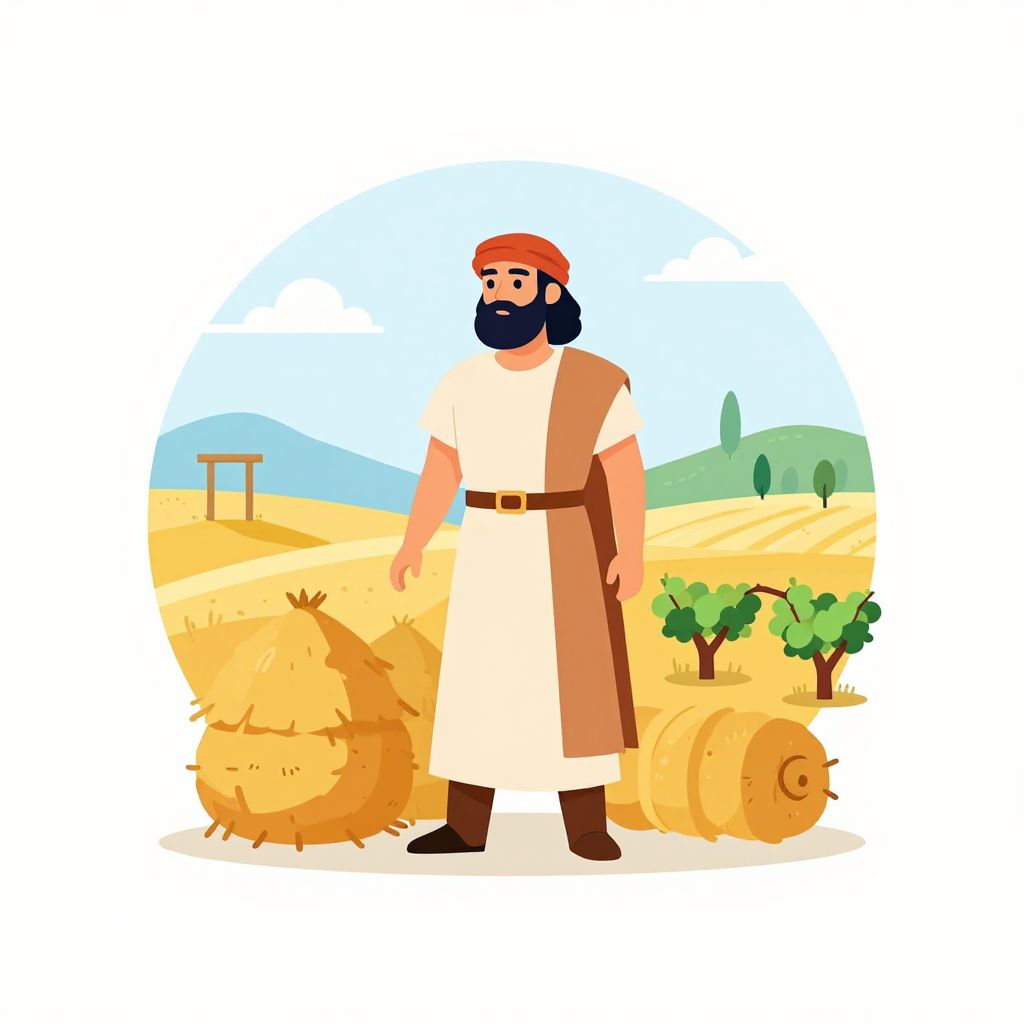
Some Bible characters leap off the page with dramatic stories, while others reveal God’s heart through quiet faithfulness. Boaz stands as one of Scripture’s most compelling examples of godly character in action.
This wealthy landowner from Bethlehem shows us what it looks like when someone lives out covenant love in practical, everyday ways. His story intertwines with Ruth’s to reveal God’s redemptive plan unfolding through ordinary people who choose extraordinary faithfulness.
Who Was Boaz in the Bible?
Boaz was a wealthy landowner in Bethlehem during the time of the judges who became Ruth’s kinsman-redeemer. He exemplified godly character through his treatment of the poor, his integrity in business dealings, and his willingness to fulfill family obligations according to God’s law.
Boaz’s Background and Family Line
Boaz descended from an unlikely lineage that reveals God’s grace. His mother was Rahab, the Canaanite woman who helped the Israelite spies in Jericho (Matthew 1:5).
This connection shows how God weaves together stories of redemption across generations. Rahab’s faith saved her family, and now her son Boaz would participate in another act of redemption that would impact Israel’s history forever.
Scripture identifies Boaz as a “man of standing” in Ruth 2:1, indicating both wealth and reputation. The Hebrew phrase suggests someone of substance – not just financially, but in character and community influence.
His Role as a Landowner
Boaz owned extensive fields around Bethlehem during harvest season. His wealth allowed him to employ many workers and maintain large grain operations.
But wealth didn’t corrupt his heart toward God or others. He personally visited his fields, knew his workers by name, and ensured fair treatment for everyone under his care.
His greeting to his harvesters reveals his spiritual priorities: “The Lord be with you!” and they replied, “The Lord bless you!” (Ruth 2:4). This wasn’t mere politeness – it showed a workplace culture built on acknowledging God’s presence.
What Did Boaz Do for Ruth?
Boaz’s actions toward Ruth demonstrate covenant love in motion. He moved beyond legal requirements to show extraordinary kindness that protected and provided for a vulnerable widow.
Immediate Protection and Provision
When Boaz noticed Ruth gleaning in his fields, he immediately took action. He instructed his workers to let her gather grain freely and even to pull out extra stalks for her (Ruth 2:15-16).
This went far beyond the Old Testament law requiring landowners to leave gleanings for the poor. Boaz ensured Ruth would gather enough grain to sustain herself and Naomi through difficult times.
He also provided protection by warning his men not to touch her and inviting her to drink from their water jars. In an era when foreign women faced constant danger, Boaz created a safe environment for Ruth to work.
Recognition of Her Character
Boaz saw Ruth’s heart, not just her circumstances. He praised her loyalty to Naomi, saying, “I’ve been told all about what you have done for your mother-in-law since the death of your husband” (Ruth 2:11).
This recognition mattered deeply in a culture where widows, especially foreign ones, often became invisible. Boaz acknowledged Ruth’s sacrificial love and honored her commitment to family obligations.
Have you ever had someone see your heart when others only saw your circumstances? Boaz’s example shows how God calls us to look beyond surface situations to recognize character and faithfulness in others.
How Did Boaz Become Ruth’s Kinsman-Redeemer?
The kinsman-redeemer role reveals one of the Old Testament’s most beautiful pictures of redemption. Boaz willingly stepped into this responsibility, showing us a glimpse of how Christ redeems us.
Understanding the Kinsman-Redeemer Role
A kinsman-redeemer was a close relative who could buy back family property and marry a widow to continue the family line. This practice protected families from permanent poverty and preserved inheritances within tribal boundaries.
The role required both relationship and resources. The redeemer had to be related to the family and wealthy enough to purchase the property and support a wife.
Boaz qualified on both counts, though another relative stood closer in line. This situation required careful navigation according to Israel’s customs and laws.
The Threshing Floor Encounter
Ruth approached Boaz at the threshing floor following Naomi’s guidance. This bold move asked Boaz to “spread the corner of your garment over me, since you are a guardian-redeemer of our family” (Ruth 3:9).
Boaz’s response reveals his integrity: he praised Ruth’s loyalty and promised to handle the matter properly. Rather than taking advantage of the situation, he protected Ruth’s reputation and followed proper legal procedures.
He sent Ruth home with six measures of barley, ensuring she didn’t return empty-handed. Every action demonstrated honor, wisdom, and genuine care for Ruth’s wellbeing.
Legal Resolution at the City Gate
Boaz gathered ten elders at the city gate to resolve the kinsman-redeemer question legally. He presented the matter to the closer relative first, respecting the proper order.
When the other man declined after learning he would need to marry Ruth, Boaz publicly declared his intention to redeem the property and marry Ruth (Ruth 4:9-10). The elders witnessed and blessed the transaction.
This public process protected everyone involved and ensured the redemption would be legally binding. Boaz’s careful attention to proper procedure shows how godly people handle important matters with wisdom and transparency.
What Does Boaz Represent Spiritually?
Boaz serves as a powerful type of Christ in Scripture. His role as kinsman-redeemer points forward to Jesus, who became our ultimate Redeemer.
A Picture of Christ Our Redeemer
Just as Boaz redeemed Ruth, Christ redeemed us from sin and death through His sacrifice. Both required the redeemer to pay a price – Boaz paid money for property, while Jesus paid with His life for our souls.
The kinsman aspect matters too: Boaz was related to Ruth through her deceased husband, while Jesus became our kinsman by taking on human nature. He “shared in their humanity so that by his death he might break the power of him who holds the power of death” (Hebrews 2:14).
Both redemptions transformed hopeless situations into stories of abundant provision. Ruth went from widowed poverty to marriage and motherhood, while we move from spiritual death to eternal life.
Model of Godly Leadership
Boaz demonstrates how godly leaders use their resources and influence. He didn’t hoard his wealth or ignore the needs around him – he actively sought ways to bless others.
His treatment of workers, protection of the vulnerable, and careful handling of family obligations show leadership that honors God. Modern believers can learn from his example of using privilege to serve rather than dominate.
Notice how he balanced kindness with wisdom, generosity with responsibility. These aren’t contradictions – they’re the marks of mature faith that thinks beyond immediate impulses to long-term consequences.
Why Does Boaz’s Story Matter Today?
Boaz’s example speaks directly to contemporary Christian living. His story shows how faith works itself out in practical, everyday decisions that honor God and serve others.
Lessons for Modern Believers
First, Boaz shows us how to treat people with dignity regardless of their social status. He honored Ruth when she had every reason to feel ashamed or invisible as a foreign widow.
Second, he demonstrates integrity in business and personal dealings. His reputation preceded him because his actions consistently matched his words.
Here are practical ways to follow Boaz’s example:
- Look for opportunities to help vulnerable people in your community
- Conduct business with honesty and fairness
- Use your resources to create opportunities for others
- Follow proper procedures when handling important matters
- Recognize and honor good character when you see it
Understanding God’s Providential Work
Boaz’s story reveals how God orchestrates circumstances to accomplish His purposes. What seemed like random events – Ruth gleaning in his specific field – were actually divine appointments.
This perspective changes how we view our daily interactions. That conversation with a struggling coworker, that opportunity to help a neighbor, that chance encounter at the store – God might be positioning us to be His hands and feet in someone’s redemption story.
Are you watching for divine appointments in your own life? Sometimes God’s biggest plans unfold through our smallest acts of faithfulness and kindness.
The Legacy of Boaz and Ruth
The marriage of Boaz and Ruth produced Obed, who became the father of Jesse, who became the father of David. This means Boaz stands in the direct lineage of Jesus Christ (Matthew 1:5-6).
Their story didn’t end with personal happiness – it contributed to God’s redemptive plan for all humanity. The faithfulness of two people during a difficult season in Israel’s history helped prepare the way for the Messiah.
This reminds us that our faithfulness matters beyond our immediate circumstances. We can’t see how God might use our obedience to contribute to His larger purposes, but Scripture assures us that “in all things God works for the good of those who love him” (Romans 8:28).
Walking in Boaz’s Footsteps
Boaz exemplifies what it looks like to live as God’s people in a broken world. He combined practical wisdom with generous love, careful procedures with bold action, personal blessing with kingdom purpose.
His story calls us to examine our own hearts and actions. Are we using our resources – whether great or small – to reflect God’s character to those around us? Do we look for opportunities to redeem difficult situations through faithful, sacrificial love?
Boaz shows us that ordinary people can participate in God’s extraordinary work. He wasn’t a prophet or priest, just a landowner who chose to honor God in his daily relationships and responsibilities. That same opportunity awaits each of us today.
Consider exploring more biblical insights to deepen your understanding of God’s character and His plans. You can discover what does the Bible say about many important topics that will strengthen your faith. Additionally, learning about other biblical symbols like what is manna in the Bible can reveal more about how God provides for His people in unexpected ways, just as He provided for Ruth through Boaz’s kindness.