
The name Judas Iscariot sends a chill through most believers, yet his story remains one of the most crucial in all of Scripture. His betrayal of Christ changed the course of human history, fulfilling ancient prophecies while serving as a sobering reminder of the human heart’s capacity for darkness.
Understanding Judas requires us to look beyond the surface of his infamous act and examine what Scripture reveals about his character, his role among the disciples, and the spiritual lessons his life teaches us today.
Who Was Judas Iscariot in the Bible?
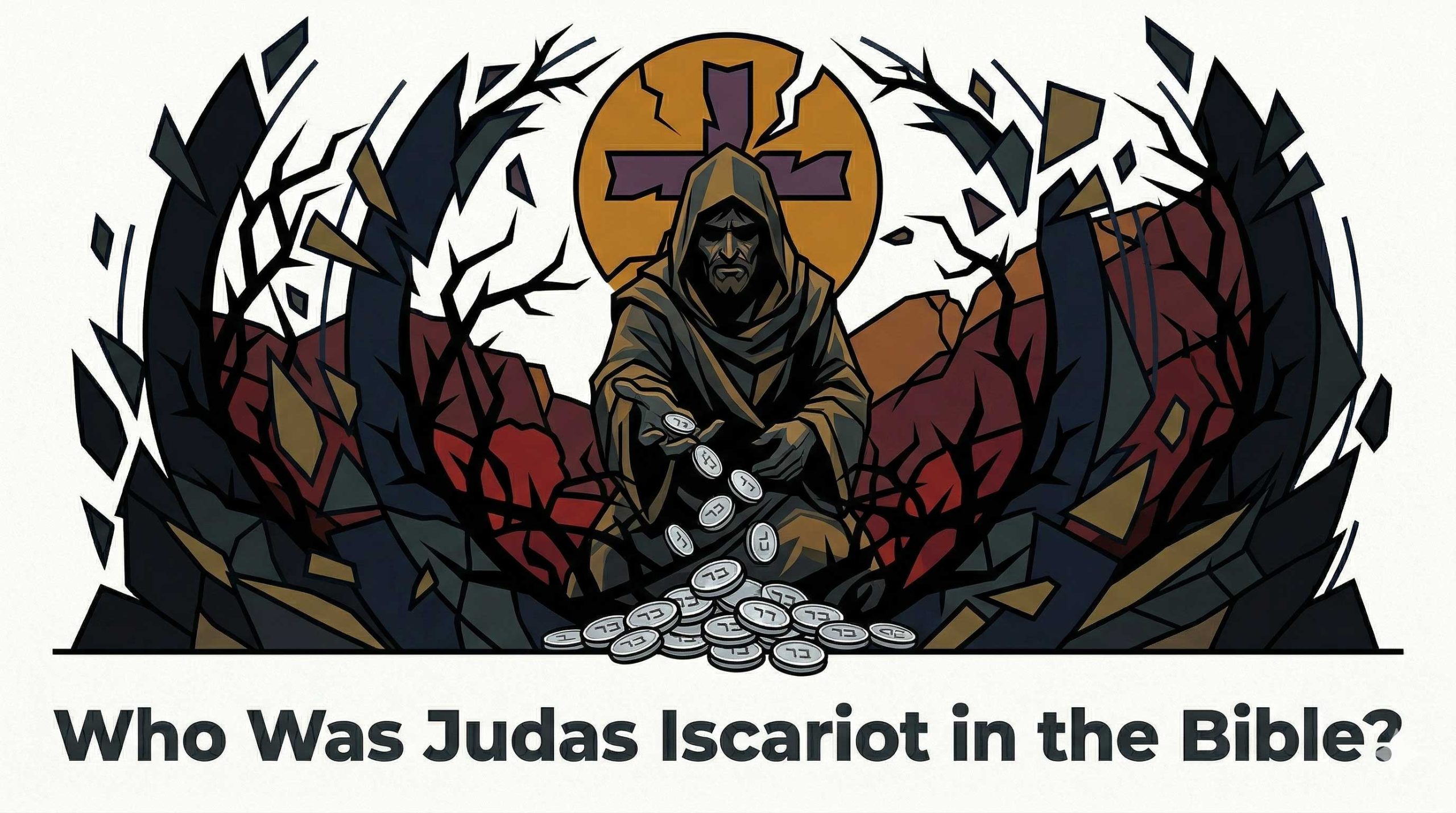
Judas Iscariot was one of Jesus’ twelve chosen disciples who ultimately betrayed Christ to the religious authorities for thirty pieces of silver, leading to Jesus’ crucifixion. He served as the group’s treasurer and followed Jesus for approximately three years before his act of treachery.
His Background and Calling
Scripture provides limited details about Judas’s background, but we know he was called “Iscariot,” likely meaning “man from Kerioth,” a town in Judea. This made him possibly the only non-Galilean among the twelve disciples.
Jesus chose Judas deliberately, knowing full well what would unfold (John 6:64). This reality challenges our understanding but confirms God’s sovereignty even in humanity’s darkest choices.
His Role Among the Disciples
Judas held the position of treasurer for the disciples, carrying the money bag and managing their finances. John 12:6 reveals that “he was a thief; as keeper of the money bag, he used to help himself to what was put into it.”
This detail shows that Judas’s betrayal wasn’t a sudden moral collapse but the culmination of ongoing compromise. Small acts of dishonesty prepared the ground for his ultimate act of treachery.
The Path to Betrayal
Warning Signs in Scripture
Several incidents in the Gospels hint at Judas’s spiritual condition before his final betrayal. His objection to Mary’s expensive perfume being poured on Jesus’ feet revealed his true priorities (John 12:4-6).
While the other disciples also struggled with understanding Jesus’ mission, Judas displayed a pattern of valuing material gain over spiritual truth. His heart remained hardened to the very words of life he heard daily.
The Moment of Decision
Luke 22:3 states that “Satan entered Judas, called Iscariot, one of the Twelve.” This doesn’t excuse Judas’s choice but explains the spiritual reality behind his actions.
Judas approached the chief priests and temple officers to discuss betraying Jesus for money. The thirty pieces of silver he received fulfilled Zechariah’s prophecy (Zechariah 11:12-13) and demonstrated how God’s purposes advance even through human evil.
The Betrayal and Its Aftermath
The Last Supper
During their final meal together, Jesus announced that one of the disciples would betray him. Judas had the audacity to ask, “Surely you don’t mean me, Rabbi?” (Matthew 26:25).
Jesus responded, “You have said so,” revealing his knowledge while still offering Judas opportunity for repentance. Even at this late hour, Christ extended grace to his betrayer.
The Kiss of Betrayal
Judas led the armed crowd to Gethsemane and identified Jesus with a kiss, a gesture typically reserved for greeting a beloved teacher. This act transformed a symbol of affection into an instrument of treachery.
Jesus’ response—”Friend, do what you came for” (Matthew 26:50)—shows remarkable composure and love even toward his betrayer. Christ’s character shines brightest against the darkness of Judas’s deed.
Remorse and Death
When Judas saw that Jesus was condemned to death, he felt remorse and tried to return the thirty pieces of silver to the chief priests. They refused, saying, “What is that to us? That’s your responsibility!” (Matthew 27:4).
Judas experienced regret but not repentance—there’s a crucial difference. Regret focuses on consequences while repentance involves genuine sorrow for sin and turning to God for forgiveness.
Unable to bear his guilt, Judas hanged himself in a field that became known as the “Field of Blood.” His tragic end serves as a warning about the ultimate destination of unrepented sin.
Spiritual Lessons from Judas’s Life
The Danger of Compromise
Judas didn’t wake up one morning and decide to betray the Son of God. His betrayal was the result of countless small compromises that hardened his heart over time.
His story warns us that proximity to Jesus doesn’t guarantee salvation. Being in church, hearing God’s word, and even serving in ministry cannot substitute for genuine heart transformation.
The Reality of Human Responsibility
While God used Judas’s betrayal to accomplish salvation for humanity, Scripture never excuses his actions. Jesus said it would have been “better for him if he had not been born” (Matthew 26:24).
This sobering truth reminds us that God’s sovereignty doesn’t eliminate human accountability. We remain responsible for our choices, even when God works through them for good.
The Difference Between Regret and Repentance
Compare Judas’s response to Peter’s after his denial of Christ. Both felt terrible about their actions, but Peter turned to Jesus in repentance while Judas turned inward in despair.
True repentance involves faith that God’s mercy is greater than our sin. Judas couldn’t grasp this truth, choosing death over the possibility of forgiveness.
God’s Sovereignty in Human Evil
Fulfillment of Prophecy
Judas’s betrayal fulfilled multiple Old Testament prophecies, including Psalm 41:9: “Even my close friend, someone I trusted, one who shared my bread, has turned against me.” God’s plan moved forward through human treachery without being contaminated by it.
This doesn’t mean God caused Judas to sin, but rather that God’s purposes cannot be thwarted even by humanity’s worst actions. What Satan meant for evil, God used for the salvation of the world.
The Mystery of Divine Election
Jesus called Judas one of the twelve, knowing he would become the betrayer. This raises difficult questions about predestination and free will that theologians have debated for centuries.
Rather than trying to solve this mystery completely, we should focus on what Scripture clearly teaches: God is sovereign, humans are responsible, and salvation comes through faith in Christ alone.
Practical Applications for Today
Examining Our Hearts
Judas’s story should drive us to honest self-examination. What areas of compromise might we be tolerating in our lives?
Are we serving Christ with pure motives, or do we have hidden agendas? The human heart is deceitfully wicked (Jeremiah 17:9), and we need God’s Spirit to reveal our true condition.
The Importance of Community
While the other disciples didn’t recognize Judas’s spiritual danger, his isolation from genuine fellowship contributed to his downfall. We need authentic Christian community to help us stay accountable and spiritually healthy.
Are you walking closely with other believers who can speak truth into your life? Isolation makes us vulnerable to spiritual attack and moral compromise.
Responding to Betrayal
Most of us will experience betrayal at some point, though probably not on the scale of Judas’s treachery. Jesus’ response to his betrayer provides a model for how we should handle those who wound us deeply.
Christ remained composed, extended grace until the end, and ultimately forgave even this ultimate act of betrayal. His example challenges us to respond with similar grace when others hurt us.
The Hope Beyond Betrayal
Judas’s story is ultimately about the triumph of God’s love over human evil. The cross that resulted from his betrayal became the means of salvation for all who believe.
While Judas serves as a warning about the human capacity for evil, his story also highlights the incredible mercy of God. Even the worst human treachery couldn’t derail God’s plan to redeem his people.
When you’re tempted to despair over human sinfulness—whether your own or others’—remember that God’s grace is greater than our worst failures. The same cross that Judas helped bring about offers forgiveness to all who truly repent and believe.
Take time today to examine your heart before God. Are there areas of compromise that need confession? Are you trusting in Christ alone for salvation, or are you depending on your proximity to Christian things? Let Judas’s tragic example drive you deeper into genuine relationship with Jesus, where true security and forgiveness are found.
For those seeking to deepen their understanding of Scripture and grow in their faith, there are many profound topics worth exploring. Consider studying what is manna to understand God’s faithful provision, or explore other foundational biblical concepts at The Bible Christian to strengthen your spiritual foundation and biblical knowledge.