
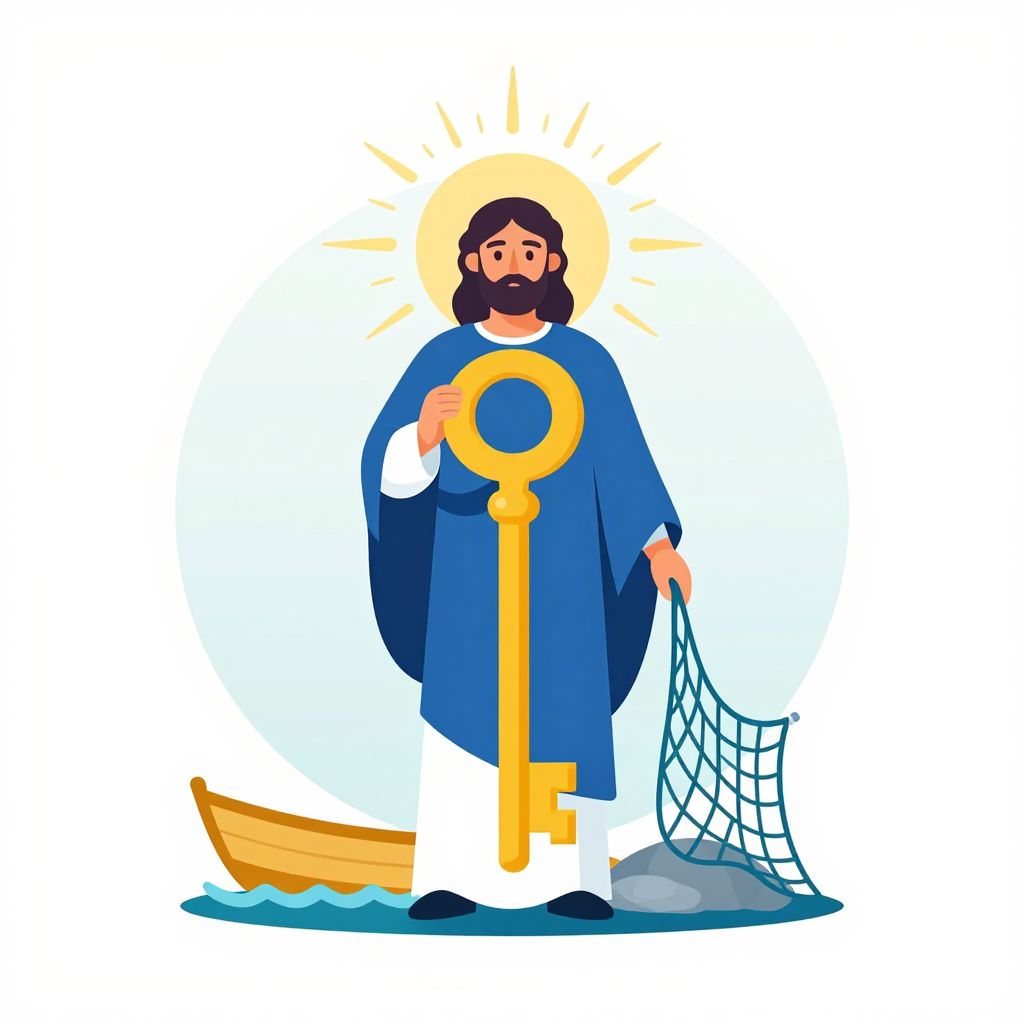
Peter stands as one of the most human figures in all of Scripture — impulsive, passionate, and deeply flawed, yet chosen by Christ to lead the early church. His story reads like a divine comedy of errors that transforms into triumph through God’s grace.
When you study Peter’s life, you witness the breathtaking reality that God uses broken people to accomplish His perfect purposes. Peter’s journey from fisherman to apostle reveals how Christ shapes ordinary believers into extraordinary servants.
Who Was Peter in the Bible?
Peter was a Galilean fisherman who became one of Jesus’ twelve apostles and the primary leader of the early Christian church. Originally named Simon, Jesus renamed him Peter (meaning “rock”) despite his tendency toward impulsive behavior and dramatic failures.
Peter’s Background and Calling
Simon Peter worked as a fisherman on the Sea of Galilee alongside his brother Andrew. Luke 5:1-11 records Jesus calling Peter to follow Him after a miraculous catch of fish that demonstrated Christ’s divine power.
Peter’s response reveals his character immediately — he fell at Jesus’ knees and said, “Go away from me, Lord; I am a sinful man!” This humility mixed with boldness would define Peter’s entire relationship with Christ.
Peter’s Role Among the Disciples
Jesus placed Peter in the inner circle of disciples along with James and John. These three witnessed the Transfiguration (Matthew 17:1-8), accompanied Jesus during His agony in Gethsemane (Mark 14:32-42), and received special revelations from Christ.
Peter consistently served as the spokesman for the twelve apostles. Matthew 16:16 records his famous confession: “You are the Messiah, the Son of the living God” — a declaration that earned Jesus’ praise and a promise about Peter’s future leadership role.
Peter’s Greatest Failures and Lessons
The Denial of Christ
Peter’s most infamous moment came when he denied knowing Jesus three times on the night of Christ’s arrest (Luke 22:54-62). This failure devastated Peter, who wept bitterly when he realized what he had done.
Yet this breakdown became a breakthrough in Peter’s spiritual development. God often allows our greatest failures to become our greatest teachers about His grace and our desperate need for Him.
Impulsive Actions and Their Consequences
Peter’s impulsiveness created memorable moments throughout the Gospels. He walked on water then sank when fear overtook faith (Matthew 14:28-31), he cut off a soldier’s ear defending Jesus (John 18:10), and he tried to prevent Christ from washing his feet (John 13:6-9).
Each impulsive act taught Peter important lessons about trust, surrender, and the difference between human wisdom and divine will. Have you ever noticed how God uses our personality traits — even the problematic ones — to teach us deeper truths about His character?
Peter’s Transformation and Leadership
The Restoration Process
John 21:15-19 records Jesus’ beautiful restoration of Peter after the resurrection. Christ asked Peter three times, “Do you love me?” — once for each denial — then commissioned him to “feed my sheep.”
This conversation demonstrates how thoroughly God forgives and how completely He restores those who repent. Jesus didn’t just forgive Peter; He entrusted him with leading the entire early church.
Peter’s Bold Preaching
The same man who cowered before a servant girl became a fearless preacher after receiving the Holy Spirit at Pentecost. Acts 2:14-41 shows Peter boldly proclaiming Christ to the very people who had crucified Jesus just weeks earlier.
Three thousand people came to faith through Peter’s first sermon. This transformation from coward to champion illustrates the Holy Spirit’s power to change lives from the inside out.
Peter’s Key Contributions to Early Christianity
Leadership in the Jerusalem Church
Peter became the primary leader among the apostles in Jerusalem. Acts 3-5 records his healing ministry, his confrontations with religious authorities, and his role in church discipline and governance.
He demonstrated both pastoral care for believers and prophetic boldness before unbelievers. Peter’s leadership style balanced truth-telling with grace-giving — a combination every Christian leader needs.
Opening Christianity to Gentiles
Peter received a vision from God in Acts 10 that led him to preach to Cornelius, a Roman centurion. This event marked the first official acceptance of Gentiles into the Christian church without requiring them to become Jews first.
Peter’s obedience to this vision literally changed the course of Christianity. How might God want to expand your understanding of His kingdom purposes?
The Epistles of Peter
Peter wrote two letters that became part of the New Testament. First Peter encourages believers facing persecution, while Second Peter warns against false teaching and emphasizes the importance of spiritual growth.
These letters reveal Peter’s pastoral heart and theological maturity. The man who once spoke without thinking had learned to write with careful wisdom gained through decades of following Christ.
What Peter’s Life Teaches Modern Believers
God Uses Imperfect People
Peter’s story demolishes the myth that God only uses perfect people for significant kingdom work. Christ chose a fisherman with a quick temper and a tendency toward poor decisions to lead His church.
This truth should encourage every believer who struggles with personal failures. God doesn’t call the qualified; He qualifies the called through His grace and the work of the Holy Spirit.
Failure Doesn’t Disqualify You
Peter’s denial of Christ could have ended his ministry before it truly began. Instead, his failure became the foundation for deeper humility and more effective service.
Romans 8:28 promises that God works all things together for good for those who love Him — including our failures when we bring them to Him in repentance. What failure might God want to transform into a testimony of His grace in your life?
Spiritual Growth Takes Time
Peter’s transformation from impulsive fisherman to mature apostle didn’t happen overnight. The Gospels span roughly three years, and Acts covers several more decades of Peter’s continued growth.
God remains patient with our slow progress and persistent weaknesses. Spiritual maturity develops through years of walking with Christ, not through a single moment of commitment.
Peter’s Legacy for Today’s Church
Balanced Leadership
Peter modeled leadership that combined boldness with humility. He stood firm on essential truths while showing flexibility on cultural practices, as demonstrated in his handling of the Gentile inclusion question.
Modern church leaders can learn from Peter’s willingness to admit mistakes, change course when corrected, and prioritize unity over personal preferences. True spiritual authority comes from serving others, not from demanding compliance.
Evangelistic Courage
After Pentecost, Peter never hesitated to proclaim Christ publicly, even when facing imprisonment or death. Acts 4:19-20 records his declaration: “We cannot help speaking about what we have seen and heard.”
Peter’s example challenges modern believers to share their faith boldly despite potential social costs. The same Holy Spirit who transformed Peter’s fear into fearlessness lives in every Christian today.
Pastoral Care
Peter’s letters reveal deep concern for believers facing difficult circumstances. He wrote with the heart of a shepherd who had learned to feed Christ’s sheep with both truth and comfort.
First Peter 5:2-3 instructs church leaders to “shepherd the flock of God” willingly and eagerly, setting an example rather than lording authority over others. This servant-leadership model reflects Peter’s own growth from self-focus to other-focus.
Peter’s life demonstrates that God delights in using ordinary people for extraordinary purposes. His journey from fisherman to foundational church leader proves that divine calling matters more than human credentials. When you study Peter’s story, you discover that faithful discipleship — not perfection — qualifies believers for significant kingdom service.
Let Peter’s example encourage you to bring your failures to Christ for forgiveness, your weaknesses to Him for strength, and your ordinary life to Him for extraordinary transformation. The same Jesus who built His church on Peter’s flawed but faithful foundation wants to use your surrendered life for His glory today.
We hope this exploration of Peter’s biblical story strengthens your faith and deepens your appreciation for God’s grace. For more insights into Scripture and Christian living, visit our homepage to discover additional biblical truth. You can also explore what the Bible says about other important topics that impact your spiritual growth and daily walk with Christ.