
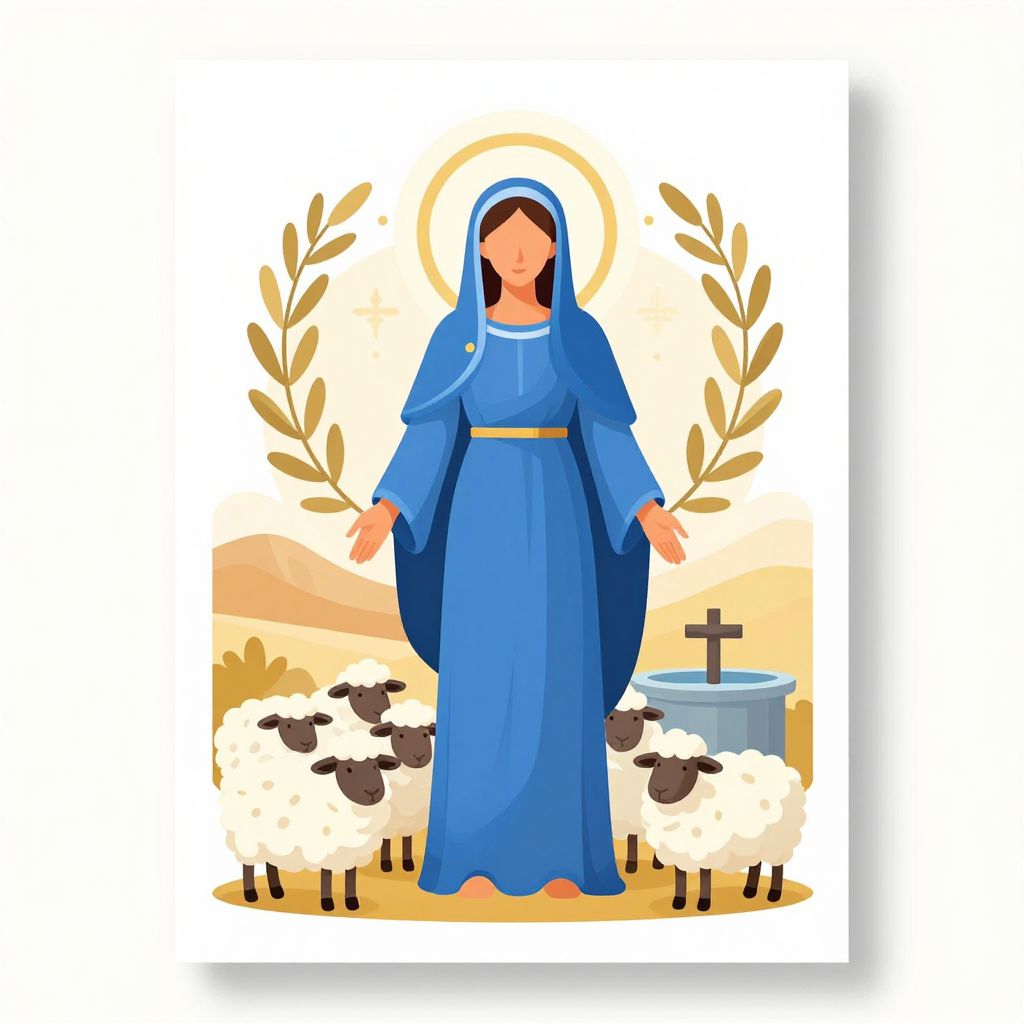
Rachel stands as one of the most compelling women in Scripture, her story woven through heartbreak, hope, and God’s mysterious ways. Many believers find themselves drawn to her struggles with infertility, sibling rivalry, and waiting on God’s promises.
Her life reveals profound truths about God’s faithfulness even when His timing feels impossibly slow. Rachel’s story teaches us that God works through our deepest disappointments to accomplish His greater purposes.
Who Was Rachel in the Bible?
Rachel was the beloved wife of Jacob and mother of Joseph and Benjamin, playing a crucial role in God’s covenant promises to Abraham’s descendants. She lived in ancient Mesopotamia during the patriarchal period, roughly 2000-1800 BC.
Rachel’s Family Background
Rachel belonged to the family line that God had chosen for His covenant people. Her father Laban was the brother of Rebekah, making Rachel the niece of Isaac and the cousin of Jacob.
Scripture describes Rachel as “lovely in form, and beautiful” (Genesis 29:17, NIV). Her beauty caught Jacob’s attention immediately when he first encountered her at the well near Haran.
The Shepherdess at the Well
Rachel worked as a shepherdess, caring for her father’s flocks. This detail reveals her strong work ethic and practical nature in a culture where women often handled significant responsibilities.
When Jacob first met Rachel at the well, he rolled away the heavy stone covering it and watered her flock. This act of service foreshadowed the years of labor he would invest to win her hand in marriage.
Rachel’s Marriage to Jacob
The story of Jacob and Rachel’s courtship reveals both the depth of human love and the complications that arise when we try to manipulate God’s plans. Jacob’s willingness to work seven years for Rachel demonstrates love that “seemed like only a few days to him because of his love for her” (Genesis 29:20, NIV).
Laban’s Deception
Laban’s trickery on Jacob’s wedding night created a painful situation that would affect multiple generations. Instead of giving Jacob his beloved Rachel, Laban substituted her older sister Leah under the cover of darkness and wedding veils.
This deception forced Jacob into a polygamous marriage that created deep rivalry between the sisters. God’s original design for marriage as one man and one woman becomes strikingly clear when we see the heartache that polygamy brought to this family.
Seven More Years
Jacob’s commitment to work another seven years for Rachel shows the persistence of true love. Yet it also reveals how human desires can lead us to accept arrangements that fall short of God’s best design.
Rachel became Jacob’s second wife after just one week, but Jacob had to complete fourteen years of labor total. This arrangement set up decades of competition between Rachel and Leah for Jacob’s affection and attention.
Rachel’s Struggle with Infertility
Perhaps no aspect of Rachel’s story resonates more deeply with modern believers than her battle with infertility. While her sister Leah bore child after child, Rachel remained barren despite being Jacob’s favored wife.
The Pain of Comparison
Rachel watched Leah give Jacob six sons and a daughter while her own womb remained closed. Scripture records her desperate cry: “Give me children, or I’ll die!” (Genesis 30:1, NIV).
Her words reveal the intense anguish of unfulfilled longing. Rachel’s identity became tied to her ability to bear children, a struggle many women face when God’s timing doesn’t match their desires.
Taking Matters into Her Own Hands
Like her mother-in-law Sarah before her, Rachel tried to solve her problem through human means. She gave her servant Bilhah to Jacob as a surrogate, hoping to build a family through her.
This decision brought temporary relief but couldn’t fill the deeper longing in Rachel’s heart. God’s solutions often require us to wait longer than we want, but they always prove more satisfying than our quick fixes.
God’s Faithfulness to Rachel
After years of waiting and heartbreak, God remembered Rachel and opened her womb (Genesis 30:22, NIV). This phrase “God remembered” doesn’t mean He forgot her previously, but that He acted in His perfect timing.
The Birth of Joseph
Rachel’s first son Joseph became one of the most significant figures in Old Testament history. She named him Joseph, meaning “may he add,” expressing her faith that God would give her another son.
Joseph’s later role in saving Egypt and his family from famine shows how God was working through Rachel’s story to preserve the covenant line. Her years of waiting contributed to God’s larger plan of redemption.
The Promise of Another Son
Rachel’s choice of Joseph’s name proved prophetic. She conceived again, but this pregnancy would cost her life.
Her second son Benjamin’s birth fulfilled her longing for another child, yet it came with the ultimate sacrifice. Rachel died in childbirth, but not before seeing God’s faithfulness to His promises.
Rachel’s Spiritual Legacy
Rachel’s story offers profound lessons for believers walking through seasons of disappointment and delay. Her life demonstrates that God’s faithfulness doesn’t always look like we expect it to.
Lessons from Her Struggles
Rachel’s battle with infertility teaches us that God sometimes allows us to wait for good gifts He intends to give. Her story shows us how to bring our deepest longings to God while learning to trust His timing.
Her rivalry with Leah reveals how comparison steals joy and creates unnecessary conflict. Rachel had Jacob’s love, but she wanted what Leah had too, illustrating how envy blinds us to our own blessings.
Her Role in God’s Plan
Despite her struggles and mistakes, Rachel played a crucial role in establishing the twelve tribes of Israel. Through Joseph and Benjamin, she became the mother of two of the most important tribes in Israel’s history.
Joseph’s tribe received a double portion through his sons Ephraim and Manasseh. Benjamin’s tribe later produced King Saul and the apostle Paul, showing how God used Rachel’s legacy for generations.
What Rachel Teaches Us Today
Modern believers can find hope and wisdom in Rachel’s story. Her experiences speak to anyone who has waited on God’s promises or struggled with unfulfilled longings.
Trusting God’s Timing
Rachel’s years of waiting remind us that God’s delays are not His denials. He works according to His perfect timing, not our preferred schedule.
When we find ourselves in seasons of waiting, Rachel’s story encourages us to keep bringing our requests to God while trusting His wisdom. Her eventual blessing came at exactly the right time for God’s larger purposes.
Finding Identity in God
Rachel’s desperate cry for children reveals how easily we can tie our worth to circumstances beyond our control. Her story challenges us to find our identity in God’s love rather than in our achievements or roles.
God saw Rachel’s worth long before she bore children. He loved her during her years of barrenness just as much as He did after Joseph’s birth.
The Danger of Comparison
Rachel’s rivalry with Leah serves as a warning about the destructive power of comparison. While Leah longed for Jacob’s love, Rachel envied Leah’s fertility, and both women missed opportunities for contentment.
This dynamic reminds us to celebrate what God has given us rather than focusing on what others possess. Gratitude for our unique blessings prevents the bitterness that comparison breeds.
Rachel’s Death and Lasting Impact
Rachel’s death during Benjamin’s birth adds a bittersweet element to her story. She received the second son she longed for, but didn’t live to raise him.
Jacob buried Rachel near Bethlehem and set up a pillar over her tomb. Her grave became a landmark that Scripture references centuries later, showing how her story continued to impact God’s people.
The prophet Jeremiah later used Rachel’s memory as a symbol of Israel’s mourning during the Babylonian exile. Matthew’s Gospel connects this prophecy to the weeping following Herod’s massacre of infants in Bethlehem, linking Rachel’s story to the coming of Christ.
Conclusion: Rachel’s Enduring Message
Rachel’s life teaches us that God works through our deepest struggles to accomplish His greatest purposes. Her years of barrenness prepared her to treasure the sons God eventually gave her, and those sons played crucial roles in Israel’s survival and growth.
Her story encourages believers to persist in prayer while trusting God’s perfect timing. Rachel’s legacy reminds us that our temporary disappointments cannot derail God’s eternal plans.
Take time to reflect on areas where you might be waiting on God’s promises. Like Rachel, bring your longings to God honestly while choosing to trust His faithfulness, knowing that His timing always serves His greater purposes for your life and His kingdom.
Continue exploring the rich stories of biblical figures and discover who was Jacob and his remarkable relationship with God. You’ll also find encouragement by learning what the Bible says about the challenges you face in your own faith experience.