
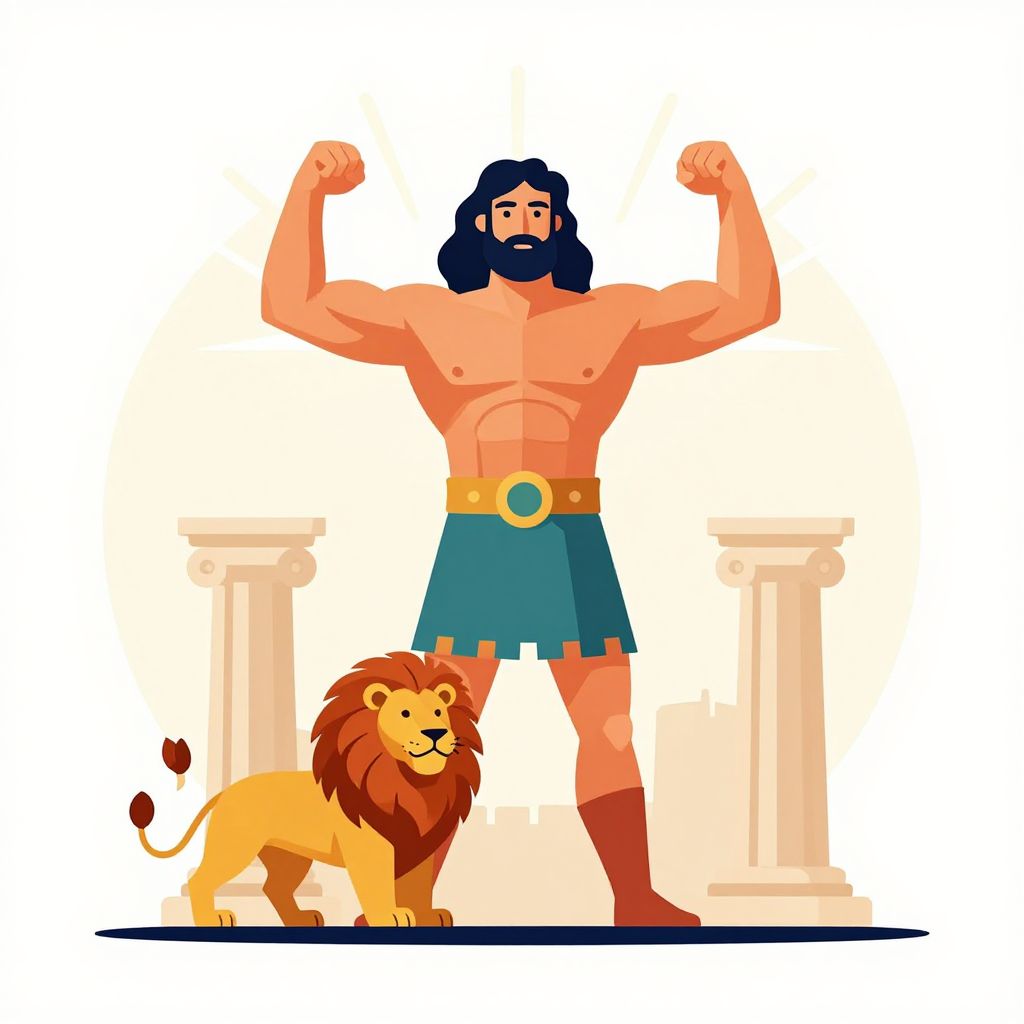
When strength becomes weakness and weakness becomes strength, you’re likely reading about Samson. Few biblical figures capture the tension between God’s calling and human failure quite like this Israelite judge who could tear apart lions but couldn’t master his own heart.
Samson was a Nazirite judge of Israel who possessed supernatural strength from God but repeatedly compromised his calling through poor choices, ultimately demonstrating both God’s power and the consequences of unfaithfulness. His story spans Judges 13-16 and reveals profound truths about divine calling, human weakness, and redemptive grace.
Who Was Samson in the Bible?
Samson was an Israelite judge chosen by God before birth to deliver Israel from Philistine oppression. He lived during a dark period when “everyone did what was right in his own eyes” (Judges 21:25, ESV), and Israel desperately needed divine intervention.
Samson’s Divine Calling
God called Samson through an angel who appeared to his previously barren mother. The angel declared that Samson would be a Nazirite from birth, set apart for God’s special purpose.
The Nazirite vow involved three key restrictions: no wine or strong drink, no contact with dead bodies, and no cutting of hair. These weren’t arbitrary rules but symbols of complete consecration to God’s service.
The Source of Samson’s Strength
Samson’s supernatural strength didn’t come from his muscles or his long hair—it flowed from God’s Spirit upon him. Scripture repeatedly states that “the Spirit of the Lord rushed upon him” before his mighty acts.
This divine empowerment enabled him to kill a lion with his bare hands, strike down thirty Philistines, and later slay a thousand men with a donkey’s jawbone. His strength was always miraculous, never natural.
Samson’s Greatest Victories
Despite his personal failures, Samson achieved remarkable victories that freed Israel from Philistine domination for twenty years. Each victory demonstrated God’s power working through an imperfect vessel.
The Lion and the Honey
Samson’s first recorded feat involved killing a lion that attacked him near Timnah. Later, he discovered bees had made honey in the lion’s carcass, leading to his famous riddle about sweetness coming from strength.
This incident foreshadowed a pattern in Samson’s life: strength and weakness, victory and compromise, all intertwined in ways that would define his ministry.
The Philistine Massacre
When the Philistines burned his wife and father-in-law, Samson responded with devastating force. He “struck them hip and thigh with a great blow” (Judges 15:8, ESV), then retreated to a cave.
Later, when three thousand men of Judah handed him over to the Philistines, God’s Spirit empowered him to break free and kill a thousand enemies with a donkey’s jawbone. This victory gave Israel breathing room from their oppressors.
Samson’s Fatal Weaknesses
Samson’s downfall wasn’t sudden—it developed through a pattern of compromise that gradually weakened his spiritual foundation. His story warns against presuming on God’s grace while living in deliberate disobedience.
The Attraction to Wrong Women
Samson consistently chose relationships that compromised his calling. His attraction to Philistine women—Israel’s enemies—created ongoing conflicts between his divine purpose and personal desires.
Each relationship pulled him deeper into enemy territory, both literally and spiritually. God used even these poor choices to accomplish His purposes, but Samson paid a heavy personal price.
The Delilah Deception
Delilah’s persistence in discovering Samson’s secret revealed his greatest weakness: the inability to say no to the wrong person. Three times she asked, three times he lied, and three times the Philistines failed to capture him.
When Samson finally revealed that his uncut hair symbolized his Nazirite vow, he crossed the line from compromise into complete betrayal of his calling. The consequences came swiftly and severely.
Samson’s Tragic End and Final Victory
Samson’s capture and humiliation seemed to end his story in complete failure. Yet God had one more chapter to write—a chapter that would demonstrate divine mercy even in judgment.
Blindness and Bondage
The Philistines gouged out Samson’s eyes and bound him with bronze shackles, forcing him to grind grain like a common prisoner. The man who once judged Israel now served his enemies in the most degrading way possible.
But something else happened during his imprisonment: his hair began to grow back. This detail hints at the possibility of restoration even after devastating failure.
The Final Act of Faith
During a great feast honoring their god Dagon, the Philistines brought out Samson for entertainment. Positioned between the supporting pillars of their temple, Samson prayed his most recorded prayer: “O Lord God, please remember me and please strengthen me only this once” (Judges 16:28, ESV).
God answered that prayer with devastating power. Samson’s death killed more Philistines than all his previous victories combined, dealing a blow from which they never fully recovered.
What Samson Teaches Us Today
Samson’s life offers profound lessons about God’s grace, human responsibility, and the cost of compromise. His story speaks directly to anyone struggling with the tension between divine calling and personal weakness.
God Uses Flawed People
Samson’s inclusion in Hebrews 11—the great hall of faith—proves that God can use deeply flawed people to accomplish His purposes. His failures didn’t disqualify him from God’s ultimate plan.
This truth offers hope to everyone who feels too broken or compromised for God to use. God’s power shows most clearly through human weakness, not human perfection.
Compromise Has Consequences
Samson’s gradual drift from his calling warns against the danger of incremental compromise. Each small step away from God’s standards made the next step easier until he found himself in complete bondage.
Have you noticed areas where small compromises are leading you away from God’s best for your life? Samson’s story urges immediate course correction before the consequences become overwhelming.
Restoration Remains Possible
Even in his darkest hour, God hadn’t abandoned Samson completely. His final prayer and God’s powerful response demonstrate that restoration remains possible even after devastating failure.
No failure is too great for God’s redemptive power, and no person is too far gone for divine restoration. Samson’s last act proved more significant than all his previous victories combined.
Samson’s Legacy in Scripture
The New Testament treatment of Samson provides important perspective on how God views this complex figure. Rather than focusing on his failures, Scripture emphasizes his faith.
A Man of Faith
Hebrews 11:32 lists Samson among the heroes of faith who “through faith conquered kingdoms, enforced justice, obtained promises, stopped the mouths of lions.” This divine assessment focuses on his ultimate trust in God rather than his moral failures.
This perspective doesn’t minimize his sins but recognizes that faith, not perfection, qualifies people for God’s service. Samson’s story encourages struggling believers that God sees their hearts, not just their mistakes.
A Type of Christ
Some scholars see parallels between Samson and Jesus: both were announced by angels before birth, both were Nazirites, both were betrayed for silver, and both achieved their greatest victory through death. While these parallels shouldn’t be pressed too far, they remind us that all Old Testament stories ultimately point toward Christ.
Unlike Samson, Jesus never compromised His calling and willingly laid down His life for others. Where Samson failed, Christ succeeded perfectly.
Samson’s story reveals the complexity of human nature and the consistency of divine grace. His supernatural strength couldn’t overcome his spiritual weaknesses, yet God used even his failures to accomplish divine purposes. Modern believers can find both warning and hope in this account: warning against the dangers of compromise and hope in God’s ability to redeem even our greatest failures. The same God who strengthened Samson for one final act of faith continues to offer strength and restoration to those who call upon His name.
Exploring biblical characters like Samson deepens our understanding of God’s character and His dealings with humanity. You might also find value in examining what the Bible say about other important topics or discovering how biblical principles have shaped different regions, including areas like the Bible Belt in American culture.