
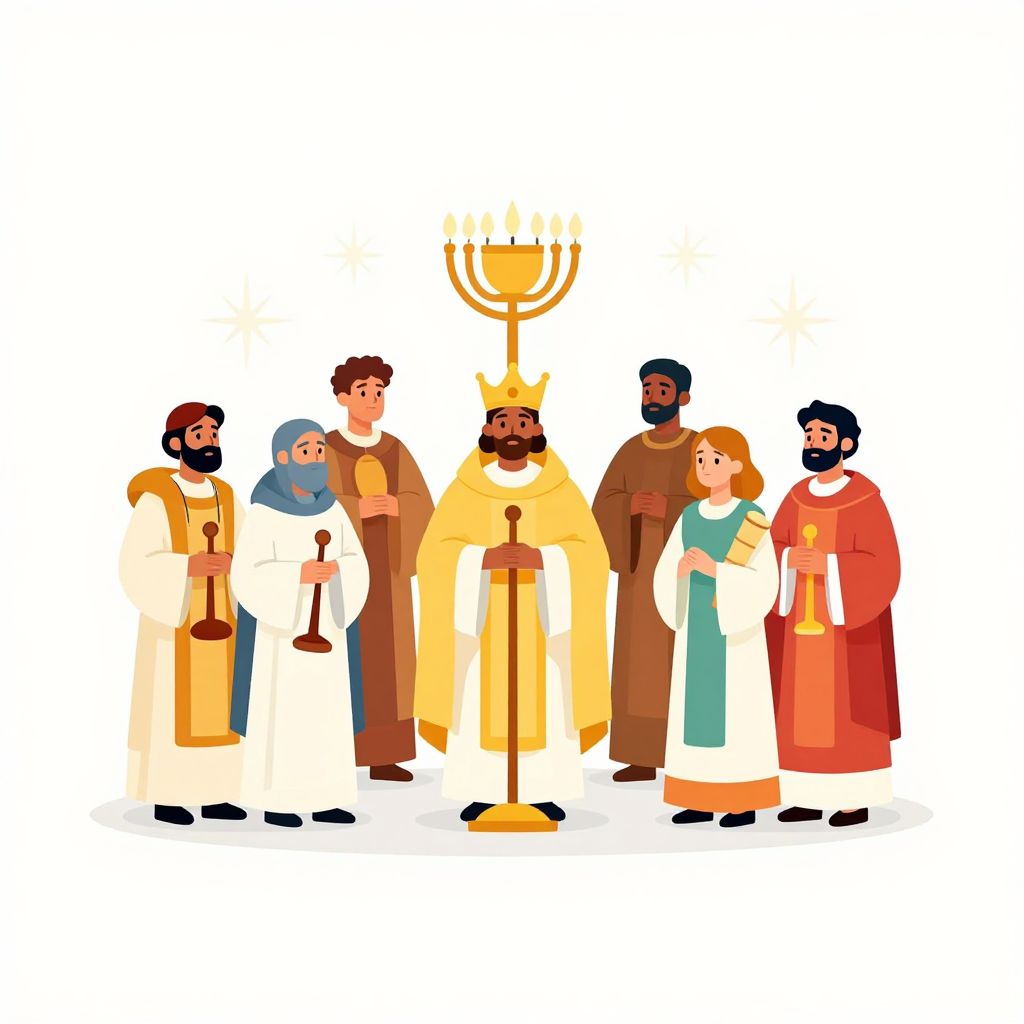
When you read about worship, sacrifice, and service in the Old Testament, you encounter a tribe that God set apart for sacred purposes. The Levites stand as one of the twelve tribes of Israel, yet their calling differed dramatically from their brothers.
God chose the Levites to serve Him directly — not through farming land or building cities, but through maintaining His presence among His people. Their story reveals how God values dedicated service and provides a model for understanding our own calling to serve Him today.
Who Were the Levites in the Bible?
The Levites were descendants of Levi, one of Jacob’s twelve sons, whom God chose to serve in the tabernacle and later the temple. Unlike other tribes who received territorial inheritance, the Levites received cities scattered throughout Israel and devoted their lives to religious duties, teaching God’s law, and facilitating worship.
The Origins of the Levitical Calling
Levi, the third son of Jacob and Leah, originally carried a reputation for violence and anger. In Genesis 34, Levi and his brother Simeon killed the men of Shechem in revenge, prompting Jacob to rebuke them in Genesis 49:7.
Yet God transformed this tribe’s fierce nature into zealous devotion. During the golden calf incident in Exodus 32:26-29, when Moses called out “Whoever is for the Lord, come to me,” the Levites responded immediately.
They chose obedience to God over family loyalty, even when it meant standing against their own relatives. This decisive moment marked their transformation from a tribe known for destructive anger to one consecrated for holy service.
God’s Specific Selection Process
Numbers 3:12-13 reveals God’s reasoning: “I have taken the Levites from among the Israelites in place of the first male offspring of every Israelite woman.” Originally, God claimed every firstborn male for His service after delivering Israel from Egypt.
Instead of taking firstborns from every family, God chose the entire tribe of Levi. This arrangement allowed families to remain intact while ensuring dedicated servants for His sanctuary.
The Three Levitical Families and Their Duties
God organized the Levites into three distinct family groups, each with specific responsibilities. This structure ensured orderly worship and proper care of sacred items.
The Kohathites: Guardians of Sacred Objects
The Kohathites carried the most sacred items of the tabernacle. Numbers 4:4-15 describes their responsibility for transporting the ark of the covenant, the table of showbread, the lampstand, and the altars.
They could not touch these items directly — Aaron and his sons first covered everything with special cloths. One careless touch of the uncovered ark meant death, as Uzzah discovered in 2 Samuel 6:6-7.
The Gershonites: Keepers of Coverings and Curtains
Numbers 4:24-26 assigned the Gershonites to transport all the fabric elements of the tabernacle. They carried the curtains, coverings, tent cloths, and ropes that formed the structure of God’s dwelling place.
Their work required careful attention to detail — every curtain had to be transported, stored, and erected according to God’s precise specifications. The beauty and function of the tabernacle depended on their faithfulness.
The Merarites: Builders of the Framework
The Merarites handled the heaviest work, transporting all the structural components. Numbers 4:31-32 lists their cargo: frames, crossbars, posts, bases, tent pegs, and ropes.
God gave them carts and oxen to help with their load, recognizing the physical demands of their service. They literally carried the foundation that supported everything else.
The Priests Within the Levites
Not every Levite could serve as a priest — God made an additional distinction within the tribe. Only descendants of Aaron, Moses’ brother, could offer sacrifices and enter the holy places.
Aaron’s Sons: The Priestly Line
Exodus 28:1 records God’s command to Moses: “Have Aaron your brother brought to you from among the Israelites, along with his sons… so they may serve me as priests.” This established the hereditary priesthood within the larger Levitical tribe.
The priests alone could offer sacrifices, burn incense, and enter the Holy Place. They served as mediators between God and the people, bearing the weight of intercession and atonement.
The High Priest’s Unique Role
Among the priests, one man served as high priest — initially Aaron, then his descendants. Leviticus 16 describes his most solemn duty: entering the Most Holy Place once a year on the Day of Atonement.
The high priest carried the names of all twelve tribes on his breastplate and shoulders, literally bearing the people before God. His ministry foreshadowed Christ, our great High Priest who entered heaven itself on our behalf.
Daily Life and Responsibilities
The Levites’ calling shaped every aspect of their existence. Their work extended far beyond ceremonial duties to encompass teaching, judging, and maintaining spiritual order in Israel.
Teaching God’s Word
Deuteronomy 33:10 describes part of their mission: “They teach your precepts to Jacob and your law to Israel.” The Levites served as Israel’s primary teachers, preserving and explaining God’s commands to each generation.
In 2 Chronicles 17:7-9, King Jehoshaphat sent Levites throughout Judah to teach from the Book of the Law. They carried Scripture to every town, ensuring God’s people understood His requirements.
Serving as Judges and Leaders
Many Levites functioned as judges and administrators throughout Israel’s history. 1 Chronicles 23:4 records that 6,000 Levites served as officials and judges during David’s reign.
Their training in God’s law equipped them to make decisions based on divine principles rather than human wisdom. They provided stable leadership grounded in unchanging truth.
Musicians and Gatekeepers
David organized many Levites as temple musicians and gatekeepers. 1 Chronicles 25 details the musical families who led Israel in worship with instruments, singing, and prophetic songs.
The gatekeepers controlled access to the temple courts, ensuring only ceremonially clean people entered God’s presence. They protected the holiness of worship while welcoming sincere seekers.
Their Inheritance and Provision
Unlike other tribes, the Levites received no large territorial inheritance. God Himself became their portion, and He provided for them through the offerings and tithes of their fellow Israelites.
Cities Instead of Territory
Numbers 35:1-8 commanded Israel to give the Levites 48 cities scattered throughout the land, along with surrounding pasturelands for their livestock. This distribution placed Levites in every region, making their teaching and leadership accessible to all.
Six of these cities served as cities of refuge where those guilty of accidental manslaughter could find safety. The Levites’ presence in these cities ensured fair treatment and proper application of God’s justice.
Supported by Tithes and Offerings
Numbers 18:21 established God’s provision system: “I give to the Levites all the tithes in Israel as their inheritance in return for the work they do while serving at the tent of meeting.” The people’s faithfulness in tithing directly supported those who served them spiritually.
The Levites, in turn, gave a tithe of what they received to the priests. This system created mutual dependence and reminded everyone that all provision comes from God.
Lessons for Christian Living Today
The Levites’ example speaks powerfully to believers today about wholehearted service, faithful stewardship, and the privilege of serving God’s people. Their lives demonstrate principles that remain relevant for Christians in every generation.
Wholehearted Devotion to God’s Service
The Levites gave up earthly inheritance to serve God directly. They chose spiritual calling over material security, trusting God to provide for their needs.
Do you approach your service to God with similar dedication? Every Christian receives a calling to serve — some in full-time ministry, others in secular vocations where they represent Christ.
Faithful in Small Things
Each Levitical family had specific, detailed responsibilities. The Kohathites couldn’t decide to carry curtains instead of sacred vessels; the Gershonites couldn’t abandon their fabric duties to help with the framework.
God values faithfulness in assigned tasks, whether teaching Sunday school, greeting visitors, or maintaining church facilities. Excellence in small responsibilities prepares us for greater ones.
Supporting Those Who Serve
Israel’s tithes and offerings supported the Levites, freeing them to focus on spiritual duties. 1 Corinthians 9:14 applies this principle to New Testament ministry: “The Lord has commanded that those who preach the gospel should receive their living from the gospel.”
Faithful financial support allows pastors, missionaries, and ministry workers to serve without distraction. Your giving directly impacts the effectiveness of God’s work in your community and beyond.
The Levites in Prophecy and Christ
The Levitical system pointed forward to Jesus Christ, our ultimate High Priest. Understanding their role helps us appreciate the superiority of Christ’s ministry and our access to God through Him.
A Shadow of Better Things
Hebrews 8:5 explains that the Levitical priests “serve at a sanctuary that is a copy and shadow of what is in heaven.” Their earthly ministry represented heavenly realities that Christ would fulfill.
Where human priests offered repeated sacrifices for sin, Christ offered Himself once for all. Where they entered an earthly Holy Place, Christ entered heaven itself as our representative.
Our Priestly Calling
1 Peter 2:9 declares that all believers are “a chosen people, a royal priesthood, a holy nation.” We don’t need human mediators to approach God — Christ has opened the way for direct access.
Yet like the Levites, we’re called to serve God’s people through teaching, encouragement, and intercession. We carry the privilege and responsibility of representing God’s love to a watching world.
The Levites demonstrate that God transforms ordinary people for extraordinary service. He took a tribe marked by violence and anger, then shaped them into devoted servants who facilitated worship and taught His word for generations. Their faithfulness in practical duties created the foundation for Israel’s spiritual life, proving that no task is too small when performed for God’s glory. As you consider their example, ask yourself how God might be calling you to serve His people with the same wholehearted devotion that marked these ancient servants.
Continue growing in your faith by exploring more biblical insights and discovering how Scripture applies to everyday Christian living. Whether you’re seeking deeper understanding of Old Testament history or practical guidance for modern challenges, additional resources can strengthen your walk with God and equip you for faithful service in His kingdom.