
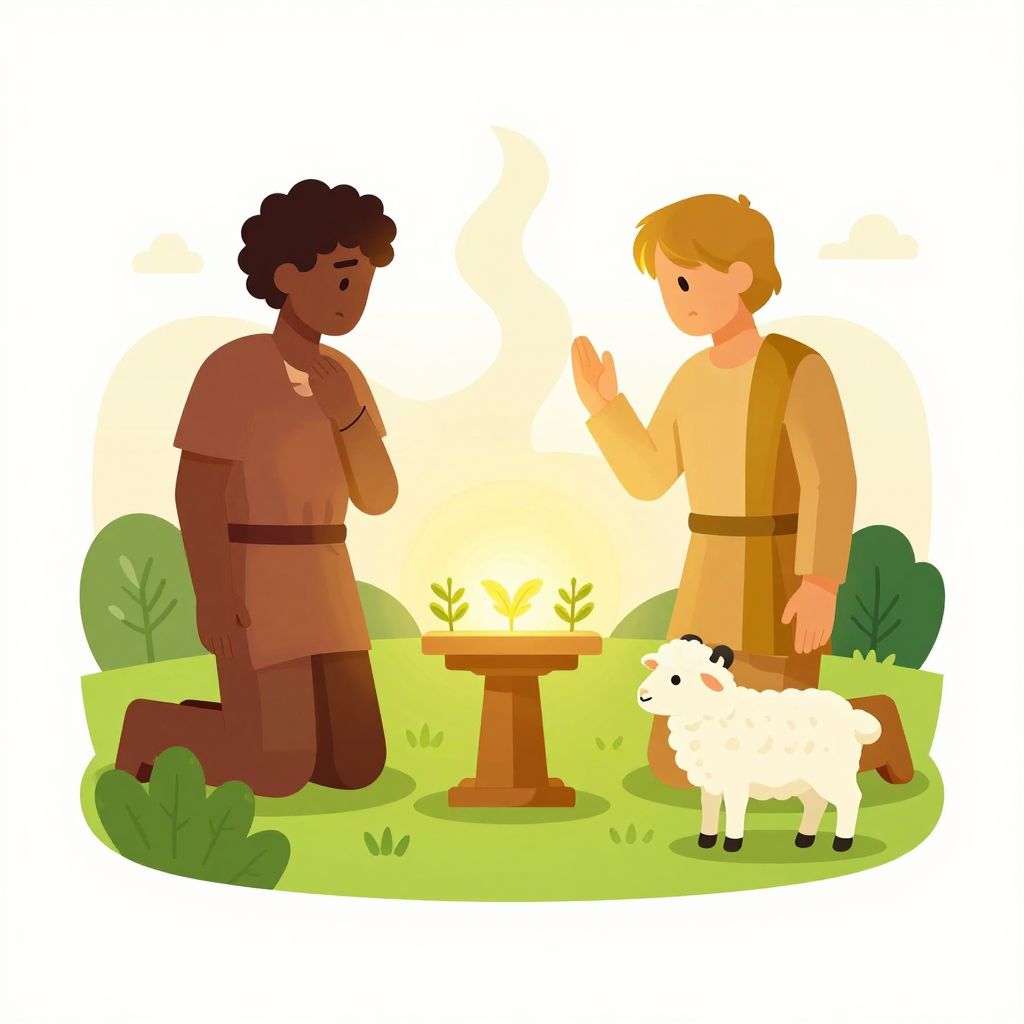
The first murder in human history didn’t happen in a dark alley or during a war—it happened between two brothers at worship. When Cain killed Abel, he shattered the innocence of the early world and revealed the depth of sin’s power over the human heart.
This ancient tragedy speaks directly to struggles we face today: jealousy, rejection, anger, and the choice between surrendering to God or demanding our own way. Understanding why Cain murdered his brother helps us recognize these same dangerous patterns in our own lives.
Why Did Cain Kill Abel in the Bible?
Cain killed Abel because jealousy and pride consumed his heart after God rejected his offering while accepting Abel’s sacrifice. The murder stemmed from Cain’s refusal to deal properly with his anger and his choice to blame Abel rather than examine his own heart before God.
The Heart Issue Behind the Sacrifice
The story begins with both brothers bringing offerings to the Lord in Genesis 4:3-4. Cain brought “some of the fruits of the soil” while Abel brought “fat portions from some of the firstborn of his flock.”
God looked with favor on Abel’s offering but not on Cain’s. This wasn’t about vegetables versus meat—it was about the heart behind the gift.
Abel brought his best with a heart of faith, while Cain gave carelessly with a heart focused on himself. Hebrews 11:4 confirms that “by faith Abel brought God a better offering than Cain did.”
The difference lay in their approach to worship. Abel understood that coming before a holy God required reverence, sacrifice, and genuine devotion.
God’s Warning That Cain Ignored
When Cain’s face fell with anger and disappointment, God didn’t leave him without help. The Lord asked him directly: “Why are you angry? Why is your face downcast?”
God offered Cain a path to restoration: “If you do what is right, will you not be accepted?” The door to God’s favor remained wide open if Cain would humble himself and approach worship correctly.
But God also warned Cain about the spiritual danger he faced. “Sin is crouching at your door; it desires to have you, but you must rule over it” (Genesis 4:7).
This shows us something crucial about temptation and spiritual warfare. Sin doesn’t just happen—it prowls around looking for an opportunity to strike.
The Deeper Spiritual Forces at Work
Pride’s Deadly Progression
Cain’s murder of Abel followed a predictable pattern that pride always takes when left unchecked. First came the rejection—his offering wasn’t accepted.
Instead of examining his own heart and approach to God, Cain became angry. Pride always looks outward to blame rather than inward to repent.
The anger then turned to jealousy toward Abel, whose heart was right with God. Rather than learning from his brother’s example, Cain resented it.
Finally, jealousy birthed murderous hatred. James 1:15 explains this progression: “After desire has conceived, it gives birth to sin; and sin, when it is full-grown, gives birth to death.”
The Battle Between Two Ways of Life
Cain and Abel represent two fundamentally different approaches to life and faith. Abel walked in humility, offering his best to God and trusting in the Lord’s righteousness.
Cain embodied self-righteousness and self-will. He wanted God’s blessing but refused to submit to God’s requirements.
This same battle rages in every human heart. We can choose Abel’s path of humble faith or Cain’s path of prideful self-determination.
First John 3:12 tells us that Cain “belonged to the evil one and murdered his brother.” This wasn’t just a family dispute—it was spiritual warfare playing out in human relationships.
What This Ancient Murder Teaches Us Today
Recognizing Dangerous Heart Attitudes
Cain’s story serves as a warning about attitudes that can grow deadly if we don’t address them quickly. Do you ever find yourself comparing your spiritual life to others and feeling bitter when they seem more blessed?
That’s the same jealousy that ate away at Cain’s heart. Comparison is pride’s favorite weapon, and it always leads to either arrogance or envy.
When you face correction or see God working differently in someone else’s life, how do you respond? Cain chose resentment over repentance.
The healthy response is to examine our own hearts and ask God to show us what needs to change. Pride resists this process, but humility embraces it.
God’s Patience with Our Failures
Notice that God didn’t reject Cain permanently after his poor offering. The Lord came to Cain personally, explained the problem, and offered him a clear path forward.
This reveals God’s incredible patience with our spiritual immaturity. When we approach worship carelessly or with wrong motives, He doesn’t slam the door in our faces.
Instead, God often uses these moments to teach us about genuine faith and proper reverence. The question is whether we’ll receive His correction with humility or harden our hearts like Cain did.
Even after the murder, God’s interaction with Cain showed mercy. Though consequences followed, God still protected Cain from being killed by others (Genesis 4:15).
The Consequences of Unchecked Sin
Murder’s Immediate Impact
When God confronted Cain about Abel’s disappearance, Cain’s response revealed how sin had hardened his heart completely. “Am I my brother’s keeper?” he asked defiantly.
Sin doesn’t just damage our relationship with God—it destroys our love for others. Cain went from offering worship to showing contempt for human life in a matter of verses.
God pronounced judgment swiftly: the ground would no longer yield crops for Cain, and he would become “a restless wanderer on the earth” (Genesis 4:12). Sin always brings separation and restlessness.
The consequences affected not just Cain but all of human history. Abel’s blood “speaks a better word than the blood of Abel” (Hebrews 12:24), pointing forward to Christ’s sacrifice that truly covers sin.
Lessons About Spiritual Warfare
Cain’s failure teaches us crucial truths about fighting temptation. God warned him that sin was “crouching at his door,” but Cain didn’t take the threat seriously enough.
When anger, jealousy, or pride begins stirring in your heart, that’s the moment to fight—not later when these emotions have grown stronger. Small compromises lead to large catastrophes.
The battle for our souls happens in everyday moments of choice. Will we humble ourselves when corrected, or will we justify our attitudes?
Victory over sin requires both God’s grace and our active resistance. Cain had access to God’s help but chose not to use it.
Finding Hope in This Dark Story
Christ as the Better Abel
The story of Cain and Abel points forward to God’s ultimate solution for human sinfulness. Abel’s innocent blood cried out from the ground for justice, but Christ’s blood speaks of mercy and forgiveness.
Where Abel’s sacrifice pleased God temporarily, Jesus’ sacrifice satisfies God’s justice permanently. Everyone who comes to God through faith in Christ finds the acceptance that Cain sought through his own works.
This means we don’t have to repeat Cain’s tragic pattern. When conviction of sin comes, we can run to the cross instead of hardening our hearts.
The gospel breaks the cycle of comparison and competition that destroyed Cain. In Christ, we’re all equally loved and equally accepted by faith.
Practical Steps for Different Hearts
If you recognize Cain-like attitudes in your own heart, here are specific steps to take:
• Confess comparison and jealousy as sin rather than justifying these feelings
• Ask God to show you areas where pride has made you unteachable
• Choose to celebrate others’ blessings instead of resenting them
• Examine your motives in worship and service—are you seeking approval or genuinely loving God?
• Deal with anger quickly before it grows into bitterness
Remember that God’s correction is always motivated by love. He wants to save us from sin’s consequences, not punish us unnecessarily.
The same God who warned Cain about crouching sin is warning us today through His Word and His Spirit.
Walking in Abel’s Footsteps
Abel’s example shows us what God-honoring faith looks like in practical terms. He brought his best to God, offered it with a sincere heart, and trusted in God’s righteousness rather than his own.
Abel’s life was short, but his faith still speaks to us thousands of years later. Hebrews 11:4 says that “by faith he still speaks, even though he is dead.”
This should encourage every believer who wonders if their quiet faithfulness matters. God sees and remembers hearts that honor Him, even when the world doesn’t notice.
The key to Abel’s acceptable worship wasn’t perfection but faith. He understood that approaching God required humility, reverence, and dependence on divine mercy.
Cain killed Abel because pride, jealousy, and self-will consumed his heart when God rejected his careless offering. This ancient tragedy reveals the deadly progression of unchecked sin and shows us the crucial importance of responding to God’s correction with humility rather than hardening our hearts. The same choice between pride and humility, self-righteousness and faith, faces every person today. Unlike Cain, we can choose the path of repentance and find acceptance through Christ’s perfect sacrifice.
Take time this week to examine your own heart honestly. Are there areas where comparison, jealousy, or pride have taken root? Bring these struggles to God in prayer and ask Him to give you Abel’s heart of humble faith.
Continue growing in your understanding of Scripture by exploring more what the Bible says about life’s important questions. You might also find it helpful to study other biblical accounts that reveal God’s character, such as learning what is manna in the Bible and how God provides for His people even in difficult seasons.