
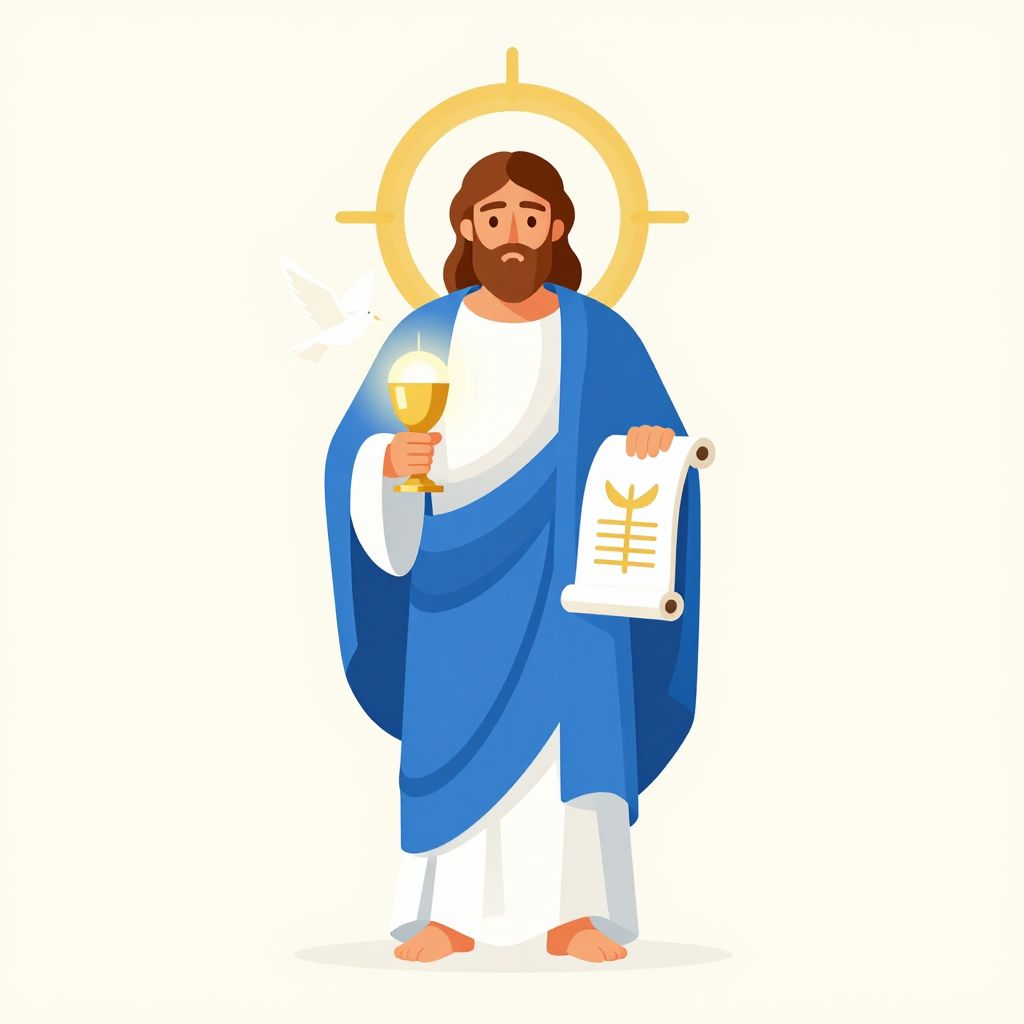
When you open the pages of the New Testament, the name John appears more than any other disciple’s name. This isn’t coincidence — it reflects the profound impact one man had on the early church and the lasting legacy of his relationship with Jesus Christ.
John stands as both the beloved disciple who leaned against Jesus at the Last Supper and the aged apostle who received the apocalyptic visions on Patmos. His life spans from the shores of Galilee to the churches of Asia Minor, leaving us with some of Scripture’s most treasured words about love, light, and eternal life.
Who Was John in the Bible?
John was one of Jesus’ twelve apostles, the son of Zebedee, and the author of five New Testament books including the Gospel of John and Revelation. He served as a pillar of the early church and became known as “the disciple whom Jesus loved.”
John’s Family Background
John came from a fishing family on the Sea of Galilee. His father Zebedee owned a successful fishing business, and his mother Salome followed Jesus and supported His ministry financially.
James, John’s older brother, also became one of the twelve apostles. The brothers worked together in their father’s business until Jesus called them to follow Him, leaving their nets behind to become “fishers of men.”
The Call to Discipleship
Jesus called John while he was mending nets with his father and brother (Matthew 4:21-22). John immediately left everything to follow Jesus, demonstrating the kind of radical commitment that would characterize his entire ministry.
This wasn’t a casual decision for a young man with few options. John walked away from financial security and family expectations to follow a traveling rabbi whose message challenged everything the religious establishment taught.
John’s Role Among the Twelve Apostles
Member of the Inner Circle
Jesus chose John, along with Peter and James, to form His inner circle of disciples. These three men witnessed events that the other nine apostles didn’t see, including the Transfiguration and Jesus’ agony in the Garden of Gethsemane.
This special access wasn’t about favoritism — it was about preparation for leadership. Jesus knew these men would need unshakeable faith to lead the church after His ascension.
The Sons of Thunder
Jesus nicknamed John and his brother James “Boanerges,” which means “Sons of Thunder” (Mark 3:17). This wasn’t exactly a compliment — it described their quick tempers and tendency toward harsh judgment.
When a Samaritan village rejected Jesus, the brothers asked if they should call down fire from heaven to destroy it (Luke 9:54). Their zeal was admirable, but their methods needed serious refinement.
John as “The Disciple Jesus Loved”
A Special Relationship
John consistently refers to himself as “the disciple whom Jesus loved” in his Gospel (John 13:23, 19:26, 20:2). This wasn’t arrogance — it was wonder at the grace that transformed his life.
John understood that Jesus’ love wasn’t based on his performance or personality. The same man who once wanted to destroy entire villages became the apostle who wrote more about love than anyone else in the New Testament.
Trusted with Jesus’ Mother
While hanging on the cross, Jesus entrusted His mother Mary to John’s care (John 19:26-27). This assignment reveals the depth of trust Jesus had in John’s character and commitment.
John took Mary into his home and cared for her as his own mother. This wasn’t just a practical arrangement — it was a sacred trust that John honored faithfully.
John’s Ministry After the Resurrection
Leadership in the Early Church
After Jesus’ ascension, John became one of the key leaders in the Jerusalem church. Paul refers to him as one of the “pillars” of the church alongside Peter and James (Galatians 2:9).
John’s transformation from a hot-tempered fisherman to a wise church leader demonstrates the power of spending time with Jesus. His leadership style emphasized love and truth rather than the harsh judgment he once favored.
Ministry in Ephesus
Church tradition tells us that John spent his later years ministering in Ephesus, one of the most important cities in the Roman Empire. From there, he oversaw the churches throughout Asia Minor and wrote his letters to combat false teaching.
Even in his old age, John’s message remained simple yet profound. Historical accounts suggest he would often end his sermons with the same words: “Little children, love one another.”
John’s Writings in the New Testament
The Gospel of John
John’s Gospel differs significantly from Matthew, Mark, and Luke because he wrote to demonstrate that Jesus is the Son of God (John 20:31). Rather than focusing primarily on Jesus’ actions, John emphasizes His identity and teachings.
The Gospel includes some of Scripture’s most beloved passages, including John 3:16 and Jesus’ seven “I am” statements. John wrote with the perspective of decades of reflection on who Jesus really was.
The Letters of John
John wrote three letters that bear his name, with 1 John being the longest and most well-known. These letters address the importance of loving other believers and warn against false teachers who denied Jesus’ humanity.
First John contains some of the Bible’s strongest statements about love: “God is love” (1 John 4:8) and “We love because he first loved us” (1 John 4:19). The former “Son of Thunder” had learned that love, not judgment, changes hearts.
The Book of Revelation
John received the visions recorded in Revelation while exiled on the island of Patmos for preaching the Gospel. This final book of the Bible reveals Jesus’ ultimate victory and the future hope of all believers.
The same apostle who leaned against Jesus at dinner also saw Him in His full glory, with eyes like flames and a voice like rushing waters (Revelation 1:14-15). John’s experience spans from the intimate to the cosmic.
Key Themes in John’s Ministry
Love as the Christian’s Distinguishing Mark
More than any other New Testament writer, John emphasizes love as the defining characteristic of true Christians. He teaches that our love for God proves itself through our love for other believers (1 John 4:20-21).
This wasn’t mere sentiment for John — it was theology. He understood that God’s nature is love, and those who know God will increasingly reflect that love in their relationships.
Truth and Error
John’s letters repeatedly warn against false teachers who denied fundamental truths about Jesus Christ. He understood that love without truth becomes mere emotion, while truth without love becomes harsh legalism.
John calls believers to “walk in truth” while loving one another (2 John 4-6). These aren’t competing priorities — they’re complementary aspects of mature Christian living.
Eternal Life
John frequently writes about eternal life, not just as a future hope but as a present reality for believers. Those who trust in Jesus possess eternal life right now, not just when they die.
This perspective shaped John’s entire ministry. He wrote so that people might believe and “have life in his name” (John 20:31).
What John’s Life Teaches Us Today
God Uses Imperfect People
John’s transformation from a judgmental “Son of Thunder” to the “apostle of love” encourages every believer. God doesn’t wait until we’re perfect to use us — He works through us while He changes us.
Your temperament, background, or past mistakes don’t disqualify you from serving God. John’s life proves that God specializes in transforming ordinary people into extraordinary servants.
Intimacy with Jesus Changes Everything
John’s closeness to Jesus didn’t happen by accident — it resulted from his willingness to draw near and remain there. The disciple who leaned against Jesus at dinner had learned to find his security in Christ’s love.
How often do you position yourself to experience Jesus’ love personally? John’s example shows us that intimacy with Christ transforms not just our theology but our entire approach to life.
Love and Truth Must Work Together
John never separated love from truth or truth from love. He confronted error firmly while maintaining deep affection for those he corrected.
This balance challenges believers today who sometimes think they must choose between being loving or being truthful. John’s ministry demonstrates that mature Christians embrace both.
John’s Legacy
Church tradition holds that John lived longer than any other apostle, dying peacefully in Ephesus around 100 AD. His longevity allowed him to shepherd multiple generations of Christians and combat various heresies that arose in the early church.
John’s writings continue to shape Christian understanding of love, truth, and eternal life nearly two thousand years after his death. His transformation from an impetuous fisherman to a wise elder gives hope to every believer that God’s grace can change anyone.
John understood something that many Christians miss: knowing Jesus personally makes all the difference. He didn’t just know facts about Jesus — he knew Jesus Himself, and that relationship transformed everything about his life and ministry.
When you read John’s words about love, remember that they come from a man who experienced dramatic personal change. When he writes about eternal life, he’s describing something he possessed and wanted others to experience. John’s life reminds us that the Gospel isn’t just information to believe — it’s a relationship to embrace.
The next time you feel like your personality or past disqualifies you from serving God effectively, remember John. The same grace that transformed a “Son of Thunder” into the “apostle of love” is available to transform your life too. God doesn’t just use perfect people — He perfects the people He uses.
If you found John’s story compelling, you might want to explore other fascinating biblical figures and their transformative encounters with God. Consider reading about Judas and his tragic choices, or discover how Joshua led God’s people with courage and faith. Each biblical character offers unique insights into God’s character and His work in human lives.