
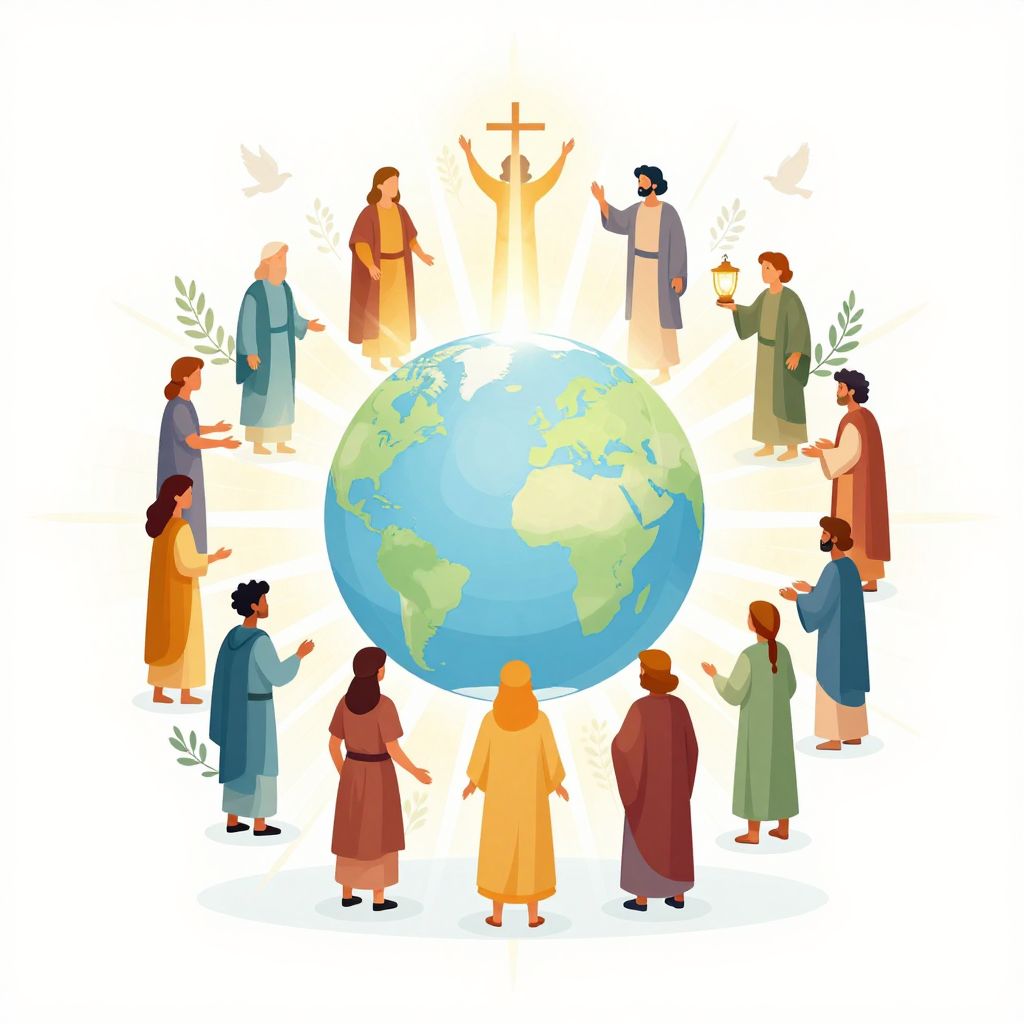
When Jesus spoke His final words to the disciples before ascending to heaven, He gave them a mission that would change the world forever. These words, known as the Great Commission, represent more than just a farewell speech.
The Great Commission stands as Christ’s direct command to His followers to make disciples of all nations, baptizing them and teaching them to obey everything He commanded. This mission forms the foundation of Christian evangelism and discipleship that continues today.
What Is the Great Commission in the Bible?
The Great Commission is Jesus Christ’s final command to His disciples, recorded in Matthew 28:19-20, instructing them to go and make disciples of all nations, baptize them in the name of the Trinity, and teach them to observe all His commandments. This passage contains the core mission statement for every Christian believer.
The Biblical Text and Context
Jesus delivered these words on a mountain in Galilee after His resurrection from the dead. The eleven remaining disciples had gathered there, experiencing a mixture of worship and doubt as they encountered their risen Lord.
Matthew 28:18-20 records Jesus saying: “All authority in heaven and on earth has been given to me. Therefore go and make disciples of all nations, baptizing them in the name of the Father and of the Son and of the Holy Spirit, and teaching them to obey everything I have commanded you. And surely I am with you always, to the very end of the age.”
The Authority Behind the Command
Jesus begins His commission by establishing His complete authority over heaven and earth. This authority gives weight and legitimacy to everything that follows.
The Greek word for authority here is “exousia,” which means complete power and right to command. Christ earned this authority through His perfect life, sacrificial death, and victorious resurrection.
The Four Essential Elements of the Great Commission
Go to All Nations
The command to “go” breaks down barriers of geography, ethnicity, and culture. Jesus expanded the mission field from Israel alone to every people group on earth.
The phrase “all nations” translates from the Greek word “ethne,” meaning all ethnic groups and peoples. This includes every tribe, tongue, and nation that exists.
Make Disciples
The central verb in the Great Commission is “make disciples,” not simply “make converts.” A disciple is a learner and follower who commits to growing in Christ-likeness.
Making disciples involves more than leading someone to pray a prayer or attend church. It requires intentional relationship, ongoing teaching, and spiritual mentorship that produces mature believers.
Baptize New Believers
Baptism serves as the public declaration of faith and the initial step of obedience for new disciples. The command specifies baptism “in the name of the Father and of the Son and of the Holy Spirit.”
This Trinitarian formula acknowledges the full nature of God and marks the believer’s entrance into the community of faith. Baptism symbolizes death to the old life and resurrection to new life in Christ.
Teach Obedience to Christ’s Commands
Teaching new disciples extends far beyond sharing information about Jesus. The goal is obedience to everything Christ commanded, which requires ongoing discipleship and spiritual growth.
This teaching includes the moral commands, spiritual disciplines, and lifestyle changes that flow from genuine faith. Mature disciples then become equipped to make other disciples, creating a multiplication effect.
The Great Commission in Other Gospel Accounts
Mark’s Version
Mark 16:15-16 records Jesus saying, “Go into all the world and preach the gospel to all creation. Whoever believes and is baptized will be saved, but whoever does not believe will be condemned.”
Mark emphasizes the urgency of gospel proclamation and the eternal consequences at stake. Belief and baptism go hand in hand as responses to the gospel message.
Luke’s Account
Luke 24:46-47 focuses on the content of the message: “This is what is written: The Messiah will suffer and rise from the dead on the third day, and repentance for the forgiveness of sins will be preached in his name to all nations, beginning at Jerusalem.”
Luke highlights repentance and forgiveness as central gospel themes. The mission begins in Jerusalem but extends to all nations without exception.
John’s Commission
John 20:21 presents Jesus’ words differently: “Peace be with you! As the Father has sent me, I am sending you.”
John connects the disciples’ mission directly to Christ’s own mission from the Father. The same purpose, power, and presence that marked Jesus’ ministry now empowers His followers.
The Promise That Accompanies the Commission
Christ’s Abiding Presence
Jesus concludes the Great Commission with an incredible promise: “And surely I am with you always, to the very end of the age.” This presence makes the seemingly impossible task achievable.
The word “always” means every day, in every situation, through every challenge. Christ doesn’t send His disciples out alone but accompanies them through His Spirit.
The Power of the Holy Spirit
Acts 1:8 adds another dimension to the commission: “But you will receive power when the Holy Spirit comes on you; and you will be my witnesses in Jerusalem, and in all Judea and Samaria, and to the ends of the earth.”
The Holy Spirit provides the power necessary to fulfill the Great Commission. Human effort alone cannot accomplish this divine mission, but God’s Spirit makes it possible through believers.
How the Great Commission Applies Today
Universal Application
The Great Commission applies to every Christian, not just pastors, missionaries, or church leaders. Every believer receives this mandate from Christ Himself.
Your specific role in fulfilling the commission may vary, but the responsibility belongs to all Christians. Some go to foreign nations, others serve in their local communities, but all participate in making disciples.
Practical Ways to Live the Commission
Consider these practical applications of the Great Commission in daily life:
- Share your faith story with friends, family, and coworkers when appropriate opportunities arise
- Support missionary work through prayer, financial giving, and encouragement
- Mentor newer believers in your church or community, helping them grow in their faith
- Serve in local outreach ministries that connect with non-believers in your area
- Study Scripture regularly so you can teach others what Christ commanded
- Pray for unreached people groups around the world who haven’t heard the gospel
The Local and Global Scope
The Great Commission includes both local and international dimensions. You can make disciples in your neighborhood while also supporting global missions.
Start where you are with the people God has placed in your life. Look for opportunities to serve, share, and disciple others right in your current circumstances.
Common Misconceptions About the Great Commission
It’s Only for Professional Ministers
Many Christians wrongly believe the Great Commission applies only to pastors, missionaries, and church staff. Scripture shows Jesus addressing all His followers, not just religious professionals.
God calls every believer to participate in making disciples according to their gifts, opportunities, and circumstances. The specific methods may differ, but the mandate remains universal.
Evangelism Is the Entire Commission
Some Christians focus only on the “going” aspect while neglecting the discipleship components. The Great Commission includes making, baptizing, and teaching disciples, not just initial conversions.
True fulfillment of the commission requires long-term commitment to helping new believers mature in their faith. Quick evangelistic encounters represent only the beginning of the process.
Cultural Sensitivity Isn’t Important
The command to reach “all nations” requires understanding and respecting different cultures while maintaining biblical truth. Effective cross-cultural ministry adapts methods without compromising the message.
Paul demonstrated this principle by becoming “all things to all people” for the sake of the gospel. Wisdom and cultural awareness enhance rather than diminish faithful commission work.
The Urgency and Importance of the Great Commission
Eternal Stakes
The Great Commission carries eternal significance because it determines where people spend eternity. Those who believe and obey the gospel receive eternal life, while those who reject it face judgment.
This reality should motivate Christians to take the commission seriously and act with appropriate urgency. Every person needs to hear the gospel and have opportunity to respond in faith.
Christ’s Final Command
As Jesus’ last recorded command before ascending to heaven, the Great Commission deserves special attention and priority. Last words carry significant weight, especially from someone who died and rose again.
Jesus could have chosen to emphasize many different things in His final moments with the disciples. Instead, He focused on the mission to make disciples of all nations.
How will you respond to Christ’s Great Commission in your own life? Begin by examining your current involvement in making disciples, whether locally or globally. Ask God to show you specific ways to participate more fully in this mission, remembering that His presence goes with you always.
The Great Commission remains as relevant and urgent today as when Jesus first spoke these words to His disciples. For those seeking to understand more about biblical teachings and grow in their faith, exploring what the Bible says on various topics can deepen your understanding. If you’re new to studying Scripture and wondering where to start reading, beginning with the Gospels provides an excellent foundation for understanding Christ’s teachings and mission.