
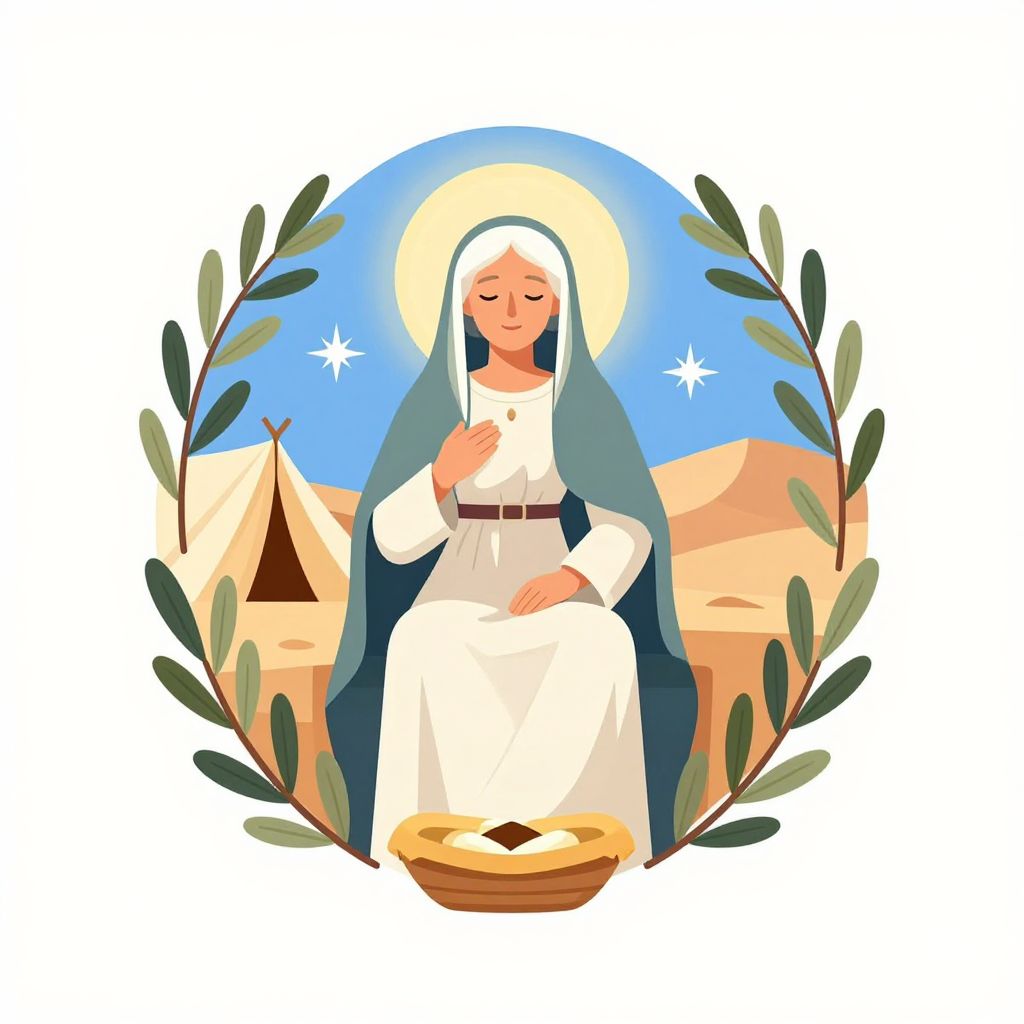
When Scripture introduces us to a woman whose story spans decades and whose faith gets tested in ways that feel startlingly familiar, we meet someone whose struggles with doubt, waiting, and God’s timing mirror our own. Sarah stands as one of the most complex and relatable figures in the Bible, a woman whose story teaches us profound truths about faith, failure, and God’s faithfulness.
Sarah’s journey from doubt to covenant partner reveals how God works through imperfect people to accomplish His perfect plans (Genesis 12-23). Her story shows us that faith doesn’t mean never struggling with God’s promises—it means continuing to walk with Him even when His timing makes no sense.
Who Was Sarah in the Bible?
Sarah was Abraham’s wife and the mother of Isaac, through whom God established His covenant with the Jewish people (Genesis 17:15-16). Originally named Sarai, she became Sarah when God changed her name as part of His promise to make her “a mother of nations.”
Sarah’s Early Life and Marriage
Sarah married Abraham (then called Abram) in Ur of the Chaldeans, likely around 2000 BC. Genesis 11:29-30 tells us she was barren, unable to have children—a detail that would define much of her story.
When God called Abraham to leave his homeland, Sarah went with him. This decision required tremendous faith, as she left everything familiar to follow God’s call on her husband’s life (Genesis 12:1-5).
The Promise That Changed Everything
God promised Abraham that he would become the father of many nations, making Sarah central to this covenant (Genesis 12:2-3). Yet decades passed without the promised child, testing Sarah’s faith in ways that would push her to make decisions she later regretted.
The waiting grew so difficult that Sarah took matters into her own hands. She gave her servant Hagar to Abraham so he could have a child through her, following the cultural practices of her time but stepping outside of God’s specific plan (Genesis 16:1-4).
Sarah’s Struggles with Faith and Doubt
The Hagar Incident
Sarah’s decision to give Hagar to Abraham reveals how waiting on God’s promises can drive us to create our own solutions. When Hagar conceived Ishmael, jealousy and tension filled Abraham’s household (Genesis 16:4-6).
This situation shows us that even people of great faith sometimes try to help God fulfill His promises. Sarah’s mistake teaches us that God’s timing and methods matter as much as His promises.
Laughter and Disbelief
When God appeared to Abraham and promised that Sarah would have a son within a year, Sarah laughed at the impossibility of it all (Genesis 18:10-12). At nearly 90 years old, the idea of pregnancy seemed absurd.
God heard her laughter and asked, “Is anything too hard for the Lord?” (Genesis 18:14). This question cuts to the heart of every struggle we face with trusting God’s promises when circumstances seem impossible.
God’s Faithfulness Despite Human Weakness
The Name Change
When God changed Sarai’s name to Sarah, meaning “princess,” He declared His intentions despite her age and circumstances (Genesis 17:15). This wasn’t just a new name—it was a prophetic declaration of who she would become.
God often gives us new identities before we see the evidence of transformation in our lives. Have you ever felt like God was calling you to something that seemed impossible given your current reality?
Isaac’s Birth
Sarah conceived and bore Isaac when she was 90 years old, exactly as God had promised (Genesis 21:1-2). After decades of waiting, God’s faithfulness became undeniably clear.
Sarah’s response to Isaac’s birth reveals her changed heart: “God has brought me laughter, and everyone who hears about this will laugh with me” (Genesis 21:6). The laughter of doubt had transformed into the laughter of joy and amazement at God’s power.
Sarah’s Legacy and Lessons
Mother of Nations
Through Isaac, Sarah became the mother of the Jewish nation and, ultimately, an ancestor of Jesus Christ (Matthew 1:1-17). Her story connects directly to God’s plan of salvation for all humanity.
The New Testament honors Sarah as a woman of faith who trusted God despite her struggles. Hebrews 11:11 credits her with faith to conceive because “she considered him faithful who had made the promise.”
What Sarah Teaches Us About Faith
Sarah’s story offers several powerful lessons for modern believers:
- Faith doesn’t mean never doubting—it means continuing to walk with God through the doubts
- God’s timing often differs from our timing, but His timing is always perfect
- Our mistakes don’t disqualify us from God’s plans—He works through imperfect people
- What seems impossible to us remains possible with God (Luke 1:37)
Sarah’s Relationship Challenges
Sarah’s marriage to Abraham faced unique pressures that tested both their faith and their relationship. Twice, Abraham told foreign rulers that Sarah was his sister rather than his wife, putting her in dangerous situations (Genesis 12:10-20, 20:1-18).
These incidents reveal that even great biblical figures made decisions based on fear rather than faith. Sarah’s story reminds us that God protects His people even when their choices create complicated situations.
Sarah’s Character Development
From Doubt to Trust
Sarah’s character arc shows a gradual transformation from someone who laughed at God’s promises to someone who trusted His faithfulness. This change didn’t happen overnight—it developed through years of walking with God.
The woman who gave Hagar to Abraham out of impatience later trusted God’s promise completely. Her story proves that spiritual maturity comes through experience, not perfection.
Handling Conflict
Sarah’s relationship with Hagar grew increasingly difficult after Isaac’s birth. When Sarah saw Ishmael mocking Isaac, she demanded that Abraham send Hagar and Ishmael away (Genesis 21:9-10).
While this decision seems harsh by modern standards, God confirmed that Sarah’s instinct to protect Isaac was aligned with His covenant plan (Genesis 21:12). Sometimes protecting God’s promises requires difficult choices.
Sarah’s Death and Lasting Impact
Sarah died at age 127, and Abraham purchased the cave of Machpelah to bury her—the first piece of the Promised Land that he actually owned (Genesis 23:1-20). Even in death, Sarah’s story connects to God’s promises about the land He would give Abraham’s descendants.
Abraham’s grief over Sarah’s death reveals the depth of their relationship after decades of shared faith and struggle. Their partnership in following God’s call created a bond that went far beyond typical marriages of their era.
What Sarah’s Story Means for Us Today
Sarah’s story speaks directly to anyone who has ever wondered if God has forgotten His promises or if His timing will ever make sense. Her decades of waiting followed by miraculous fulfillment encourage us to persevere when God’s promises seem delayed.
Do you find yourself trying to help God fulfill His promises in your life? Sarah’s story with Hagar reminds us that our attempts to speed up God’s timeline often create complications that His perfect timing would have avoided.
Sarah stands as proof that God chooses ordinary people with real struggles to accomplish extraordinary purposes. Her story runs from Genesis 11 through Genesis 23, showing us a woman who grew in faith through years of testing, waiting, and ultimate fulfillment.
The next time you feel tempted to laugh at what God has promised you, remember Sarah’s transformation from doubt to amazement. Her legacy reminds us that nothing is too hard for the Lord, and His faithfulness endures even when our faith wavers. Trust His timing, embrace His promises, and let Sarah’s story strengthen your confidence in the God who makes the impossible possible.
For readers interested in exploring more biblical figures and their profound lessons, we invite you to discover additional faith-based insights that illuminate Scripture’s transformative truths. Consider also learning about Jacob’s remarkable journey and how God shapes His people through both struggles and victories.