
The New Testament mentions two different men named Philip, and their stories reveal powerful truths about faith, service, and God’s calling on ordinary lives. Both men show us what happens when someone says yes to following Jesus, regardless of their background or circumstances.
These two Philips—one an apostle, the other a deacon—demonstrate that God uses different people in different ways to accomplish His purposes. Their lives offer practical lessons for anyone seeking to understand what faithful discipleship looks like.
Who Was Philip in the Bible?
Philip was actually two different men in the New Testament: Philip the Apostle, one of Jesus’ twelve disciples, and Philip the Evangelist, one of the seven deacons chosen to serve the early church. Both men played significant roles in spreading the gospel and building the early Christian community.
Philip the Apostle: Called to Follow
Philip the Apostle came from Bethsaida, the same town as Andrew and Peter (John 1:44). Jesus found Philip and simply said, “Follow me”—and Philip immediately obeyed.
What strikes you most about Philip’s response? He didn’t hesitate, negotiate, or ask for time to think it over.
Philip’s first recorded action after meeting Jesus shows his heart for evangelism. He immediately found his friend Nathanael and told him, “We have found the one Moses wrote about in the Law, and about whom the prophets also wrote—Jesus of Nazareth” (John 1:45, NIV).
When Nathanael expressed skepticism about anything good coming from Nazareth, Philip didn’t argue theology. He simply said, “Come and see” (John 1:46).
Philip’s Practical Faith
Philip appears several more times in the Gospels, often displaying a practical, down-to-earth approach to faith. When Jesus tested him before feeding the five thousand, Philip immediately calculated the cost: “It would take more than half a year’s wages to buy enough bread for each one to have a bite!” (John 6:7, NIV).
Philip thought in concrete terms—logistics, money, practical limitations. God uses people who think practically, not just those who seem naturally “spiritual.”
Later, when some Greeks wanted to see Jesus, they approached Philip first (John 12:20-21). Philip served as a bridge between different cultures and backgrounds, showing how God positions certain people to connect others to Christ.
In one of his most memorable moments, Philip asked Jesus, “Lord, show us the Father and that will be enough for us” (John 14:8, NIV). Jesus’ response revealed both Philip’s humanity and God’s patience: “Don’t you know me, Philip, even after I have been among you such a long time?”
Philip the Evangelist: Chosen to Serve
Philip the Evangelist was one of seven men chosen by the early church to serve widows and distribute food (Acts 6:1-6). The apostles selected these men to handle practical ministry so they could focus on prayer and preaching.
Notice something important here: God called Philip to serve tables before He called him to preach to multitudes. Faithfulness in small things always precedes greater responsibility in God’s kingdom.
From Deacon to Evangelist
After Stephen’s martyrdom scattered the Jerusalem church, Philip went to Samaria and began preaching Christ there. The results were remarkable: “When the crowds heard Philip and saw the signs he performed, they all paid close attention to what he said” (Acts 8:6, NIV).
Philip didn’t wait for permission or formal training to become an evangelist. When circumstances changed, he stepped into his new calling naturally.
Even a sorcerer named Simon believed and was baptized after hearing Philip preach (Acts 8:13). God used this former deacon to break new ground for the gospel in Samaria, a region Jews typically avoided.
The Ethiopian Encounter
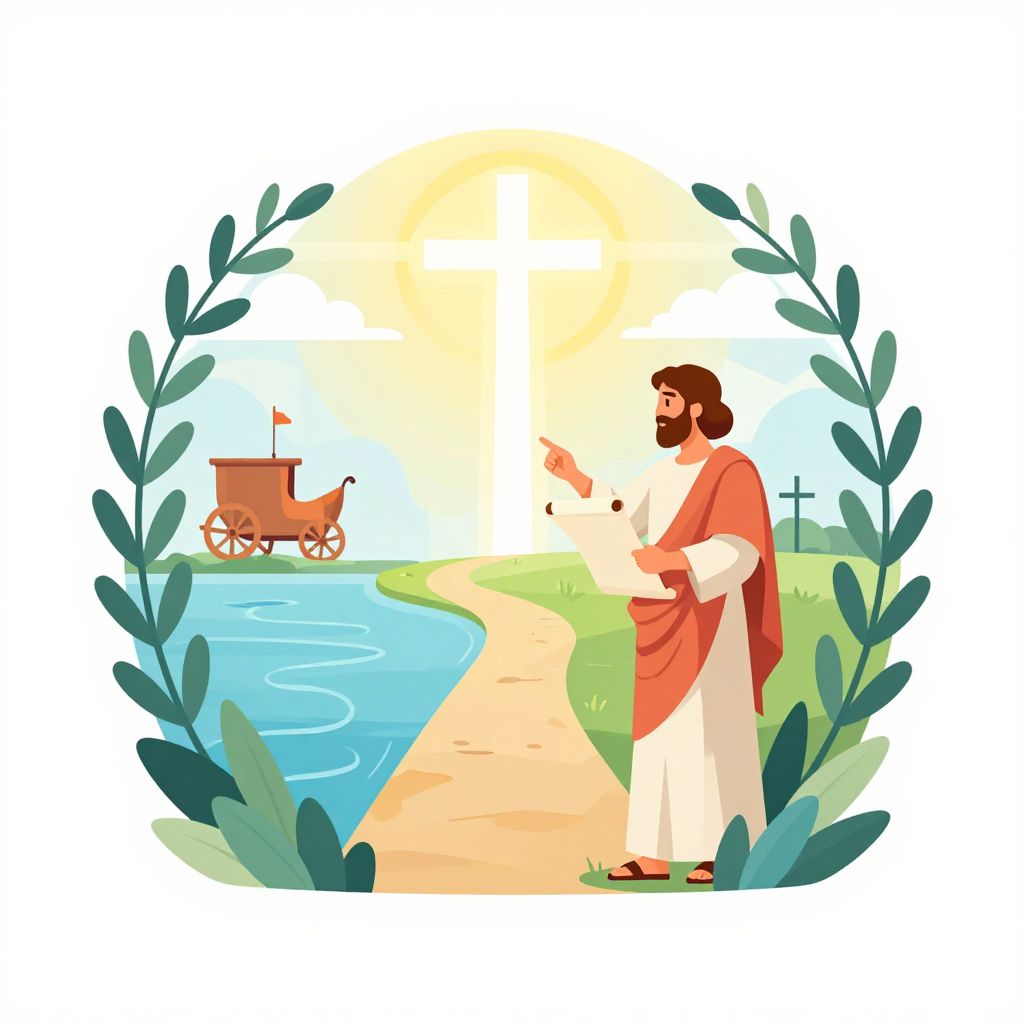
Philip’s most famous moment came when the Holy Spirit directed him to a desert road where he met an Ethiopian eunuch reading Isaiah (Acts 8:26-40). This encounter demonstrates several crucial principles about evangelism and God’s guidance.
First, Philip obeyed immediately when the Spirit spoke. He left a successful ministry in Samaria to walk down a desert road with no apparent purpose.
Second, Philip asked the right question at the right time: “Do you understand what you are reading?” (Acts 8:30, NIV). He didn’t assume anything or launch into a canned presentation.
The Ethiopian’s response opened the door: “How can I, unless someone explains it to me?” Philip climbed into the chariot and explained how Isaiah 53 pointed to Jesus.
The conversation led to immediate action. When they came to water, the Ethiopian asked, “What can stand in the way of my being baptized?” (Acts 8:36, NIV).
After the baptism, the Spirit supernaturally transported Philip to another location where he continued preaching. This wasn’t just unusual—it was God’s way of showing that He will move heaven and earth to get the gospel to those who need it.
What Both Philips Teach Us
Both men named Philip demonstrate timeless principles for Christian living and ministry. Their examples speak directly to believers today who want to serve God effectively.
Immediate Obedience
Both Philips responded immediately when God called them. The apostle Philip followed Jesus without delay, and Philip the evangelist obeyed the Spirit’s direction to the desert road.
God often reveals His next step only after we take the first one. Are you waiting for complete clarity before you obey what God has already shown you?
Natural Evangelism
Neither Philip felt the need to use special religious language or complicated theology. The apostle simply said “Come and see,” while the evangelist started with a simple question about understanding Scripture.
Effective evangelism flows from genuine relationships and honest conversations. People respond to authenticity, not performance.
Faithfulness in Different Roles
Philip the evangelist served faithfully as a deacon before God expanded his ministry. He didn’t despise small beginnings or consider practical service beneath him.
God prepares us for greater influence through faithful service in our current responsibilities. Character development always precedes platform expansion in God’s kingdom.
Cultural Bridge-Building
The apostle Philip connected Greeks with Jesus, while Philip the evangelist brought the gospel to Samaritans and an African court official. Both men crossed cultural boundaries that others might have avoided.
God strategically positions His people to reach those who might not connect with others. Who has God uniquely equipped you to reach?
Living Like Philip Today
The lives of both Philips challenge modern believers to embrace both practical service and bold evangelism. Their examples show that God uses ordinary people who make themselves available.
Consider these practical applications from their lives:
- Say yes quickly when God calls – Don’t overthink or delay obedience
- Invite others to “come and see” – Let people encounter Jesus for themselves
- Serve faithfully in small things – God prepares us through current responsibilities
- Ask good questions – Listen before you speak
- Cross cultural boundaries – God may use you to reach unexpected people
- Expect supernatural help – God provides what we need when we step out in faith
Both Philips show us that God doesn’t require perfection or special qualifications—He requires availability. The apostle Philip asked honest questions and thought practically, while Philip the evangelist started by serving tables.
Their stories remind us that God writes significant chapters through ordinary people who respond to His calling. What matters most is not our background or natural abilities, but our willingness to follow where God leads.
Take time to reflect on how God might be calling you to step forward in faith, whether in practical service or bold witness. The same Spirit who guided both Philips continues to work through believers today who make themselves available to His purposes.
If you’re looking to deepen your biblical knowledge and explore more fascinating figures from Scripture, you’ll find valuable insights in our comprehensive guide about what the Bible says on various topics. You might also find it enlightening to discover who Judas was and how his story contrasts with the faithful examples we see in Philip’s life, offering additional perspectives on discipleship and the choices that shape our spiritual journey.